The Ford Bronco is one of the few vehicles that genuinely earned icon status twice: first as a compact, go-anywhere utility machine launched in 1966, and again as a modern off-road SUV revived for a new generation. Within the broader world of classic car models and brands, the Bronco stands out because it connects several major themes at once: American design, off-road capability, collector culture, and the way nostalgia can shape modern product strategy. As a hub for iconic models, the Bronco deserves close attention because its story explains not only one famous badge, but also how an automaker turns heritage into relevance.
When enthusiasts call the Bronco a classic SUV, they usually mean the early generations built from 1966 through 1977, though the full-size models produced from 1978 through 1996 are increasingly recognized as classics as well. A classic SUV, in practical terms, is a sport utility vehicle whose engineering, styling, and cultural impact have lasted beyond its production era. The Bronco fits that definition comfortably. It began as a purpose-built four-wheel-drive vehicle aimed at buyers who wanted something smaller and more maneuverable than the International Harvester Scout and more civilized than a bare-bones Jeep CJ. It eventually grew into a larger platform that reflected changing American tastes, then disappeared, and finally returned in 2021 as a highly capable off-road model designed to compete directly with the Jeep Wrangler.
That comeback matters because the revived Bronco was not a simple retro styling exercise. Ford rebuilt the name around the qualities that made the original important: short overhangs, removable components, terrain-focused hardware, and strong aftermarket support. In my experience covering classic vehicle lineages and modern reissues, very few revivals get the balance right. Some borrow the name but ignore the mission. The Bronco returned with independent front suspension, available locking differentials, disconnecting stabilizer hardware, dedicated trail technology, and body styles that deliberately echo the first generation without copying it panel for panel. That combination is why the Bronco is now central to any serious discussion of iconic SUV models.
For readers exploring classic car models and brands, the Bronco also acts as a gateway vehicle. It leads naturally into related topics such as the first-generation off-road market, special-edition collector trends, body-on-frame engineering, V8-era utility vehicles, and the modern battle between heritage branding and clean-sheet design. Understanding the Bronco means understanding why some vehicles become symbols. It was useful, but so were many others. It was attractive, but styling alone never guarantees longevity. The difference was that the Bronco consistently represented freedom, versatility, and mechanical honesty, all traits enthusiasts still value today.
How the Ford Bronco Started and Why the Early Models Became Icons
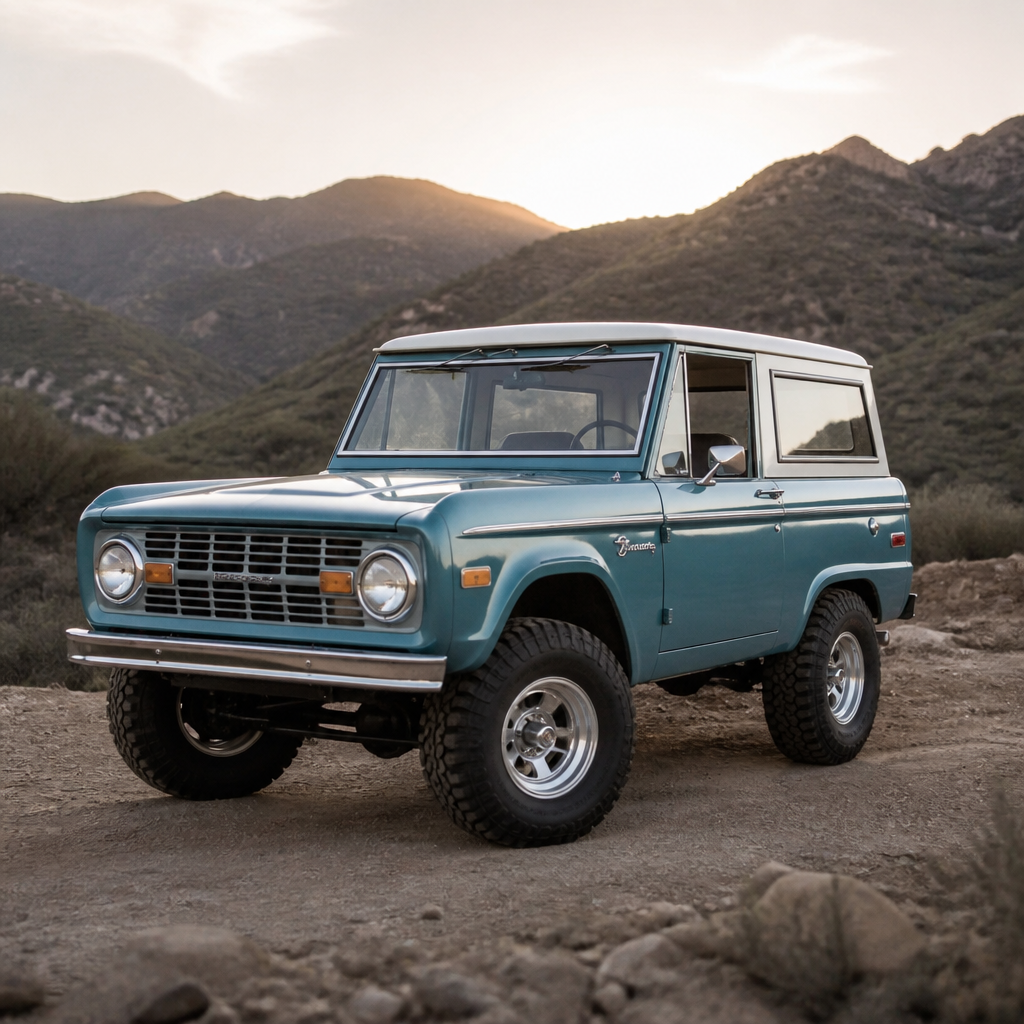
Ford introduced the Bronco for the 1966 model year after identifying a gap in the market for a compact four-wheel-drive vehicle with broader appeal than farm-only or military-adjacent machines. The original Bronco rode on a dedicated platform rather than a modified truck chassis, and it arrived in three body styles: roadster, half-cab pickup, and wagon. That range showed Ford understood the category better than many people now remember. The company was not merely selling an off-roader; it was offering a flexible utility platform for recreation, work, and daily driving.
Mechanically, the first-generation Bronco was straightforward and durable. Early examples used a 170-cubic-inch inline-six, later replaced by a 200-cubic-inch six, while a 289 V8 and then a 302 V8 gave buyers more power. The truck used body-on-frame construction, a solid front axle with coil springs, and a rear solid axle with leaf springs. That coil-spring front setup mattered. Compared with some rivals, the Bronco delivered better ride quality and articulation, helping it build a reputation for usable off-road performance. A Dana 20 transfer case and simple driveline layout also made the truck easy to maintain and modify, which still boosts collector interest now.
Styling played a major role in the Bronco’s status. The first generation had flat body sides, upright glass, round headlamps, and a blunt, confident stance. Those features were not decorative nostalgia at the time; they were practical shapes for visibility, packaging, and trail use. Yet they gave the Bronco a timeless design language that Ford would later revisit. Today, restored 1966 to 1977 Broncos regularly command strong auction prices because they appeal to multiple buyers at once: collectors, off-road enthusiasts, restomod builders, and casual admirers who simply recognize a clean shape when they see one.
Real-world demand reflects that status. Early Broncos in high-quality restored condition have sold through Barrett-Jackson, Mecum, and Bring a Trailer for sums that would have seemed improbable twenty years ago, especially V8-equipped trucks with factory-correct details or carefully executed upgrades. The roadster body style is particularly rare and desirable. Even modified examples hold value when the work is coherent, because the Bronco aftermarket is deep and buyers understand what they are looking at. That is one clear mark of an iconic model: the market develops its own literacy around originality, drivetrains, trim packages, and build quality.
The Shift to Full-Size Broncos and the Expansion of the Legend
In 1978, Ford transformed the Bronco from a compact SUV into a full-size two-door model based on the F-Series truck platform. Purists sometimes treat this change as a break from the original formula, but that view misses the historical context. American buyers in the late 1970s and 1980s increasingly wanted larger vehicles with more power, more comfort, and stronger towing capability. The full-size Bronco answered that demand directly. It kept serious four-wheel-drive credentials while adding the broad-shouldered presence that came to define truck-based SUVs in that era.
These later Broncos shared architecture with the F-150, which gave them familiar service parts, robust drivetrains, and a strong reputation for durability. Engines included inline-six options and several V8s over time, such as the 351 Windsor. Features evolved as the market changed, with improved interiors, better sound insulation, fuel injection in later years, and more convenience equipment. The removable rear hardtop remained a signature feature, preserving a degree of open-air character even as the vehicle grew larger and more suburban in its mission.
The full-size Bronco matters in any hub covering iconic models because it broadened the nameplate’s audience. For many owners, especially those who grew up in the 1980s and early 1990s, this was the Bronco they knew firsthand. It appeared in television, advertising, and family driveways. It worked as a tow rig, snow vehicle, beach cruiser, and hunting truck. That breadth is part of the badge’s cultural power. The Bronco was no longer just a niche 4×4. It had become a mainstream American utility vehicle without losing its rugged image.
Its public visibility also had a more complicated side. The 1993 to 1996 generation became inseparable, in popular memory, from the nationally televised 1994 O.J. Simpson police chase involving a white Bronco. That event dramatically increased name recognition, though for reasons unrelated to the vehicle’s engineering or design. Serious enthusiasts tend to separate the product from the incident, but the moment undeniably cemented the Bronco in American cultural history. Few classic SUVs can claim the same level of instant recognition across people who otherwise know little about cars.
Why Ford Ended the Bronco and Why Bringing It Back Was Risky
Ford discontinued the Bronco after the 1996 model year, replacing it in practice with the four-door Expedition for buyers who wanted a family-oriented SUV based on truck hardware. This was a rational business move. The late 1990s market rewarded larger four-door SUVs with easier rear-seat access, more cargo practicality, and a safer-feeling image for suburban households. Two-door full-size SUVs were losing ground, and emissions, safety, and fuel economy pressures made it harder to justify a narrower-use product.
Still, ending the Bronco created a gap that Ford left open for years. Jeep kept refining the Wrangler as a dedicated off-road lifestyle vehicle, and the market eventually proved there was enduring demand for authentic 4x4s with removable roofs and doors. During that long absence, classic Broncos gained stature. I saw this shift clearly in collector coverage: as original trucks became more expensive and restored examples more visible, public appetite for a modern interpretation grew. Ford had both an opportunity and a trap. If it revived the Bronco without real capability, enthusiasts would reject it immediately.
The risk was larger than many casual observers realized. Heritage revivals often fail when design studios overemphasize nostalgia while engineering teams underdeliver on function. Buyers may forgive a modern sports coupe for being symbolic, but they do not forgive an off-road SUV for lacking ground clearance, approach angles, recovery features, or durable driveline options. The revived Bronco therefore had to satisfy two audiences with very different expectations: older fans who remembered the originals and younger buyers cross-shopping Wranglers, 4Runners, Tacomas, and overlanding builds on social media.
How the Modern Bronco Honored the Original While Competing in Today’s Market
When Ford launched the new Bronco for the 2021 model year, it succeeded because the product team clearly understood the assignment. The vehicle used body-on-frame construction and was engineered from the outset for trail use. Two-door and four-door body styles were offered, along with removable roof panels and removable doors. Trim levels ranged from more accessible versions to highly specialized models such as the Badlands, Wildtrak, Heritage Edition, and desert-focused Raptor. This wide spread mirrored the original Bronco’s flexible spirit while addressing a much broader modern market.
Ford also loaded the Bronco with serious hardware. Depending on trim, buyers could get a two-speed transfer case, front and rear locking differentials, 35-inch tires from the factory, Bilstein position-sensitive dampers, a front stabilizer bar disconnect, steel bash plates, and terrain-management software branded with dedicated drive modes. The available EcoBoost four-cylinder and V6 engines delivered much stronger performance than the vintage trucks, while independent front suspension improved on-road composure. Some traditionalists criticized that suspension choice because solid axles are prized for certain off-road conditions, but in real mixed use it made the Bronco more livable without undermining its capability.
| Bronco Era | Key Years | Defining Traits | Why It Matters |
|---|---|---|---|
| First Generation | 1966-1977 | Compact size, simple 4×4 hardware, wagon/roadster/half-cab styles | Established the Bronco as a true off-road icon |
| Full-Size Generations | 1978-1996 | F-Series roots, larger body, V8 power, removable rear top | Expanded the badge into mainstream American SUV culture |
| Modern Revival | 2021-present | Retro-inspired design, removable panels, advanced trail tech | Proved a heritage comeback can succeed with real capability |
Design was another major win. The modern Bronco borrowed round lamps, upright proportions, strong fender forms, and a horizontal grille theme that visually linked it to the 1966 original. Yet it avoided becoming a costume piece. Practical features such as trail sight lines on the fenders, washable interiors on selected trims, frame-mounted steel bumpers, and accessory-ready mounting points gave the styling substance. That is a crucial lesson in iconic model revival: references to the past only work when they support present-tense use.
The market response confirmed Ford’s strategy. Early reservation numbers were strong, waitlists stretched, and the vehicle quickly became a centerpiece of the brand’s truck and SUV identity. More importantly, independent testing by outlets such as MotorTrend, Car and Driver, and Edmunds showed that the Bronco was not surviving on nostalgia alone. It was competitive in articulation, approach and departure geometry, water fording, and overall trail performance. In other words, Ford did what many brands talk about but few execute. It brought back a famous name and gave it modern credibility.
What Makes the Ford Bronco an Essential Hub Topic Among Iconic Models
As a hub within classic car models and brands, the Bronco links multiple article paths that readers typically explore next. One path is generational history, comparing the compact first generation with the full-size years and the current revival. Another is collector guidance, including how to evaluate rust, driveline originality, VIN details, uncut fenders, and restomod choices in vintage Broncos. A third is competitive context: Bronco versus Jeep CJ and Wrangler, International Scout, Chevrolet K5 Blazer, Toyota Land Cruiser, and Land Rover Defender. Each of those comparisons reveals why the Bronco occupies its own lane rather than simply following trends.
The Bronco also opens a useful discussion about how iconic models survive through community support. The restoration and aftermarket ecosystem matters enormously here. Companies such as Dennis Carpenter, Tom’s Offroad, and major suspension, axle, and wheel suppliers have helped keep early Broncos on the road. Meanwhile, modern accessory support from Ford Performance and independent brands has strengthened the new model’s position in camping, rock crawling, and expedition use. A vehicle becomes iconic not just when people admire it, but when they keep building, fixing, driving, and debating it across decades.
For anyone mapping the most important SUVs in automotive history, the Bronco belongs near the top because it demonstrates continuity. It started as an honest utility tool, matured into a mainstream cultural product, disappeared when the market shifted, and returned because the core idea still had power. Very few model lines complete that cycle successfully. The main takeaway is simple: the Ford Bronco made a comeback because it was always more than a vehicle name. It was a clear promise about capability, character, and freedom. If you are exploring iconic classic models, use the Bronco as a starting point, then follow its generations, rivals, and restoration stories to understand the entire SUV category more deeply.
Frequently Asked Questions
Why is the Ford Bronco considered such an important classic SUV?
The Ford Bronco is considered important because it helped define what an American sport utility vehicle could be long before SUVs became the dominant force in the market. When it debuted in 1966, the Bronco was designed as a compact, highly usable 4×4 that could handle rough trails, ranch work, and everyday driving better than many purpose-built utility vehicles of its time. That balance gave it a broad appeal. It was rugged enough for off-road enthusiasts, simple enough for practical owners, and distinctive enough to stand out in Ford’s lineup.
Its long-term importance also comes from the way it reflects several major themes in automotive history at once. The Bronco represents a distinctly American approach to vehicle design: straightforward engineering, strong styling, and a focus on versatility. Over the years, it evolved from a smaller utility model into a larger, more comfort-oriented SUV, mirroring broader changes in consumer demand. For collectors and historians, that evolution makes the Bronco more than just a single model. It becomes a lens for understanding how the SUV category grew from a niche segment into a cultural and commercial powerhouse.
Just as significant is the Bronco’s cultural staying power. Many classic vehicles are admired by enthusiasts, but relatively few remain widely recognizable across generations. The Bronco managed that rare feat. Its first life established it as a capable, charismatic off-roader, and its modern return reinforced its legacy for a new audience. That ability to matter in both the classic and contemporary eras is a major reason the Bronco is often treated as an icon rather than simply a successful old SUV.
What made the original 1966 Ford Bronco different from other off-road vehicles of its era?
The original 1966 Ford Bronco stood out because it was built to be versatile from the start. Instead of simply competing as a stripped-down work vehicle, it aimed to serve multiple purposes. Ford offered the Bronco in different body styles, including a roadster, wagon, and pickup configuration, giving buyers options that matched both recreational and practical needs. That flexibility was a major advantage in an era when many utility vehicles were more narrowly focused.
Mechanically, the Bronco was simple, durable, and honest about its mission. It featured a short wheelbase, solid off-road capability, and a design that made it well suited for uneven terrain and demanding use. At the same time, it was more approachable than some traditional off-road machines. It had cleaner styling, a more polished brand image, and a broader sense of purpose. It could appeal to outdoorsmen, farmers, suburban buyers, and drivers who simply wanted something tougher and more adventurous than a typical passenger car.
Another key difference was timing. The Bronco arrived at a moment when Americans were beginning to embrace recreation-oriented vehicles in a new way. Camping, trail driving, beach use, and general outdoor leisure were becoming more central to car-buying identity. The Bronco fit that shift extremely well. It was not just transportation; it suggested freedom, utility, and personality. That combination helped it carve out a distinct place in the market and set the stage for the SUV boom that would follow in later decades.
How did the Ford Bronco evolve from a classic utility vehicle into a modern comeback success?
The Bronco’s evolution happened in stages, and each generation reflected changes in the market. The earliest Broncos were compact and relatively simple, aimed at buyers who wanted a nimble, capable 4×4. As time went on, Ford adapted the Bronco to meet the growing demand for larger, more comfortable SUVs. Later versions became roomier, more powerful, and more aligned with mainstream family and lifestyle use. In that sense, the Bronco tracked the larger American shift from bare-bones utility vehicles to SUVs that blended toughness with convenience and everyday drivability.
Its comeback success, however, was not just the result of bringing back an old name. Ford recognized that nostalgia works best when it is paired with authenticity. The revived Bronco was carefully positioned to reconnect with the spirit of the original model rather than merely borrow its badge. That meant emphasizing off-road credibility, bold styling cues, removable elements, and a design language that clearly referenced the first-generation Bronco without feeling like a retro caricature. The result was a vehicle that felt familiar to longtime fans but exciting and relevant to new buyers.
The comeback also succeeded because Ford understood the emotional value of heritage in the modern auto market. Buyers increasingly respond to vehicles that tell a story, and the Bronco had a story that was both credible and distinctive. It was not invented as a nostalgia product; it had already earned its reputation decades earlier. By reviving the Bronco as a capable, image-rich SUV in an era when off-road lifestyle vehicles were again in demand, Ford turned history into strategy. That is why the modern Bronco feels less like a marketing exercise and more like a continuation of an established legacy.
Why does the Ford Bronco have such a strong following among collectors and enthusiasts?
The Bronco has a strong collector following because it offers a rare blend of historical significance, usability, and personality. Some classic vehicles are admired mainly for styling, while others are valued mostly for performance or rarity. The Bronco combines several collector-friendly qualities in one package. It is tied to an important chapter in SUV history, it has unmistakable design identity, and it remains practical enough to be enjoyed rather than simply displayed. That makes it attractive to both serious collectors and enthusiasts who want a classic vehicle they can actually drive and experience.
Early Broncos in particular have become especially desirable because of their compact proportions, simple mechanical layout, and highly recognizable shape. They are widely seen as authentic, elemental off-roaders from a formative era in American automotive design. Their boxy styling, upright stance, and no-nonsense character have aged extremely well. At the same time, they are highly customizable, which has fueled restoration culture, restomod builds, and a large aftermarket community. Owners can pursue factory-correct restorations or create personalized versions that blend classic style with modern performance and comfort.
Enthusiast loyalty is also strengthened by the Bronco’s cross-generational appeal. Older fans remember the original truck as part of the golden age of utility vehicles, while younger buyers may have discovered the Bronco through the revival and then developed an appreciation for the older models. That creates a feedback loop that keeps interest high. In the collector world, vehicles with strong stories, active communities, and continued public visibility tend to age especially well, and the Bronco checks every one of those boxes.
What does the Ford Bronco’s return say about nostalgia and modern automotive design?
The Bronco’s return is a strong example of how nostalgia can shape modern product strategy when it is handled with discipline and respect. In the automotive world, simply reviving an old name is not enough. Buyers can quickly tell the difference between a genuine continuation of a legacy and a superficial branding exercise. The modern Bronco worked because Ford focused on the values that made the original meaningful: capability, ruggedness, simplicity of purpose, and visual identity. Nostalgia opened the door, but credibility is what made the revival stick.
From a design perspective, the Bronco shows how manufacturers can reinterpret classic themes without becoming trapped by the past. The revived model uses recognizable proportions, front-end cues, and an adventurous stance to evoke the original, yet it is still a thoroughly modern vehicle in terms of engineering, safety, technology, and refinement. That balance is difficult to achieve. Go too far toward retro styling and the result can feel gimmicky; move too far away from the source material and the heritage connection loses meaning. The Bronco managed to occupy the middle ground effectively.
More broadly, the Bronco’s comeback highlights the commercial power of emotional continuity. Car buyers do not respond only to horsepower figures, features, or fuel economy. They also respond to identity, memory, and the feeling that a vehicle stands for something larger than transportation. The Bronco connects old and new in a way few models can. It reminds the market that heritage is most valuable when it supports a product with real substance. In that sense, the Bronco is not just a successful revival. It is a case study in how automotive history can be transformed into modern relevance.