Datsun and Nissan classics sit at the foundation of Japanese performance culture, collector enthusiasm, and the global rise of the JDM scene. When enthusiasts talk about the birth of JDM legends, they usually mean the period when Datsun and Nissan proved that Japanese classics could be durable, affordable, technically ambitious, and genuinely exciting to drive. In this context, “JDM” refers to Japanese Domestic Market vehicles and the engineering philosophy surrounding them, while “Japanese classics” covers older, historically important cars from Japan that shaped design, motorsport, tuning, and everyday mobility. As a hub within the broader Classic Car Models & Brands category, this guide maps the major Datsun and Nissan classics, explains why they matter, and gives readers a framework for exploring Japanese classics more deeply.
I have spent years around restored S30 Z cars, driver-grade Bluebirds, and Skyline projects in various states of completion, and one lesson always stands out: these cars earned their reputation through substance, not mythology. Nissan’s classic models combined overhead-cam engines, independent suspension in key applications, practical packaging, and a willingness to compete internationally. That formula helped the company move from postwar rebuilding into a serious global automotive force. It also created an enthusiast legacy that now spans concours restorations, period-correct preservation, restomods, circuit racing, and weekend cars-and-coffee gatherings.
This topic matters because Datsun and Nissan classics are more than collector objects. They explain how Japan challenged established American and European brands in export markets, how motorsport accelerated engineering progress, and how affordable sports cars changed expectations for younger buyers. They also anchor the language of modern enthusiast culture. The Skyline GT-R, Fairlady Z, Hakosuka, Kenmeri, Bluebird SSS, Silvia, and Sunny all trace their meaning back to specific historical moments, regulations, and design choices. Understanding these models helps readers evaluate values, originality, parts support, and cultural importance across the entire Japanese classics segment.
For anyone building a reading path through Japanese classics, Datsun and Nissan are essential starting points because they connect so many subtopics at once: early Japanese sports cars, homologation specials, compact sedans, coupes, rally and touring-car heritage, export branding, and the shift from economy cars to world-class performance icons. This article serves as the central overview, tying together the landmark models, technical turning points, buying realities, and preservation challenges that define the brand’s classic era.
How Datsun and Nissan Built the Foundation of Japanese Classics
Nissan’s classic story begins with identity as much as engineering. For decades, “Datsun” was the export brand used in many markets, while “Nissan” remained the company name and became more visible globally over time. That split matters because many of the most influential Japanese classics were sold abroad as Datsuns, shaping international perceptions of Japanese cars as reliable, efficient, and surprisingly sporty. In the United States, Europe, Australia, and other export regions, the Datsun badge became synonymous with value and mechanical honesty.
Postwar industrial growth pushed Japanese manufacturers to improve quality, manufacturing consistency, and fuel efficiency. By the 1960s, Nissan was no longer merely producing practical transportation; it was refining engines, suspension layouts, and body engineering to compete in demanding markets. The company also learned that motorsport and export success reinforced each other. Winning races legitimized the hardware, while dependable road cars built customer trust. That relationship became a recurring pattern across Nissan classics, from rally-prepared sedans to circuit-focused performance coupes.
The reason these cars remain central to the Japanese classics conversation is that they democratized enthusiasm. European sports cars could be expensive and sometimes fragile. Domestic American performance was strong in straight lines but often less efficient and less nimble. Datsun and Nissan found space between those worlds. Buyers could get a rev-happy engine, communicative steering, and robust mechanicals without paying luxury prices. That balance did not just sell cars; it created loyal communities that still support restoration, reproduction parts, and historical documentation today.
The Fairlady Roadster and the 240Z: Nissan’s Global Breakthrough
Before the 240Z became a legend, the Fairlady Roadster established Nissan’s sports-car credibility. Models such as the SP311 and SR311 used compact proportions, open-top styling, and willing four-cylinder engines to challenge British roadsters. The SR311’s 2.0-liter U20 engine, especially in competition trim, gave the car real performance. In period, these roadsters appealed to enthusiasts who wanted accessible sports motoring with fewer headaches than some European alternatives. They were not as universally famous as the Z, but they were critical proof that Nissan could build engaging driver’s cars.
The 1969 launch of the Datsun 240Z changed everything. Known internally as the S30, the 240Z combined long-hood sports-car styling, an independent rear suspension, a strong inline-six L24 engine, and pricing that undercut many rivals. In the United States, it arrived at exactly the right time. Buyers wanted performance and style, but they also wanted reliability and lower running costs. The 240Z delivered both. Output was roughly 151 horsepower in early U.S. specification, enough to make the light coupe genuinely quick for its class.
What made the S30 Z so important was not only speed. It offered hatchback practicality, excellent visibility, tunable suspension, and an engine family that would support decades of modification. The 260Z and 280Z expanded the range, adapting to emissions and market demands, but the core recipe remained intact. Today, the S30 platform is one of the most important Japanese classics because it works across every enthusiast category: restoration, vintage racing, tasteful modification, and long-term collecting. It also created the blueprint for Nissan performance cars that followed—beautiful design, honest engineering, and broad appeal.
Skyline GT-R Origins: Hakosuka, Kenmeri, and Touring-Car Mythology
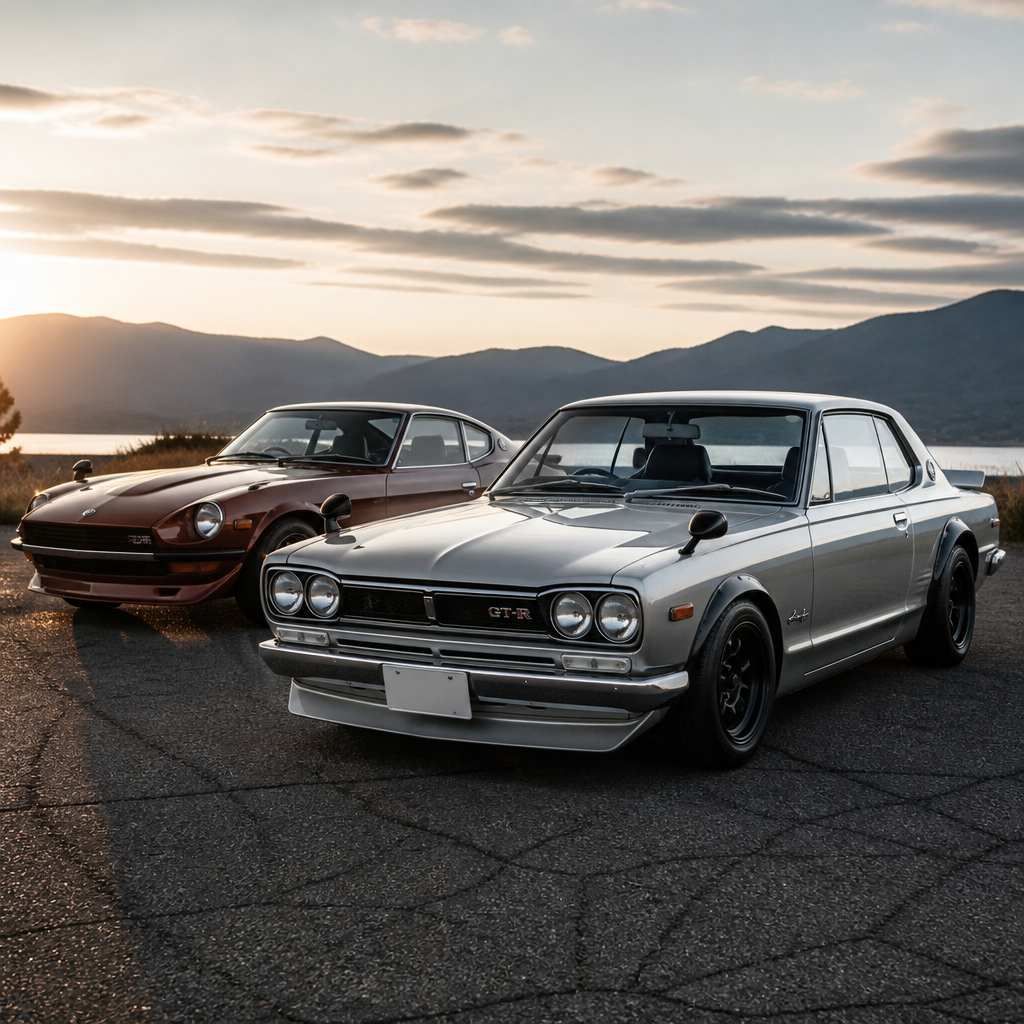
No discussion of Datsun and Nissan classics is complete without the Skyline GT-R. The earliest GT-R models established the formula that later generations would amplify: motorsport-bred engineering, high-revving performance, and a reputation built on domination rather than marketing alone. The first Skyline GT-R, the PGC10, appeared in 1969 and is now widely known by the nickname “Hakosuka,” derived from Japanese words suggesting a boxy Skyline. Powered by the S20 2.0-liter DOHC inline-six, an engine influenced by Prince Motor Company racing development, it was an advanced machine for its era.
The Hakosuka GT-R mattered because it translated racing technology into a road-going sedan and coupe platform. It collected a long streak of touring-car victories in Japan, and those wins permanently linked the GT-R name to competition success. Its significance goes beyond rarity. The car represented a domestic manufacturer proving that a Japanese performance model could be technically sophisticated, durable under stress, and culturally aspirational. That combination is why prices for authentic GT-R variants now sit far above ordinary period Skylines.
The follow-up KPGC110 GT-R, nicknamed “Kenmeri,” arrived in the early 1970s and has an almost mythical status because production was extremely limited. Emissions rules, fuel concerns, and changing market conditions cut its story short. Yet that brevity increased its aura. For enthusiasts exploring Japanese classics, the lesson is clear: Nissan’s reputation was not built solely on later turbocharged cars. It was built decades earlier by naturally aspirated machines that earned respect through engineering and racing results.
Bluebird, Sunny, and Laurel: The Sedans That Made Enthusiast Culture Practical
Sports cars attract headlines, but sedans and compact family cars built the larger enthusiast base. The Datsun Bluebird, especially performance-oriented SSS variants, gave buyers a practical platform with genuine motorsport potential. In rallying and circuit use, Bluebirds demonstrated toughness and composure, helping establish Nissan’s credibility in environments where durability mattered as much as peak output. Their simple, well-understood mechanical layouts still make them appealing classics for owners who prefer analog driving and straightforward maintenance.
The Datsun Sunny played a similar role at a smaller scale. Lightweight, affordable, and eager to be tuned, the Sunny became a favorite in club motorsport and grassroots modification. Early B-series Sunnys proved that Japanese classics were not only for collectors with large budgets. They offered rear-wheel-drive balance, compact dimensions, and engines that responded well to carburetion, camshaft, and suspension upgrades. In many countries, these cars introduced young enthusiasts to racing, fabrication, and the culture of improving a modest platform into something memorable.
Then there is the Laurel, often overshadowed by the Skyline but important in understanding Nissan’s range. The Laurel blended comfort and six-cylinder refinement with rear-wheel-drive dynamics, and in some markets or later enthusiast circles it became a sleeper choice. As a hub topic, this matters because Japanese classics are not just halo models. They include the cars that carried technology, trained mechanics, supplied parts interchangeability, and nurtured communities. Without Bluebirds, Sunnys, and Laurels, Nissan’s famous sports and GT cars would have stood on a much weaker foundation.
Silvia, Gazelle, and the Rise of Lightweight Rear-Wheel-Drive Performance
The Silvia line is indispensable in any broad overview of Japanese classics because it connects Nissan’s early specialty-car ambitions to the later explosion of tuning culture. The CSP311 Silvia of the 1960s was hand-built, rare, and stylistically distinct, signaling that Nissan could produce a boutique coupe with genuine design flair. Although production numbers were low, the model established the Silvia name as something more focused and aspirational than basic transportation.
Later Silvia and Gazelle generations, especially the S10 through S12 eras, carried that identity forward in more attainable form. These cars mattered because they preserved the front-engine, rear-wheel-drive coupe formula at a time when many manufacturers were shifting priorities. They offered a clear path for modification: suspension tuning, wheel fitment, improved carburetion or fuel delivery, and eventually turbocharged experimentation in later years. For enthusiasts today, classic Silvias occupy a key middle ground between the earliest Datsun era and the modern drift-associated S13, S14, and S15 lineage.
| Model family | Why it matters | Typical enthusiast appeal today |
|---|---|---|
| Fairlady Roadster | Established Nissan sports-car credibility before the Z | Vintage open-top driving, period competition history |
| S30 Z | Global breakthrough sports car with strong value and performance | Restoration, touring, restomod, vintage racing |
| Skyline GT-R | Created Nissan’s racing-led performance halo | High-end collecting, historical significance |
| Bluebird/Sunny | Made motorsport and tuning accessible to ordinary buyers | Grassroots builds, classic rally, affordable entry points |
| Silvia | Bridged classic coupes and later tuning culture | Lightweight rear-wheel-drive customization |
From an ownership perspective, early Silvia models reward buyers who appreciate chassis feel over outright power. They also illustrate a broader truth about Japanese classics: a car does not need huge production numbers or headline horsepower to be historically important. Sometimes the lasting influence comes from preserving a layout, a design language, or a tuning template that later generations expand.
Engineering Traits That Turned Datsun and Nissan Models into Legends
Several engineering choices explain why these cars still drive well and remain relevant. First, Nissan invested early in overhead-cam engine development, most famously with units such as the S20 and the L-series family. The L-series inline-four and inline-six engines became beloved because they were sturdy, easy to service, and flexible across different applications. An L24 or L28 can handle regular road use, spirited driving, and sensible modifications without becoming temperamental. That serviceability is a major reason the Z remains such a practical classic.
Second, rear-wheel drive gave many Nissan classics their balance and adaptability. Owners could tune suspension geometry, differential choice, spring rates, and tire setup in predictable ways. Third, Nissan often combined performance with parts commonality. That made repairs easier in period and still helps restorers now. Carburetors, trim pieces, gearbox parts, and brake components can still be sourced through specialists, club networks, and reproduction suppliers, though availability varies sharply by model and region.
Finally, motorsport was not cosmetic. Nissan’s race and rally programs influenced how these cars were engineered and marketed. Whether through homologation thinking, durability testing, or lessons learned under competition loads, many classics from the brand feel purpose-built rather than merely styled to look sporty. That authenticity is why collectors continue to prize them.
Collecting, Restoring, and Buying Japanese Classics Today
Buying a Datsun or Nissan classic today requires discipline because popularity has increased values, attracted imports, and created a wide spread between excellent cars and expensive problems. Rust is the first concern on nearly every model. On S30 Z cars, inspect frame rails, floors, battery tray areas, doglegs, hatch surrounds, and lower fenders. On sedans and coupes from the same era, check suspension pickup points, rocker panels, trunk floors, and previous repair quality. Rust hidden under undercoating or filler will erase any bargain quickly.
Originality matters, but context matters more. A numbers-matching, correctly trimmed car generally commands a premium, especially for rare variants like GT-Rs or early Zs. However, well-executed period-style modifications can still make sense if they are documented and reversible. I usually advise buyers to prioritize structural integrity, complete trim, and honest history over shiny paint. Mechanical work is often easier than replacing model-specific brightwork, interior plastics, or unobtainable emblems.
Use factory service manuals, marque specialists, owners’ clubs, and known vendors when evaluating a purchase. Compression tests, carburetor synchronization checks, cooling-system inspection, and verification of VIN or chassis numbers are basic due diligence. The reward for careful buying is substantial: Japanese classics from Datsun and Nissan deliver analog character, strong club support, and a direct connection to the origins of modern performance culture. If you are exploring the wider world of Japanese classics, start here, then follow each model family in depth, compare generations, and learn which era best matches your budget, skills, and goals.
Frequently Asked Questions
What makes Datsun and Nissan classics so important to the birth of JDM culture?
Datsun and Nissan classics are considered central to the birth of JDM culture because they helped establish the reputation of Japanese cars as more than just economical transportation. During the 1960s, 1970s, and early 1980s, these models showed the world that a Japanese manufacturer could build cars that were dependable, affordable to own, and still full of personality. That combination mattered enormously. It created a generation of enthusiasts who realized that performance did not have to come only from Europe or America. Cars like the Datsun 240Z, Skyline GT variants, Bluebird SSS, and early Silvia models proved that Japanese engineering could be stylish, technically interesting, and rewarding on the road and track.
They also shaped the values that still define JDM enthusiasm today: balanced handling, high-revving engines, tunability, motorsport influence, and a willingness to innovate within practical limits. In other words, these cars were not legends simply because they were old; they were legends because they changed expectations. Datsun and Nissan helped create a performance identity rooted in smart engineering and accessible excitement. That identity became one of the foundations of global JDM culture, influencing collectors, tuners, racers, and historians alike.
Which Datsun and Nissan classic models are most often considered true JDM legends?
Several models stand out repeatedly whenever enthusiasts discuss the earliest Datsun and Nissan legends. The Datsun 240Z is often at the top of the list because it combined sleek styling, strong straight-six performance, reliability, and relative affordability in a package that appealed to both everyday drivers and serious enthusiasts. It gave Nissan international credibility in the sports car market and remains one of the clearest symbols of Japanese performance coming of age.
The Nissan Skyline lineage is equally important, especially GT and GT-R-related heritage from the earlier generations. Long before later R32, R33, and R34 models became icons, the Skyline had already built a reputation through touring car success, advanced engineering, and a distinctly performance-focused identity. The Hakosuka Skyline GT-R in particular is revered because it linked road car appeal with competitive dominance, helping define what a Japanese performance flagship could be.
Other important names include the Datsun 510, prized for its lightweight chassis, tuning potential, and motorsport success; the Bluebird SSS, which strengthened Nissan’s sporting sedan image; and early Silvia and Fairlady models, which showcased the company’s evolving design language and engineering ambition. Together, these cars cover different corners of enthusiast culture—sports cars, sedans, coupes, and race-inspired road cars—but they all contributed to the same larger story: Nissan and Datsun built classics that earned respect through capability, not hype alone.
Why did these Japanese classics gain such a strong following outside Japan?
Datsun and Nissan classics gained international traction because they arrived at the right time with the right strengths. In many export markets, buyers wanted cars that were fuel-efficient, reliable, and reasonably priced, but they also wanted something engaging to drive. Datsun and Nissan delivered exactly that. Their cars often offered overhead-cam engines, sharp handling, solid build quality, and easier maintenance than many competitors. For enthusiasts, this meant they could own a car with genuine sporting character without the cost or fragility often associated with European performance cars of the same era.
There was also a cultural shift taking place. As Japanese automakers proved themselves in everyday transportation, enthusiasts began to look more closely at the performance side of the industry. Motorsport success, especially in rallying, touring cars, and endurance competition, gave these models credibility. Once drivers experienced how well cars like the 510 or 240Z performed in real-world conditions, word spread quickly. Over time, the combination of durability, racing pedigree, and mechanical simplicity made them ideal enthusiast cars in North America, Australia, and beyond.
Another key factor is that many of these classics aged well in reputation. They became known as approachable collector cars with strong parts support, active owner communities, and clear historical significance. That made them easier to preserve and celebrate globally. As the broader JDM movement grew in the 1990s and 2000s, earlier Datsun and Nissan classics were re-evaluated not just as old imports, but as the original building blocks of Japanese performance culture.
How did motorsport help turn Datsun and Nissan classics into legends?
Motorsport was one of the most powerful forces behind the legendary status of Datsun and Nissan classics because it gave tangible proof that these cars were not just well-marketed road vehicles—they were genuinely capable machines. Racing and rallying have always been credibility tests for performance cars, and Nissan used competition to demonstrate engineering excellence. When models related to the Skyline, Bluebird, and Z-car families succeeded in competition, that success elevated the image of the road-going versions and gave enthusiasts something concrete to admire and emulate.
The Skyline GT-R’s early touring car dominance is a perfect example. Those victories helped establish the Skyline as a serious performance nameplate long before the later generations became global icons. Likewise, the Datsun 510 earned enormous respect through motorsport because its lightweight construction, balanced chassis, and tunable engine made it highly effective in racing environments. The 240Z also built an impressive competition résumé, particularly in rally and endurance events, reinforcing the idea that Japanese sports cars could be fast, durable, and versatile.
Motorsport also shaped enthusiast behavior. It encouraged modifications, suspension tuning, engine development, and a deeper appreciation for chassis balance and reliability. Fans did not just admire these cars from a distance; they learned from the race cars and applied those lessons to street builds. That connection between competition and customization became a defining trait of JDM culture. In that sense, motorsport did not simply make Datsun and Nissan classics famous—it helped create the enthusiast mindset that still surrounds them.
Why are Datsun and Nissan classics still so desirable to collectors and JDM enthusiasts today?
These classics remain desirable because they combine historical importance with an experience that still feels engaging by modern standards. They represent a formative era when Japanese manufacturers were defining their performance identity, and Nissan was one of the brands leading that transformation. For collectors, that gives the cars real narrative value. Owning a 240Z, 510, early Skyline, or classic Fairlady is not just about owning an old car; it is about owning a piece of the story that helped Japanese performance gain global legitimacy.
From a driving perspective, these cars also continue to appeal because they are analog, mechanical, and communicative. Many enthusiasts appreciate the lighter weight, simpler engineering, and direct steering feel that older performance cars offer. You can often see the design logic in the hardware, understand the way the chassis behaves, and feel the connection between driver input and vehicle response without electronic filtering. That purity is a major part of their charm.
Finally, desirability is reinforced by culture and scarcity. As more people learn the history of JDM and the roots of Japanese collector car enthusiasm, the earliest influential models naturally receive more attention. Well-preserved examples are becoming harder to find, while restored and tastefully modified cars continue to rise in status. Strong aftermarket support, passionate clubs, and abundant historical interest keep them relevant. For many enthusiasts, Datsun and Nissan classics are not simply nostalgic objects—they are the original blueprint for what JDM performance came to mean.