Italian classic cars occupy a unique place in automotive history because they combine engineering ambition, racing pedigree, and styling that still shapes how enthusiasts define beauty on four wheels. When people talk about European classics, Italian machines sit at the emotional center of the conversation, from tiny city cars that mobilized a nation to grand touring coupes that became rolling sculpture. I have spent years around restorers, collectors, auction catalogs, and club events, and the same pattern repeats: even people who usually prefer German precision or British character stop and stare when an Alfa Romeo, Ferrari, Lancia, Fiat, Lamborghini, or Maserati arrives. The appeal is not accidental. Italy produced cars that solved practical transportation needs after the war, dominated motorsport, and elevated coachbuilding into an art form.
A classic car usually refers to a vehicle valued for historical significance, design, rarity, engineering, or cultural impact, often from the 1950s through the 1980s. In the Italian context, a true classic is rarely just old. It represents a distinct idea. Some models matter because they democratized mobility, like the Fiat 500. Others matter because they reset performance standards, like the Lamborghini Miura. Still others earned their place through competition success, such as the Lancia Stratos or Alfa Romeo Giulia Sprint GTA. Understanding the best Italian classic cars therefore means looking beyond auction prices and horsepower figures. You have to assess how each model changed the market, influenced later designs, and remains usable, collectible, or historically important today.
This hub article covers the essential Italian classics within the broader European classics landscape and gives you a practical framework for evaluating them. If you are building out a reading list on classic car models and brands, these are the cars that anchor the category. They span microcars, sports cars, homologation specials, luxury tourers, and race-bred exotics. They also illustrate recurring Italian strengths: jewel-like engines, lightweight construction, adventurous chassis design, and bodywork from Pininfarina, Bertone, Zagato, Touring, and Gandini. Just as important, they reveal the tradeoffs every buyer should understand. Italian classics can be sublime to drive and own, but parts supply, rust, maintenance costs, and originality standards vary dramatically by model. The best cars are not always the most expensive ones. The most rewarding ownership experiences usually come from choosing a car whose engineering, support network, and intended use match your budget and expectations.
What makes an Italian classic car great
The best Italian classic cars share four traits: design distinction, mechanical character, historical relevance, and a strong specialist support ecosystem. Design distinction is obvious in cars like the Ferrari 250 GT Lusso or Alfa Romeo Spider, but it matters equally on humble cars such as the Fiat 124 Spider, whose clean Pininfarina lines aged better than many richer rivals. Mechanical character is the sense that the car has a personality you can feel through its controls. Twin-cam Alfa engines, Ferrari Colombo V12s, Lampredi-designed Fiat motors, Lamborghini V12s, and Lancia narrow-angle or V4 powerplants each deliver a specific texture, sound, and response.
Historical relevance matters because classic value is often tied to a model’s role in a larger story. The Fiat 500 helped put postwar Italy on wheels. The Lancia Aurelia pioneered the production V6 and transaxle layout. The Miura established the mid-engine supercar template. The Stratos proved that a purpose-built rally car could dominate the World Rally Championship. A strong support ecosystem matters because cars survive when owners can source parts, documentation, and expert labor. Alfa Romeo and Fiat enjoy broad club networks. Ferrari and Lamborghini have factory heritage programs and top-tier specialists. Lancia support can be excellent for major models, but availability depends more heavily on the specific car and region.
In practical terms, greatness also depends on how a car drives now. Some museum-worthy machines disappoint on modern roads, while others feel timeless. The Alfa Romeo Giulia Sprint GT and GTV remain benchmarks because their steering, visibility, pedal placement, and rev-happy twin-cam engines still engage without requiring race-driver commitment. The Fiat 500 remains charming because its tiny footprint and simple controls make any short trip memorable. A top-tier Italian classic does more than look beautiful in a garage. It creates a convincing driving experience decades after launch.
The foundational icons every enthusiast should know
If you want a shortlist of Italian classics that define the category, start with the Fiat 500, Alfa Romeo Spider, Lancia Aurelia B20 GT, Ferrari 250 series, Lamborghini Miura, Maserati Ghibli, and Fiat 124 Spider. Each represents a different branch of Italian automotive excellence. The Fiat 500, launched in 1957, used minimal dimensions and air-cooled simplicity to deliver affordable urban mobility. It was not fast, but it became a cultural landmark and remains one of the most recognizable classic city cars in Europe.
The Alfa Romeo Spider, especially the Duetto and later 105/115-series cars, distilled accessible Italian sports car ownership. With twin-cam four-cylinder power, rear-wheel drive, and elegant Pininfarina styling, it offered more sophistication than many contemporaries. The Lancia Aurelia B20 GT, introduced in the early 1950s, is essential because it combined advanced engineering with grand touring usability. Its V6 engine, rear transaxle, and balanced handling influenced later GT thinking across Europe.
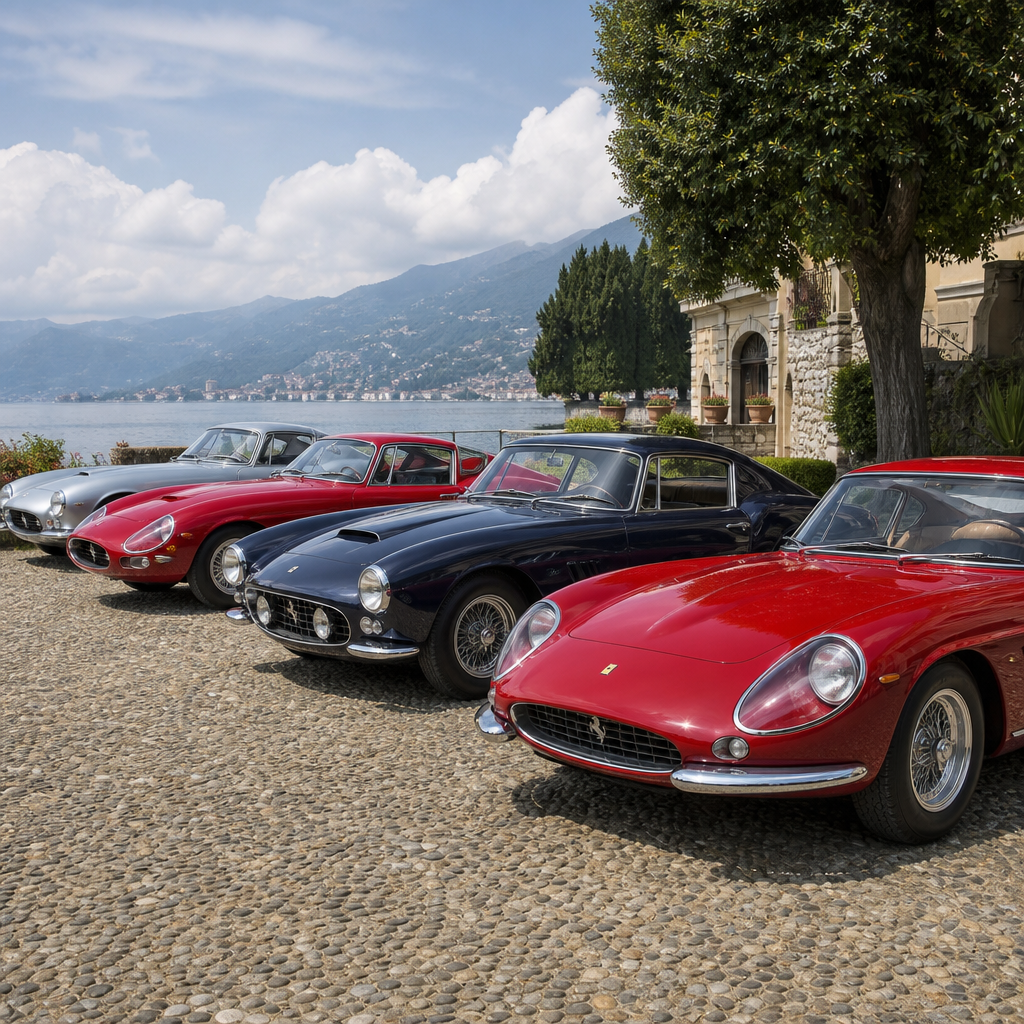
Ferrari’s 250 family, including the 250 GT Berlinetta and 250 GT Lusso, turned racing-bred V12 engineering into road-going legend. These cars sit at the top of most collectors’ wish lists not only because they are rare, but because they deliver proportion, sound, and craftsmanship at an almost unmatched level. The Lamborghini Miura changed the visual and technical language of performance cars in 1966 by placing a transverse V12 behind the seats. It was dramatic, difficult, hot, noisy, and absolutely transformative. Maserati’s Ghibli offered a different solution: front-engine V8 grand touring with low-slung Giugiaro styling and long-distance capability. The Fiat 124 Spider rounded out the group by proving that Italian style and enjoyable handling could be sold at scale, particularly in the American market.
Sports cars and grand tourers that defined the Italian formula
Italian sports cars and GTs mattered because they made speed feel theatrical. Alfa Romeo, Ferrari, Maserati, Fiat, and Lancia all approached that brief differently. Alfa focused on balance and accessible performance. The Giulia Sprint GT, designed by Giorgetto Giugiaro at Bertone, packaged a lively twin-cam engine in a compact coupe with excellent visibility and low weight. In road trim it was brisk; in GTA form, with aluminum body panels and racing development from Autodelta, it became one of the great touring car weapons of the 1960s.
Ferrari built the most aspirational grand tourers of the era by pairing V12 engines with coachbuilt bodies from Pininfarina and Scaglietti. The 275 GTB improved upon earlier 250-series road manners with independent rear suspension and a transaxle. That combination made the car more usable at speed and remains a reason many experienced collectors regard it as one of Ferrari’s most complete front-engine classics. Maserati often emphasized effortless pace. The 3500 GT helped the brand transition from racing specialist to road-car manufacturer, while the later Ghibli delivered high-speed touring with dramatic proportions and robust V8 torque.
Fiat and Lancia filled important middle ground. The Fiat Dino, using Ferrari-designed V6 power, brought exotic character to a broader audience. The Lancia Fulvia Coupe demonstrated how a front-wheel-drive layout could still feel precise and sporting when paired with low weight and a narrow-angle V4. In HF form, the Fulvia became a rally star before the Stratos took over. These cars show that the Italian formula was never just about outright speed. It was about mechanical identity, coachbuilt aesthetics, and a cabin ambience that made every drive feel deliberate.
Racing and rally legends that earned road-going immortality
Italian classic cars gained credibility on circuits and special stages, then carried that aura into showrooms. Few road cars benefit from motorsport relevance more than the Lancia Stratos. Developed specifically for rallying and powered by a Ferrari Dino V6, the Stratos won the World Rally Championship for manufacturers in 1974, 1975, and 1976. Its short wheelbase, wedge shape, and purpose-built packaging make it one of the clearest examples of homologation engineering in any country. It looks extreme because it was engineered for a specific task, not because a stylist chased drama for its own sake.
Alfa Romeo’s Giulia Sprint GTA is another essential case. Autodelta transformed the standard coupe into a lightweight competition machine with aluminum panels, revised suspension geometry, magnesium components on some cars, and highly developed twin-cam engines. On track, the GTA became a touring car giant. On the road, it translated that pedigree into one of the sharpest classic driving experiences available. Ferrari road cars also drew directly from competition know-how. Models such as the 250 GT SWB and 365 GTB/4 Daytona were not racing cars with license plates, but their engines, braking capability, and high-speed composure reflected a brand built around endurance racing.
| Model | Era | Why It Matters | Best Known For |
|---|---|---|---|
| Fiat 500 | 1957-1975 | Mass mobility icon | Affordable Italian design |
| Lancia Aurelia B20 GT | 1951-1958 | Advanced GT engineering | Production V6 and transaxle |
| Alfa Romeo Giulia Sprint GTA | 1965-1971 | Lightweight homologation legend | Touring car success |
| Lamborghini Miura | 1966-1973 | Defined the supercar layout | Mid-engine V12 drama |
| Lancia Stratos | 1973-1978 | Purpose-built rally champion | WRC dominance |
The lesson from these cars is practical as well as romantic. Motorsport history tends to support long-term collector demand, but it also increases scrutiny. Provenance, matching numbers, body authenticity, period competition history, and correct mechanical specification matter far more on race-linked models than on mainstream classics. Buyers stepping into this end of the market need marque experts, factory records where available, and inspection specialists who understand what originality should look like on each series.
Italian design houses and engineering breakthroughs
No discussion of the best Italian classic cars is complete without the studios and engineers behind them. Pininfarina shaped the identity of Ferrari road cars for decades and also gave elegance to accessible models like the Alfa Spider and Fiat 124 Spider. Bertone, through designers including Marcello Gandini and Giorgetto Giugiaro, produced some of the boldest forms in automotive history, from the Lamborghini Miura to the Alfa Giulia Sprint GT. Zagato specialized in lightweight, aerodynamic bodies and created some of Alfa Romeo’s most collectible limited-production variants. Touring’s Superleggera method influenced coachbuilding by combining light alloy panels with a tubular framework.
Engineering innovation was equally important. Vittorio Jano’s work at Alfa Romeo set standards for twin-cam performance engines long before they became common. Lancia repeatedly took technical risks, introducing the first production V6 in the Aurelia and later applying advanced thinking to chassis layout and packaging. Ferrari’s Gioachino Colombo developed V12 architecture that became foundational to the brand’s identity. Giotto Bizzarrini contributed to Ferrari performance development and later influenced other high-performance projects. Lamborghini, initially the upstart, turned ambitious engineering into a market differentiator by committing to multi-cylinder performance and unconventional layouts.
These breakthroughs explain why Italian classics matter beyond nostalgia. They moved the industry forward. The impact can be traced through later European cars, Japanese sports cars, and modern supercars that adopted ideas first proven in Italy. When collectors pay a premium for an Aurelia, Miura, or 275 GTB, they are not simply buying beauty. They are buying a chapter of engineering history.
What to buy, what to inspect, and where this hub leads next
For buyers entering Italian classics today, the smartest approach is to align the car with your use case. If you want approachable ownership, the Fiat 124 Spider, Alfa Romeo Spider, and Fiat 500 offer strong parts support, active clubs, and manageable running costs. If your priority is driving engagement, the Alfa Giulia coupe range, Fulvia Coupe, and early Porsche-rival GTs from Italy often deliver more feel than raw speed. If you are building a serious collection, the Aurelia B20, Ferrari 250 or 275 variants, Maserati Ghibli, Miura, and Stratos are cornerstone models, but each demands expert due diligence.
Inspection priorities are consistent across the category. Rust is usually the first threat, especially on Fiat, Alfa Romeo, and Lancia cars from the 1960s and 1970s. Poor past restorations are often more dangerous than honest wear, because filler, incorrect welding, and hidden corrosion can turn a beautiful car into an expensive liability. Mechanical condition matters, but engines and gearboxes are usually easier to rebuild than a badly repaired shell. Verify chassis numbers, engine stamps, trim correctness, and known series-specific details. On Ferraris and Lamborghinis, documentation quality and specialist service history can change values dramatically. On rally and homologation cars, provenance is central.
This European classics hub naturally leads into deeper articles on Alfa Romeo coupes, Ferrari grand tourers, Lamborghini icons, Lancia rally legends, Fiat roadsters, and Maserati GTs. The key takeaway is simple: the best Italian classic cars ever made are not united by one body style or price bracket. They are united by clarity of purpose. Italy built cars that made commuting charming, racing heroic, and touring unforgettable. Start with the models here, study the marque-specific guides that follow, and choose the car whose engineering story still speaks to you. That is how the right Italian classic becomes more than a collectible. It becomes the car you never stop wanting to drive.
Frequently Asked Questions
What makes Italian classic cars so special compared with other European classics?
Italian classic cars stand apart because they rarely separate performance, design, and emotion into different categories. In many other automotive traditions, a car might be admired mainly for engineering, durability, luxury, or racing success. The best Italian classics tend to deliver all of those qualities at once, but with a dramatic flair that makes them memorable even to people who are not dedicated enthusiasts. From the curves of a Ferrari 250 GT to the compact ingenuity of the Fiat 500, Italian cars often feel like cultural statements as much as machines.
A major reason for that distinction is Italy’s deep connection between coachbuilding, motorsport, and industrial design. Legendary names such as Pininfarina, Bertone, Zagato, Touring, and Ghia did not simply style bodies; they helped define the visual language of entire eras. At the same time, brands like Ferrari, Alfa Romeo, Lancia, Maserati, and Fiat built reputations in racing, innovation, and public mobility. That means many of the most admired Italian classics are not beautiful by accident. Their proportions, details, and mechanical character often grew out of serious engineering ambition and competition experience.
There is also a uniquely human quality to Italian classics. They can be temperamental, charismatic, delicate, bold, and occasionally impractical, but those traits are often part of the appeal. Collectors and restorers value them not only because they are historically important, but because they create an emotional connection that is difficult to quantify. The steering feel, the sound of a twin-cam engine, the sightline across a sculpted hood, or the way sunlight catches an elegantly simple fender line can leave a stronger impression than raw specification numbers ever could. That emotional center is exactly why Italian classic cars remain so influential in both collecting circles and broader automotive culture.
Which Italian classic cars are usually considered the best ever made?
The answer depends on whether someone values racing pedigree, styling, technical innovation, cultural significance, or collectibility, but a few models appear again and again in any serious discussion. The Ferrari 250 series, especially the 250 GT and 250 GTO, is often treated as the gold standard because it combines V12 performance, motorsport dominance, rarity, and some of the most admired bodywork ever produced. Alfa Romeo’s 8C and later Giulietta and Giulia variants are also crucial because they helped establish the brand’s image as a builder of refined, sporting road cars with strong competition credentials.
Maserati deserves a place in the conversation with models such as the A6GCS, 3500 GT, and Ghibli, all of which reflect the company’s ability to balance elegance and speed. Lancia’s best classics, including the Aurelia, Fulvia, and Stratos, represent a different kind of brilliance. The Aurelia introduced groundbreaking engineering ideas like the production V6 and transaxle layout, while the Fulvia and Stratos reinforced Lancia’s rally reputation. Lamborghini, although younger than some of its rivals, secured an undeniable place in classic car history with the Miura, a model many enthusiasts view as the first true modern supercar because of its mid-engine layout and astonishing visual drama.
It is equally important not to overlook smaller and more accessible icons. The Fiat 500 and Fiat 600 transformed personal mobility in postwar Italy and became symbols of economic and social change. The Autobianchi A112, Alfa Romeo Spider, and Lancia Delta Integrale also carry huge historical and enthusiast appeal depending on the era being considered. In short, the “best” Italian classics are not limited to six-figure grand tourers and exotic supercars. The list includes tiny city cars, race-bred coupes, and everyday sports sedans that together tell the full story of Italy’s automotive genius.
Are Italian classic cars good investments, or should they be bought purely for passion?
Italian classic cars can be strong investments, but they should never be approached as guaranteed financial instruments. The top tier of the market has produced spectacular auction results for rare Ferraris, important Alfa Romeos, select Maseratis, and historically significant coachbuilt examples. Cars with documented provenance, matching numbers, notable competition history, original coachwork, and expert restoration tend to attract the strongest values. In that part of the market, Italian classics can perform very well because demand is global and the supply of truly exceptional examples is extremely limited.
That said, the broader market is much more nuanced. Restoration costs on Italian classics can be high, parts availability varies widely, and the wrong purchase can quickly erase any expectation of profit. A car that looks inexpensive at first glance may require major body, trim, or mechanical work, particularly if it has corrosion, undocumented modifications, or incomplete original components. Buyers also need to understand that value often depends on specifics such as engine type, body style, production year, coachbuilder, and ownership history. Two examples of the same model can have dramatically different market outcomes.
The most experienced collectors usually advise buying the best example you can afford and choosing a model you would enjoy owning even if the market stayed flat. That is especially true with Italian classics because much of their reward comes from the ownership experience itself: the sound, design, heritage, and social connection through clubs, rallies, and concours events. If the car appreciates, that is a welcome bonus. If it does not, a well-bought and well-maintained Italian classic can still return tremendous value in the form of enjoyment, identity, and participation in automotive history. Passion should lead the decision, with investment discipline close behind.
What should buyers look for when choosing an Italian classic car?
The first thing to evaluate is originality and documentation. Service records, restoration invoices, ownership history, factory build details, and authenticity certificates can make a major difference in both confidence and value. On important Italian classics, buyers should verify whether the engine, gearbox, chassis, and body are original or period-correct, and whether the car retains its proper colors, trim, and significant components. Paperwork matters because these cars often have long, complex histories, and the market places a premium on examples that can be clearly traced and accurately described.
Condition is the next major factor, and with Italian classics, bodywork deserves especially close attention. Rust can be a serious issue on many postwar models, and poor prior repairs may be hidden beneath paint or filler. Panel fit, underbody integrity, floor condition, jacking points, suspension mounts, and evidence of accident damage should all be carefully inspected. Mechanical condition is equally important, but many buyers underestimate the cost and complexity of sourcing correct trim, gauges, lights, interior materials, badges, and coachbuilt details. Cosmetic completeness can be just as important as engine health on a proper restoration candidate.
It is also wise to think realistically about use and support. Some Italian classics are surprisingly manageable for regular enjoyment, while others are better suited to occasional drives, events, or collection display. A Fiat 500, Alfa Romeo Spider, or later Giulia may be easier to maintain and enjoy than a highly strung V12 grand tourer or a rare hand-built coupe with scarce parts. Before buying, it helps to speak with marque specialists, restorers, owners’ clubs, and independent experts who know the specific model well. A professional pre-purchase inspection is not optional on a serious classic; it is one of the smartest investments a buyer can make.
Why do models like the Ferrari 250, Lamborghini Miura, Alfa Romeo Giulia, and Fiat 500 remain so influential today?
These models endure because each one shaped a different part of automotive history in a way that still feels relevant. The Ferrari 250 series represents the ideal fusion of racing success, road-going refinement, and timeless design. It set a benchmark for what a grand touring car could be and helped establish Ferrari not just as a competition brand, but as a maker of some of the most desirable automobiles in the world. Its influence continues in the way collectors, designers, and manufacturers think about proportion, purity, and mechanical elegance.
The Lamborghini Miura changed the visual and conceptual future of high-performance cars. Its mid-engine layout, low stance, and exotic presence created the template for the supercar as people now understand it. Even decades later, modern halo cars still echo the Miura’s basic promise: radical packaging, dramatic styling, and emotional excess. The Alfa Romeo Giulia, especially in its sporting forms, remains influential for a different reason. It proved that a practical sedan could also be sharp, advanced, and genuinely exciting to drive. Its balance, twin-cam character, and clean styling helped define the sports sedan formula long before that category became crowded.
The Fiat 500 may seem like an outlier among such glamorous company, but its significance is enormous. It democratized mobility, became a symbol of postwar optimism, and showed that great design does not require size or extravagance. Its simplicity, personality, and urban practicality still resonate today, especially in a world newly interested in compact efficiency and iconic design. Taken together, these cars show why Italian classics remain so influential: they were not merely successful products of their time. They introduced ideas, aesthetics, and emotional standards that continue to shape how the world thinks about cars.