
How to protect tires during storage is a question every classic car owner eventually faces, usually after seeing a once-supple sidewall turn gray, hard, and cracked while a car sat untouched for one winter too many. In classic car ownership, storage and preservation are not cosmetic concerns; they determine whether original parts survive, whether the car drives safely, and whether expensive replacements can be postponed for years instead of months. Tires are especially vulnerable because they carry weight, react to temperature swings, absorb ultraviolet light, and age chemically even when the vehicle never leaves the garage.
When I prepare collector cars for seasonal layup, I treat tires as both structural components and perishable materials. That distinction matters. A tire can look acceptable from ten feet away yet be weakened by ozone exposure, flat-spotting, internal cord stress, or contamination from petroleum-based products on the floor. Storage, in practical terms, means any period when the car or spare tires are not being driven regularly, from a two-week shop stay to a six-month winter hibernation or a multi-year restoration pause. Preservation means controlling the conditions that accelerate degradation: load, heat, sunlight, oxygen, ozone, moisture, and neglect.
For classic cars, the stakes are higher than with daily drivers. Many collector vehicles run period-correct bias-ply tires, specialty whitewalls, or low-volume reproduction radials that are expensive and sometimes backordered. Original date-coded tires may carry historic value but are not always roadworthy, so owners must decide whether they are preserving a display artifact or maintaining a tire intended for use. Understanding that difference helps you choose the right storage method, inspection routine, and replacement timeline. This storage and preservation hub explains how to protect mounted tires, loose tires, and spares with practical methods that reduce cracking, deformation, and premature aging.
The good news is that tire storage is not mysterious. If you clean tires correctly, stabilize inflation, reduce weight stress, shield them from ultraviolet light and ozone, and inspect them on a schedule, you eliminate most avoidable damage. The details matter, though, and shortcuts often backfire. Tire shine products with silicone solvents can stain rubber. Bare concrete can transfer moisture and temperature fluctuations. Overinflation during storage can distort a casing as easily as underinflation can cause flat spotting. A well-preserved storage environment is controlled, dark, clean, and cool, but not freezing, and every step should support that environment.
Why tires deteriorate in storage
Tires age because rubber compounds continuously change over time. Oxygen slowly reacts with the polymers in the rubber, ultraviolet radiation breaks molecular bonds on exposed surfaces, and ozone attacks sidewalls and creates the fine checking often mistaken for harmless cosmetic aging. Heat accelerates all of those processes. According to the basic chemistry behind the Arrhenius principle, reaction rates increase significantly with temperature, which is why a hot attic, metal shed, or sunlit carport can age a tire far faster than a climate-stable garage. In practical terms, every avoidable heat source shortens useful life.
Mechanical stress matters just as much as chemistry. A stationary car concentrates weight on one section of each tire, compressing the contact patch and encouraging temporary or permanent flat spots. Radial tires often recover after driving, but long storage on underinflated tires can leave vibration that never fully disappears. Bias-ply tires are even more prone to taking a set. Floors also affect tire health. Concrete can wick moisture and experience sharp temperature swings, while contaminated surfaces expose rubber to oil, solvents, and battery acid residue. None of those hazards are dramatic in one day, but storage damage is cumulative and usually becomes obvious only after months.
Prepare tires before the car is parked
The best storage protection starts before the ignition key comes out. Wash the tires and wheels with mild soap and water, then rinse and dry them completely. Avoid petroleum-based dressings, harsh degreasers, and bleach cleaners, all of which can extract protective compounds or leave residues that continue reacting during storage. I use a soft brush only if road grime is embedded in white letters or whitewalls. Once clean, inspect the tread and sidewalls for cuts, bulges, punctures, sidewall checking, exposed cords, or uneven wear that suggests an alignment or suspension issue. Storage is the right time to correct those problems, not hide them under covers.
Next, set inflation to the vehicle manufacturer recommendation on the placard or owner literature unless the tire maker specifies a storage adjustment. For most collector cars, adding a few pounds above normal operating pressure can help resist flat spotting, but staying below the maximum sidewall pressure is essential. If the car will sit more than a month, mark the date, pressures, and any observed flaws in a maintenance log. On valuable cars, I also note the DOT code and tire brand because age matters as much as tread depth. Most safety organizations advise extra caution once tires reach six years, and replacement often becomes prudent by ten years regardless of appearance.
Best storage methods for mounted tires
Mounted tires can be stored in three basic ways: carrying normal vehicle weight, supporting part of the load with tire cradles, or removing load with jack stands placed under the suspension or approved lift points. The right method depends on storage duration, tire type, and whether suspension components should remain loaded. For a few weeks, clean floors, correct inflation, and periodic rolling are usually enough. For several months, I prefer curved tire cradles or a slight load reduction because they distribute weight better than a flat floor. For very long storage or restoration work, taking most weight off the tires is the safest option, provided the car is supported correctly.
Do not let a car hang unsupported by the suspension for years without considering bushing and shock geometry. On many classics, supporting the suspension close to normal ride position avoids overextending components while still relieving tire stress. If the car remains on its tires, place a vapor barrier or tire mat beneath each wheel. Commercial products from Race Ramps and similar brands work well, but dense rubber mats or sealed wood platforms are also effective. The key is isolating tires from cold, damp concrete and reducing localized pressure. If space allows, move the car slightly every month, just enough to change the contact patch without scrubbing the tires in place.
How to store loose tires and spares
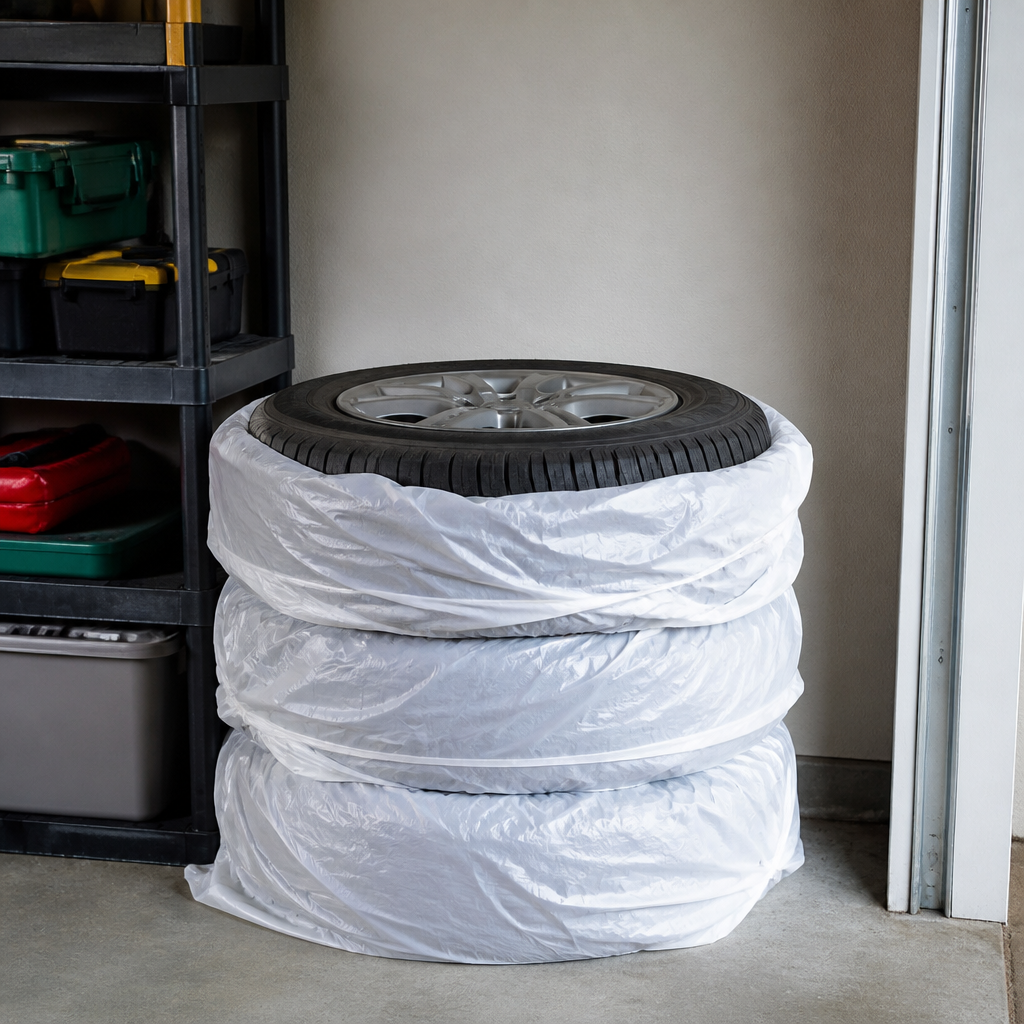
Loose tires and spare tires require a different approach because load distortion is no longer the main concern. Clean and dry them first, then place each tire in an opaque bag or specialized tire tote to reduce oxygen exchange and block light. Some restorers vacuum-seal tires loosely, but the more important step is simply limiting exposure to circulating air and sunlight. Store them in a cool, dry room away from electric motors, furnaces, welders, sump pumps, and compressors, all of which can generate ozone. Basements can work if they stay dry and temperature-stable; outdoor sheds usually do not.
Orientation depends on whether the tire is mounted on a wheel. Unmounted tires should generally stand upright and be rotated slightly every month to prevent distortion. Mounted tire-and-wheel assemblies can be stacked cautiously if the stack is not too high and the wheels are protected from scratching, but upright storage on racks is still better for long periods. Space-saver spares, concours spare assemblies, and narrow bias-ply tires deserve the same climate control as road tires. Owners often neglect trunk spares, yet trunks can trap heat and moisture. If the spare is part of a judged classic, preserve the original while using a separate serviceable tire for road emergencies.
Environmental conditions that preserve rubber best
The ideal storage environment is dark, clean, dry, and consistently cool, typically around 50 to 75 degrees Fahrenheit with moderate humidity. The exact number matters less than stability. Repeated cycles from freezing nights to hot afternoons are harder on rubber than a steady cool room. Direct sunlight is always harmful, and fluorescent lighting can contribute small amounts of ultraviolet exposure over long periods. Ozone sources are a bigger problem than many owners realize. Electric motors, battery chargers, welders, and older furnaces all produce low levels that attack sidewalls, especially when tires sit close to them.
| Storage factor | Best practice | Why it matters |
|---|---|---|
| Light | Keep tires in darkness or under opaque covers | Reduces ultraviolet degradation and fading |
| Temperature | Maintain cool, stable conditions | Slows chemical aging and prevents condensation swings |
| Floor contact | Use mats, cradles, or sealed platforms | Limits moisture transfer and flat-spot stress |
| Air quality | Store away from motors, welders, and chargers | Minimizes ozone cracking on sidewalls |
| Cleanliness | Remove oils, solvents, and road salts before storage | Prevents chemical contamination and staining |
Humidity should be controlled but not obsessively. Extremely damp spaces encourage wheel corrosion, mold on covers, and condensation, while very dry heated rooms can harden old rubber faster than owners expect. If your garage shares space with lawn equipment, paints, or solvents, isolate the tires from those chemicals. Never store tires near fuel cans, kerosene heaters, or ozone-generating air purifiers. Covers should breathe enough to prevent trapped moisture but remain opaque. I avoid thin blue tarps because they can trap condensation and allow light leaks. Purpose-made tire covers or clean cotton sheets over bagged tires work better in most garages.
Inspection schedule and signs a stored tire is no longer safe
Storage does not mean ignore. Inspect tires at least monthly during seasonal layup and before the car returns to the road. Check pressure with a quality gauge, look for sidewall cracks, tread face distortion, bulges, punctures, rodent damage, and any change in color or texture that suggests drying or chemical exposure. Spin lifted wheels if possible and listen for brake drag that could heat one tire in storage. On cars resting on the ground, verify that contact patches are not visibly collapsed. If a cover trapped moisture, dry the tire and wheel immediately and improve ventilation before sealing things back up.
Some warning signs mean the tire should be replaced, not rehabilitated. Deep sidewall cracking, tread separation, exposed cords, recurring pressure loss, severe flat spotting that persists after driving, and vibration developing after storage all justify removal from service. Age alone can be disqualifying on a road car. The Tire Industry Association and many vehicle manufacturers treat six to ten years as the range requiring close review and likely replacement, depending on use and conditions. For classic car owners, the hard truth is simple: originality never outweighs safety. If an original tire belongs with the car historically, preserve it for display and install a modern replacement for driving.
Related storage and preservation priorities for classic cars
Tire care works best when it supports a larger storage and preservation plan. Battery maintenance, fuel stabilization, rodent prevention, paint-safe car covers, controlled ventilation, and moisture management all affect tires indirectly because the same environment that preserves rubber also protects upholstery, chrome, and wiring. This hub should connect to your deeper guides on winterizing a classic car, using jack stands safely, choosing tire cradles, preserving whitewall tires, storing spare wheels, and decoding DOT tire dates. Those topics are separate articles, but they belong together because storage mistakes rarely happen in isolation. Good preservation is a system, not a single product.
The main benefit of proper tire storage is simple: safer driving and longer service life for parts that are costly to replace and easy to damage through inattention. Clean the tires, document their age and condition, control inflation, reduce load stress, block light, avoid ozone, and inspect on a schedule. If the car will sit for months, prepare the storage surface as carefully as you prepare the vehicle itself. If a tire shows age-related decline, retire it without debate. Build these habits into your classic car routine, then use this storage and preservation hub to plan the rest of your preservation work with the same discipline.
Frequently Asked Questions
1. What is the best way to prepare tires before long-term storage?
The best results start with careful preparation before the vehicle is parked. First, wash the tires and wheels with mild soap and water to remove road grime, brake dust, salt, oil, and any chemical residue that can slowly degrade rubber during storage. Avoid harsh petroleum-based cleaners or dressings, especially products that leave a glossy finish, because many of them can dry out the rubber over time rather than protect it. Once cleaned, allow the tires to dry fully so moisture does not remain trapped against the sidewall or bead area.
After cleaning, inspect each tire closely. Look for weather checking, sidewall cracking, bulges, punctures, tread separation, embedded debris, and signs of uneven wear. Storage will not improve an aging tire, so this is the time to identify whether a tire is still worth preserving. Inflate each tire to the vehicle manufacturer’s recommended pressure, or slightly toward the upper end of the normal operating range if the car will sit for an extended period, as long as you do not exceed the tire’s maximum rated pressure. Proper inflation helps the tire maintain its shape and reduces the risk of flat spotting.
If the tires are being removed from the car, label their original positions so they can be rotated intelligently or reinstalled in the same locations later. Finally, protect them from their biggest storage enemies: sunlight, ozone, heat, and moisture. Tire totes, opaque covers, or clean plastic bags can help shield them from air exposure and UV light, but they should be used in a clean, dry, temperature-stable environment. In short, the ideal preparation routine is simple but disciplined: clean, inspect, inflate, label, cover, and store in the right conditions.
2. Should a classic car be stored on its tires, or is it better to take the weight off them?
For many classic car owners, this depends on how long the car will sit and how valuable or delicate the tires are. If the storage period is relatively short, such as a few weeks or a couple of months, keeping the car on properly inflated tires is usually fine. However, for long-term storage, especially over an entire season or longer, reducing the constant load on the tires is often the safer choice. Tires that remain in one position under the full weight of a vehicle can develop flat spots, internal stress, and sidewall fatigue, particularly older bias-ply tires or vintage-style reproductions that may be less tolerant of prolonged compression than modern radials.
One common approach is to place the vehicle on jack stands so the suspension is supported and the tires are either just touching the ground lightly or completely off the ground, depending on the setup. The key is to support the car correctly, using manufacturer-approved lift points or structurally sound suspension areas, so you do not create other preservation problems while trying to protect the tires. If you prefer not to store the vehicle on stands, tire cradles or curved flat-spot-prevention pads are a good compromise. They spread the load more evenly and reduce the sharp contact patch that causes deformation.
If the car must remain on its tires, inflate them properly and move the vehicle slightly every few weeks if possible. Even rolling it a small distance can change the contact patch enough to reduce stress in one area. For prized original tires or expensive specialty replacements, removing them from the vehicle and storing them separately in controlled conditions may be the best option of all. The broader rule is this: the longer the storage period and the more irreplaceable the tire, the more worthwhile it becomes to remove weight and minimize deformation.
3. What storage environment helps prevent tire dry rot and cracking?
The ideal storage environment is cool, dry, dark, and stable. Tires age fastest when they are exposed to heat, ultraviolet light, ozone, and fluctuating humidity. A climate-controlled garage or storage space is far better than an outdoor carport, an uninsulated shed, or a corner of a garage next to a furnace, water heater, compressor, or electric motor. Those machines can generate ozone, which attacks rubber compounds and contributes to the cracking and hardening many owners associate with old stored tires.
Sunlight is another major threat. Even indirect daylight can gradually damage tire sidewalls, fading the surface and accelerating oxidation. That is why it is smart to keep stored tires out of windows and under opaque covers. Moisture matters too. While tires themselves are water-resistant, damp conditions encourage corrosion on steel belts, wheel surfaces, and valve components, and they can create a generally hostile storage environment for every rubber part on the car. A clean concrete floor is acceptable for many situations, but if tires are removed from the vehicle, storing them on a barrier such as cardboard, carpet squares, wood, or shelving can help reduce contact with cold or damp flooring and keep them cleaner.
Temperature consistency is just as important as temperature itself. Repeated heating and cooling cycles can accelerate aging by expanding and contracting materials and encouraging condensation. Try to avoid spaces that swing from freezing nights to hot afternoons. If you can maintain a dry, shaded area with moderate temperatures and little air contamination, you will significantly slow the processes that cause sidewalls to turn gray, brittle, and cracked. Good storage conditions do not make tires immortal, but they can dramatically extend usable life.
4. Is it a good idea to use tire covers, plastic bags, or tire dressings during storage?
Yes, but only if you choose the right type of protection. Tire covers are generally an excellent idea because they block light, reduce dust accumulation, and add a layer of protection against accidental scuffs and airborne contaminants. The best covers are opaque, breathable enough to avoid trapping moisture, and clean on the inside. If the tires are removed from the car, sealing them in large, thick plastic bags can further reduce exposure to oxygen, which contributes to rubber aging. Some owners even remove as much air as practical before sealing the bag. That said, the tire must be completely dry before bagging, and the storage area still needs to remain cool and stable.
Dressings require much more caution. Many shine-enhancing tire products are designed for appearance, not preservation, and some contain solvents or silicone-heavy formulas that can actually hasten drying or discoloration over time. For a classic car in storage, avoid anything that leaves the tire artificially wet-looking or greasy. If you want to apply a protectant, use only a reputable product specifically intended for long-term rubber care and free of petroleum distillates. Even then, less is more. The goal is protection, not a showroom gloss.
A practical preservation strategy is to skip cosmetic dressings altogether unless you are certain of the product, and focus instead on environmental control and physical shielding. In other words, a clean tire stored in darkness at the right temperature is usually better off than a heavily dressed tire stored in poor conditions. Covers and bags can be very effective tools, but they work best as part of a larger storage plan, not as a substitute for one.
5. How long can tires sit in storage before they become unsafe to use?
There is no single timeline that applies to every tire, because safety depends on age, construction, storage conditions, previous use, and visible condition when the tire is put back into service. A tire stored indoors in ideal conditions will generally age more slowly than one left mounted on a car outdoors in heat and sunlight. Even so, rubber continues to age whether the car is driven or not. That is why low-mileage classic cars can still end up riding on tires that look acceptable at a glance but are structurally too old to trust at speed.
The first step is to check the DOT date code on each tire to confirm its age. From there, inspect for sidewall cracking, tread hardening, flat spots that do not disappear after driving, internal vibration, bead deterioration, and any sign that the rubber has become stiff or chalky. If the tire has spent years supporting the same weight in one position, internal damage may exist even if the exterior looks presentable. This is especially important on collector vehicles that are driven infrequently and may still wear tires with plenty of tread depth but advanced calendar age.
As a practical rule, stored tires should be evaluated conservatively, especially on vehicles that will be driven on public roads at modern traffic speeds. If there is any doubt about age, cracking, hardness, or structural condition, replacement is the smart decision. For show-only originals, storage and display may still make sense, but for driving, safety comes first. The real goal of proper storage is not to make tires last forever; it is to slow deterioration enough that they remain serviceable for as long as reasonably and safely possible.