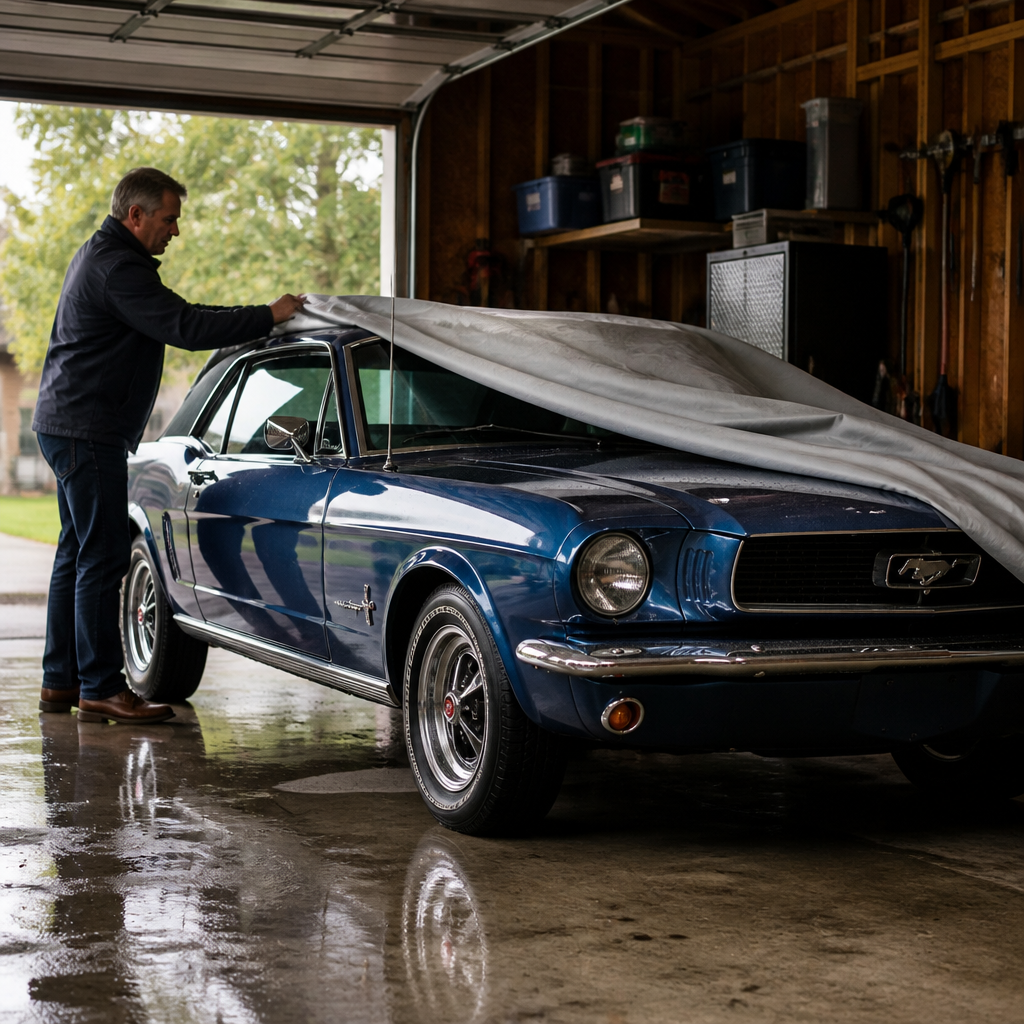
Moisture is the most persistent enemy in classic car storage, and protecting a vintage vehicle from humidity, condensation, and water intrusion is the foundation of long term preservation. In the restoration shops and private collections I have worked around, the cars that aged gracefully were not always the most expensive models; they were the ones stored with disciplined moisture control. For a sub-pillar page on classic car ownership, this guide covers the full storage and preservation picture: what moisture damage is, why it happens, where it starts, and how to stop it before rust, mold, swollen trim, and electrical failures take hold.
Moisture damage in a classic car means more than visible rust on body panels. It includes corrosion inside frame rails, oxidized wiring terminals, pitted chrome, stained upholstery, mildew in carpet underlay, delaminated wood trim, seized brake components, clouded gauges, and contaminated fluids. Relative humidity, temperature swings, dew point, ventilation, and storage surface all play a role. A collector vehicle can look clean on the outside while silently deteriorating underneath weatherstripping, inside rocker panels, or behind door cards. That hidden progression is why proper storage and preservation matter as much as mechanical maintenance.
This topic matters because classic cars are built from materials that react differently to damp air. Steel rusts, cast iron flashes over, aluminum oxidizes, leather dries and molds, adhesives soften, and older electrical systems are especially vulnerable to corrosion. Many vehicles from the 1950s through the 1980s also have factory rustproofing that was limited by modern standards. Even a minor roof leak or a garage floor that “sweats” seasonally can create the conditions for years of cumulative harm. Owners who understand moisture control protect originality, avoid expensive bodywork, and preserve drivability and value.
The practical goal is simple: keep liquid water out, keep humidity stable, and reduce the temperature swings that create condensation. That requires thinking beyond a car cover. Good storage and preservation combine the right building conditions, preparation steps, inspection habits, and product choices. The sections below explain how to assess risk, prepare your garage, dry out the car properly, use dehumidifiers and barriers effectively, and build a preservation routine that supports every other classic car ownership decision.
Why classic cars suffer moisture damage so easily
Classic cars are vulnerable because they contain many unfinished cavities and absorbent materials, and most were not engineered for decades of low-use storage. Door bottoms, cowl vents, trunk seams, quarter panels, frame channels, and windshield surrounds trap moisture after washing, rain exposure, or damp storage. Once water enters those spaces, evaporation is slow. In older garages without insulation or vapor barriers, nighttime cooling can drop metal surfaces below the dew point, causing condensation even when the car was never driven in rain.
I have seen this most clearly in cars stored under tarps in detached garages. Owners thought they were adding protection, but the trapped air held moisture against paint, chrome, and trim. The result was blistering on brightwork, mildew odor in the cabin, and corrosion starting at fastener heads and panel edges. The same pattern appears when a vehicle is parked after a short drive without allowing exhaust moisture and engine bay heat to dissipate. Water vapor condenses inside the exhaust, crankcase, and cooler body cavities, then sits for weeks.
Climate shapes the risk. Coastal regions expose cars to salt-laden humid air. Four-season climates create freeze-thaw cycles and spring condensation. Hot humid areas accelerate mold growth and surface corrosion. Even arid regions are not immune, because rapid day-night temperature swings can create heavy condensation on metal panels and concrete floors. That is why moisture control is a preservation system, not a single product.
How to inspect a classic car and storage space for moisture risk
Start with an evidence-based inspection of both the vehicle and the building. On the car, check lower fenders, rocker panels, wheel arches, trunk wells, spare tire recesses, floor pans, door seams, weatherstrips, and around glass seals. Pull back floor mats and inspect carpet backing. Smell for mildew. Look for fogging on instrument lenses, white oxidation on electrical terminals, and water tracks below rear windows or windshield corners. Use a bright LED light and a borescope for body cavities if access allows.
The storage space matters just as much. Measure relative humidity with a calibrated hygrometer; ideal long-term storage usually falls around 45 to 55 percent. Above 60 percent, corrosion and mold risk rise sharply. Check whether the slab has a vapor barrier below it. Look for efflorescence, dark damp patches, peeling paint on walls, dripping pipes, roof staining, or poor grading that sends rainwater toward the foundation. Garage doors with failed bottom seals often let in wind-driven moisture and insects together.
A moisture meter can help identify wet wood framing or interior wall materials. If you want a simple baseline, place one hygrometer near the floor and one at chest height for two weeks. Large swings suggest the garage is gaining moisture overnight or during weather changes. That data tells you whether you need dehumidification, insulation upgrades, drainage work, or all three.
| Risk Area | What to Check | Why It Matters | Best Response |
|---|---|---|---|
| Garage air | Relative humidity above 60% | Promotes rust, mold, and corrosion | Use a dehumidifier and seal air leaks |
| Concrete floor | Cold or damp slab, no vapor barrier | Creates condensation under the car | Install floor coating or use a vapor-resistant mat |
| Weatherstrips | Cracks, flattening, gaps | Lets water enter cabin and trunk | Replace with quality reproduction seals |
| Body cavities | Blocked drains, debris, trapped water | Causes hidden rust from inside out | Clean drains and apply cavity wax |
| Interior | Mildew smell, damp carpet, fogged gauges | Signals ongoing moisture intrusion | Dry fully and trace leak source before storage |
Preparing the garage for safe storage and preservation
The best classic car storage starts with the building envelope. Fix roof leaks, improve drainage outside, and keep gutters and downspouts moving water away from the slab. If the garage is uninsulated, insulating the roof and walls can reduce the temperature swings that drive condensation. Air sealing around doors, windows, and service penetrations helps a dehumidifier work efficiently. In many cases, a modest portable compressor dehumidifier with continuous drain performs better than relying on passive products alone.
Floor condition is often overlooked. Bare concrete can transmit moisture and stay colder than the surrounding air, especially in spring and fall. An epoxy or polyaspartic floor coating helps, but even a heavy vapor-resistant parking mat can create a cleaner buffer under the car. I prefer avoiding thick carpeting under stored vehicles because it can hold moisture against the underbody. If you use a mat, clean beneath it regularly.
Ventilation needs balance. Constant outside air exchange sounds sensible, but in humid climates it can raise indoor moisture. Controlled dehumidification is usually more effective than simply opening windows or leaving the garage door cracked. Add a circulating fan only if it supports drying without pulling in wet air. For valuable cars, a smart temperature and humidity monitor with app alerts gives early warning before a problem becomes visible.
Preparing the car before long-term storage
Never put a dirty or damp classic car into storage. Wash the exterior carefully, including wheel housings and undercarriage areas that may hold dirt and salts. Dry the car completely with compressed air, microfiber towels, and time. Water trapped around trim, emblems, mirrors, and weatherstrips is a common source of staining and rust. If the car was caught in rain, let it sit in a controlled environment until the cabin, trunk, and underbody are fully dry.
Protective coatings help slow moisture contact. A quality wax or paint sealant adds a sacrificial layer on painted surfaces. Chrome and stainless trim benefit from a dedicated metal protectant. Door, trunk, and window seals should be cleaned and lightly conditioned with a rubber-safe product so they remain pliable and continue sealing effectively. For hidden areas, cavity wax products from brands such as 3M, Wurth, or Bilt-Hamber can protect inner panels, seams, and box sections. These coatings are particularly valuable on vehicles with known rust-prone architecture.
Inside the car, remove any damp items, vacuum thoroughly, and confirm the carpet padding is dry. Leather should be cleaned and conditioned; vinyl should be cleaned to remove residues that can feed mildew. Avoid sealing moisture inside with plastic seat covers. In the trunk, inspect the weatherstrip, taillight seals, and any body plugs. A surprising number of “mystery leaks” begin around rear glass or trunk channels and only show up after months of storage.
Managing humidity, condensation, and airflow around the vehicle
The target is stable humidity, not extreme dryness. Over-drying can shrink natural materials, while high humidity accelerates corrosion. In most storage situations, 45 to 55 percent relative humidity is a sound range. Use a reliable hygrometer, and do not guess. Consumer units from ThermoPro or Govee are adequate for monitoring, while commercial-grade sensors offer better calibration stability.
Dehumidifiers work best in enclosed spaces. Size the unit to the garage volume and local climate, and route condensate to a drain or pump so the tank does not overflow. Desiccant dehumidifiers can perform well in cooler conditions, while compressor models are often more efficient in warmer spaces. If the space is truly climate controlled, a breathable indoor car cover can protect against dust without trapping moisture. Avoid impermeable covers unless the vehicle is in a specialized enclosed storage bubble designed for airflow.
For owners who want added protection, a car capsule or air chamber system can create a controlled micro-environment around the vehicle. These systems are effective when used correctly, especially for cars stored in less-than-ideal buildings. The tradeoff is cost, floor space, and the temptation to “seal and forget.” Even with a capsule, scheduled inspection remains necessary.
Preventing hidden moisture damage in mechanical and electrical systems
Storage and preservation are not only about bodywork. Engines, fuel systems, brakes, and wiring all suffer in damp conditions. Short engine starts are a common mistake. If you cannot bring the car fully to operating temperature long enough to evaporate internal moisture, do not start it casually. Condensation in the exhaust and crankcase can be worse than leaving the car undisturbed with properly prepared fluids.
Brake components rust quickly when exposed to humid air, especially rotors, drums, backing plates, and steel lines. After washing, driving the car enough to dry the brakes matters. Fuel tanks with excess empty space can accumulate condensation, so stabilizing fuel and storing with an appropriate fill level based on the tank material and manufacturer guidance is wise. Electrical connectors, fuse blocks, and grounds should be clean and protected with suitable contact products where appropriate; corrosion increases resistance and creates intermittent faults that are difficult to trace later.
Battery storage also intersects with moisture. A damp battery tray promotes corrosion, and poor ventilation can encourage terminal oxidation. A smart maintainer helps battery health, but only after the area is clean and dry. On cars with known cowl or windshield leaks, inspect harness pass-throughs and fuse panels closely. Water migration through insulation can damage circuits far from the original leak point.
Building a year-round preservation routine
The owners who avoid major moisture damage follow a repeatable routine. Check humidity readings weekly, inspect the floor and undercarriage monthly, and open the car periodically to confirm there is no odor, condensation, or new staining. Exercise drains in doors, cowls, and sunroof channels if fitted. Review weatherstrips annually. If you find moisture, trace the source first; drying alone is never the full solution.
Seasonal transitions deserve extra attention. In spring, rising outdoor humidity meets cool slabs and metal surfaces, so condensation risk spikes. In fall, leaves clog drains and trap water around stored cars. Before winter storage, perform a final dry-down after the last drive. During summer, monitor for mold in cabins that are rarely opened. Preservation succeeds when storage conditions, vehicle prep, and inspection habits reinforce each other.
The central lesson is straightforward: protecting a classic car from moisture damage is less about expensive products than about controlling the environment and eliminating hidden water paths. Dry the car thoroughly, stabilize the garage, monitor humidity, maintain seals and drains, and inspect on a schedule. Those steps preserve originality, reduce restoration costs, and make every future drive more enjoyable. If you are building out your classic car ownership plan, start with a moisture-control checklist for your garage and vehicle today, then use it before every storage period.
Frequently Asked Questions
What is the biggest moisture threat to a classic car in storage?
The biggest threat is usually not obvious standing water or a roof leak, but sustained humidity and condensation. Moisture in the air settles on metal surfaces when temperatures shift, especially in garages, barns, and storage units that warm up during the day and cool down at night. That repeated cycle creates a thin film of water on body panels, chrome, undercarriage components, electrical connections, and unfinished metal surfaces. Over time, that leads to rust, oxidation, mildew, musty interior odors, degraded weatherstripping, and corrosion inside places you cannot easily inspect, such as rocker panels, frame sections, and trunk seams.
Classic cars are especially vulnerable because many were built with older materials, less advanced rustproofing, and design features that trap water. Window seals, cowl drains, door bottoms, and trunk channels can all hold moisture if they are not maintained. The danger is that humidity damage happens slowly and quietly. A car can look clean from the outside while corrosion is spreading behind trim, under carpets, inside floor pans, or in wiring terminals. That is why disciplined moisture control matters more than occasional cosmetic care. If you want a vintage vehicle to age well, the storage environment has to stay dry, stable, and consistently monitored.
How can I control humidity in a garage or storage space for a classic car?
The goal is to create a clean, dry, stable environment rather than simply closing the door and hoping for the best. Start by addressing the building itself. Fix roof leaks, wall seepage, cracked concrete, poor drainage around the structure, and any areas where rainwater or groundwater can enter. If the floor gets damp, use a vapor barrier or floor coating designed to reduce moisture migration through concrete. Make sure gutters and downspouts move water away from the building, because exterior drainage problems often become interior humidity problems.
From there, focus on air quality and humidity control. A dehumidifier is one of the most effective tools for classic car storage, especially in humid climates or in enclosed spaces with little natural airflow. Many collectors aim to keep relative humidity around 45 to 55 percent, which is dry enough to discourage corrosion and mold without creating an overly harsh environment for leather, wood, rubber, and other natural materials. Use a hygrometer so you are measuring actual conditions instead of guessing. In larger garages, you may need more than one monitoring point because humidity can vary from one corner to another.
Ventilation also matters, but it has to be balanced. Too little airflow allows damp air to linger. Too much uncontrolled airflow can bring in outside humidity. In many cases, the best setup is a sealed or semi-sealed space paired with active dehumidification and occasional controlled ventilation. If the garage is climate controlled, stable temperature swings are helpful because they reduce condensation cycles. Even basic insulation can make a meaningful difference by limiting the daily rise and fall that causes moisture to form on cold metal surfaces. The key is consistency. A classic car stored in a dry, predictable environment will almost always fare better than one stored in a space with frequent humidity spikes, even if that second space looks clean and enclosed.
Should I use a car cover to protect a classic car from moisture damage?
Yes, but only if you use the right kind of cover and only in the right conditions. A high-quality, breathable indoor car cover can protect the finish from dust and minor contact while still allowing trapped moisture to escape. That breathability is critical. If you put a non-breathable or poorly fitted cover over a car that is slightly damp, or you use it in a humid garage with no environmental control, you can effectively trap moisture against the paint, trim, chrome, and weather seals. That can make condensation and mildew problems worse rather than better.
Before covering the car, make sure it is completely dry, including the wheel wells, underbody, glass channels, and seals. Avoid covering a vehicle immediately after washing unless you have given it enough time to air dry thoroughly. Also pay attention to the type of storage. Indoor and outdoor covers are not interchangeable. Outdoor covers may offer water resistance, but if they are used long term in fluctuating weather, they can still trap humidity underneath. For long-term indoor preservation, the best practice is a breathable cover combined with a dry storage space, not a cover used as a substitute for proper moisture control.
For especially valuable vehicles, some owners go a step further and use a car capsule or enclosed storage bubble with filtered airflow. These systems can be very effective when used correctly because they create a more controlled micro-environment around the car. Still, even the best cover or enclosure is only one layer of protection. The surrounding storage conditions remain the foundation. If the room is damp, the cover alone will not solve the problem.
What parts of a classic car should I inspect regularly for hidden moisture problems?
Focus first on the areas where water naturally collects or where moisture can remain trapped without being visible. That includes door bottoms, rocker panels, wheel arches, trunk floors, spare tire wells, floor pans under carpet, cowl vents, windshield and rear glass seals, weatherstripping, and around the base of quarter windows. If the car has a vinyl top, inspect the edges carefully because moisture can hide underneath and encourage rust in the roof skin. Convertibles need extra attention around top seals, drains, and storage wells.
Inside the car, check carpets, underlayment, seat mounts, insulation, and the underside of floor mats. A damp interior is not just a comfort issue; it can lead to mold, mildew, rusted seat frames, corroded wiring, and deteriorated upholstery. In the trunk, inspect seams, jack storage areas, and the underside of the package tray. Under the hood, look at electrical terminals, fuse connections, brake components, and exposed metal hardware for early signs of oxidation. Moisture damage often appears first as a faint musty smell, light surface rust on fasteners, water stains, or cloudy chrome before it becomes structural.
Regular inspection is one of the most valuable habits a classic car owner can develop. It is far easier to correct a failing seal, blocked drain, or damp carpet than it is to repair advanced corrosion in structural panels. A monthly visual check is a smart baseline for stored vehicles, with a more thorough seasonal inspection if the car is not driven often. When you catch moisture early, preservation becomes manageable. When you ignore it, restoration costs rise quickly.
What are the best long-term storage practices to prevent moisture damage in a vintage vehicle?
Long-term protection comes from combining environmental control, vehicle preparation, and ongoing monitoring. Start with a clean car. Dirt, road film, and organic residue hold moisture against surfaces, so wash and dry the exterior thoroughly before storage. Clean the undercarriage if the car has been exposed to wet roads, and make sure drain holes are open and functioning. Apply a quality wax or paint sealant to protect painted surfaces, and use appropriate conditioners on leather, vinyl, rubber, and weatherstripping to keep them from drying out or cracking. Those materials are easier to preserve when the environment remains balanced.
Inside the storage space, maintain stable humidity with a dehumidifier and monitor it with a hygrometer. If possible, avoid storing the car directly on bare concrete that tends to sweat or transfer moisture. A vapor barrier, sealed floor, or specialized parking mat can help. Do not store cardboard boxes, damp fabrics, or items that hold moisture near the vehicle, as they can affect the microclimate around it. If rodents are a concern, address that proactively too, since nests and organic debris can trap moisture and create hidden damage points.
For the car itself, keep seals, glass channels, and drains in good condition so water has no path inside and no opportunity to sit. If the car will remain parked for extended periods, inspect it routinely instead of forgetting about it. Open the storage area periodically, check for leaks, look under the car, feel carpets and trunk liners for dampness, and verify that your humidity-control equipment is working properly. The cars that survive decades in impressive condition are rarely the ones left alone indefinitely. They are the ones cared for methodically, with moisture prevention treated as an ongoing preservation system rather than a one-time storage step.