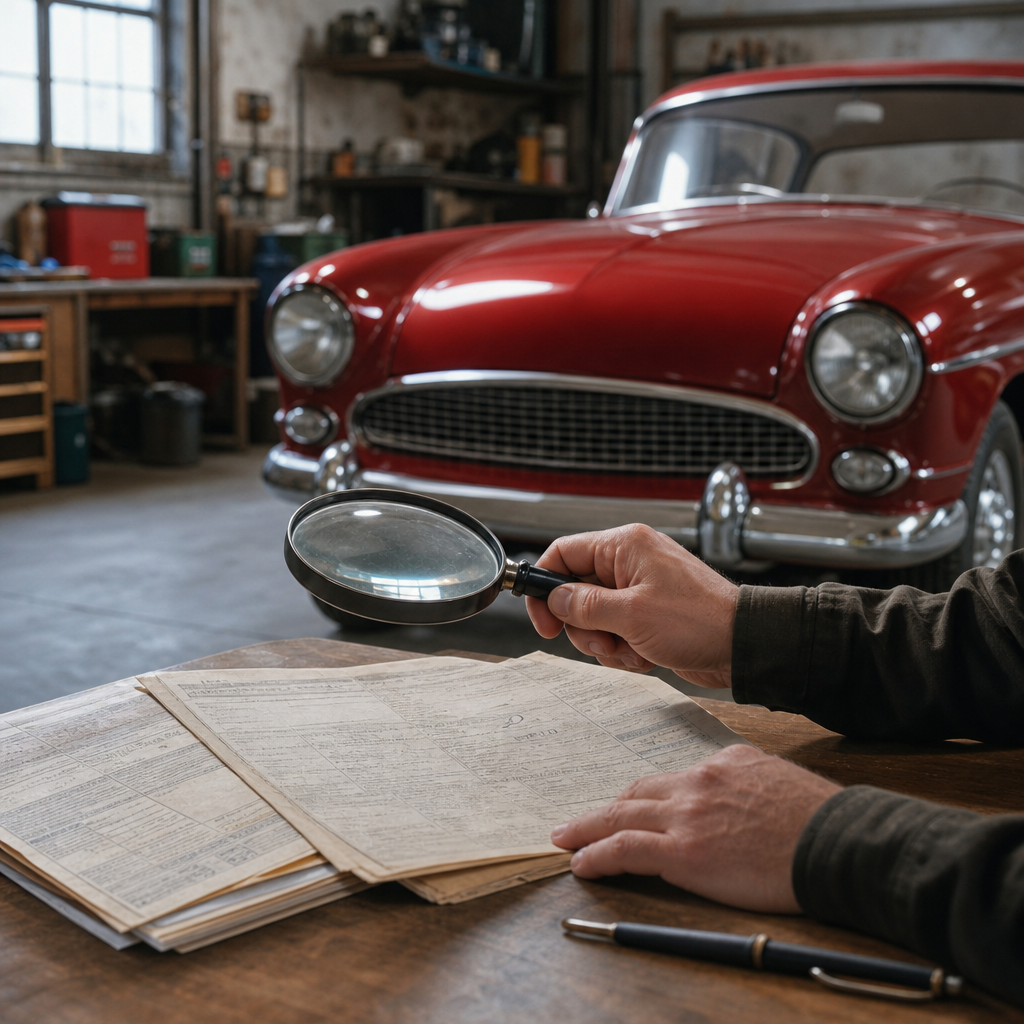
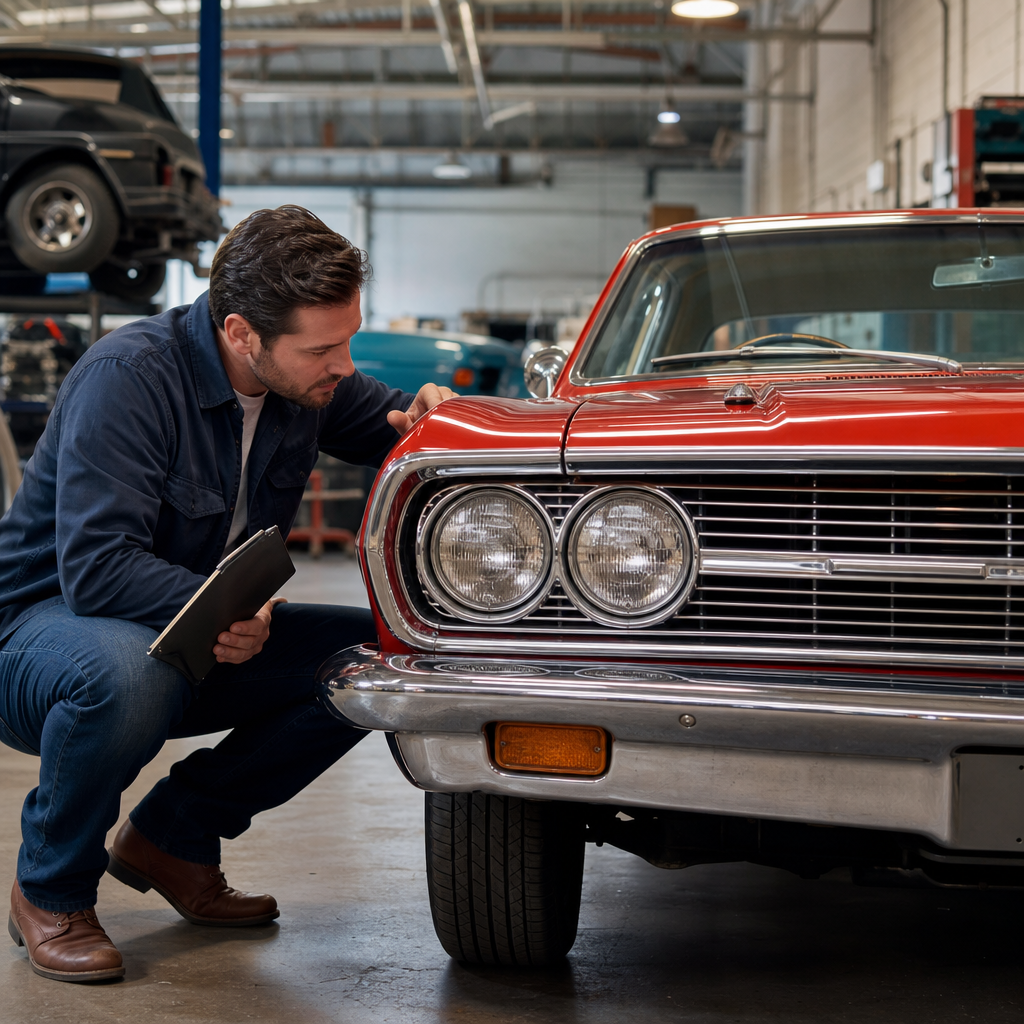
Buying a classic car is part research project, part financial decision, and part emotional commitment, and beginners usually underestimate at least one of those three. A classic car is generally a vehicle valued for age, rarity, design, cultural significance, or collector demand rather than simple transportation utility. Depending on the market, that can mean a prewar sedan, a 1960s muscle car, a 1980s hot hatch, or even a 1990s Japanese sports coupe. In practical buying terms, the label matters less than condition, documentation, parts support, and your intended use. I have helped first-time buyers inspect cars at auctions, decode trim tags in dim garages, and walk away from flashy listings that looked better in photos than in person. The best purchase is rarely the cheapest or the rarest. It is the car whose mechanical state, paperwork, and ownership costs match your budget and skill level. This matters because mistakes in classic car buying are expensive and hard to reverse. Rust repair can exceed the value of the vehicle, missing paperwork can delay registration for months, and incorrect restorations can hurt resale. A structured process protects you from overpaying and helps you buy a car you will actually enjoy owning.
Define Your Goal, Budget, and Ownership Plan
The first step in how to buy a classic car is deciding what success looks like for you. Do you want a weekend cruiser, a local show car, a vintage rally participant, or a long-term investment-grade vehicle? Those are different purchases. A numbers-matching 1970 Chevrolet Chevelle SS with factory documentation appeals to collectors, while a driver-quality Mercedes-Benz W123 coupe may suit someone who wants reliability and easy weekend use. When I work with beginners, I ask three questions first: how often will you drive it, where will you store it, and how much inconvenience can you tolerate? Your answers narrow the field quickly.
Budgeting must go beyond purchase price. A realistic classic car budget includes transport, pre-purchase inspection, title and registration fees, immediate maintenance, insurance, storage, and a repair reserve. Hagerty’s market tools and valuation guides are useful for establishing a starting range, but they do not replace current local market data from Bring a Trailer, Hemmings, marque forums, Facebook groups, and dealer inventory. A car listed at market value may still be overpriced if it needs tires, suspension bushings, paint correction, and brake work within the first six months. As a rule, beginners should keep at least 15 to 20 percent of the total budget uncommitted for post-purchase needs.
Your ownership plan also affects which classics make sense. If you live in a humid region, rust-sensitive unibody cars deserve extra scrutiny. If you need highway comfort, short-wheelbase British roadsters may not be ideal. If parts availability matters, common production classics such as first-generation Ford Mustangs, C3 Corvettes, Volkswagen Beetles, and MGBs offer a much easier entry point than low-production exotics. The smartest beginner move is usually to buy the best-supported car in the best condition you can afford.
Choose the Right Classic Car for a Beginner
Beginners often ask what the best first classic car is. The direct answer is this: choose a model with strong parts support, active owner communities, straightforward mechanical systems, and stable values. Popularity is not a drawback at this stage; it is a safety net. Cars with abundant reproduction parts, factory literature, and forum knowledge reduce ownership risk. A 1965 to 1966 Ford Mustang coupe, a 1968 to 1972 Chevrolet Nova, a Volkswagen Beetle, a Volvo 240, or a Mercedes-Benz R107 can be easier first purchases than a rare Italian coupe with limited spares and complex fuel injection.
You should also understand common body styles and condition labels used in listings. A coupe, convertible, sedan, fastback, targa, and roadster may share a model name but command very different prices. Terms such as survivor, restored, restomod, driver-quality, concours, and project car are not interchangeable. A survivor usually retains a high percentage of original finishes and components. A restored car has undergone refurbishment, but quality varies enormously. A restomod blends classic styling with modernized mechanicals. Driver-quality generally means usable and presentable, not perfect. For beginners, a driver-quality car with honest cosmetics and sorted mechanicals is usually the sweet spot.
Originality versus usability is another key decision. If you want dependable weekend driving, tasteful upgrades such as electronic ignition, improved cooling, radial tires, and front disc brakes can add value to you even if they slightly reduce collector purity. If long-term appreciation is your primary goal, originality, factory colors, correct trim, date-coded components, and matching numbers become more important. There is no universal right answer, but there is a wrong one: paying top-tier money for a car that is neither authentically original nor well upgraded.
Research Values, History, and Market Trends
Before contacting sellers, study the market deeply enough that you can recognize a fair car, a great car, and a dangerous car. That means learning recent sale prices, not just asking prices. Public auction archives from Bring a Trailer, Mecum, and Barrett-Jackson reveal what comparable cars actually sold for, often with detailed photo sets and comment threads that highlight flaws. Hemmings gives insight into dealer and private asking trends. Hagerty Price Guide provides condition-based ranges. NADA can help, but it is less nuanced for certain niches. Use at least three sources before forming a number.
History research should include production changes, option codes, engine and transmission combinations, and known weak spots. For example, 1967 Camaro buyers need to verify whether an SS clone is represented accurately; 1973 Porsche 911 buyers should inspect magnesium crankcase issues and corrosion; air-cooled Volkswagen buyers should check heater channels and floor pans carefully. Marque-specific clubs are invaluable here. The Porsche Club of America, Antique Automobile Club of America, Mustang Club of America, and model-specific registries often maintain buyer guides far better than generic websites do.
Learn the difference between rarity and desirability. A low-production trim package does not automatically make a car valuable. Value follows demand, documentation, condition, provenance, and drivability. I have seen rare trim combinations sit unsold while standard but beautifully maintained examples trade quickly. Beginners should pay for verifiable quality, not just a seller’s story. Service records, ownership chronology, restoration invoices, factory build sheets, window stickers, and judging sheets from recognized organizations all add confidence. Missing history is not always a deal breaker, but undocumented claims should never command premium pricing.
| Research Area | What to Check | Why It Matters |
|---|---|---|
| Market value | Recent sold listings, auction archives, condition ranges | Prevents overpaying based on optimistic asking prices |
| Authenticity | VIN, trim tags, engine codes, transmission stamps | Confirms the car is what the seller claims |
| Body condition | Rust-prone areas, panel gaps, prior repairs, underbody | Structural repairs are usually the most expensive problem |
| Mechanical condition | Cold start, compression, leaks, brakes, suspension, cooling | Shows whether the car is safe and usable immediately |
| Paperwork | Title status, registration, invoices, ownership records | Reduces legal risk and supports future resale value |
Find Cars in the Right Places and Screen Sellers Carefully
Where you shop affects both price and risk. Auctions offer access and transparency but can trigger emotional bidding and compressed decision-making. Dealers may provide convenience, financing options, and some reconditioning, but prices usually reflect that margin. Private sellers can offer the best value because they know the car’s history and do not have dealer overhead, but they can also omit issues unintentionally or intentionally. Estate sales, local club networks, and word-of-mouth leads often produce better cars than high-traffic listing sites because the vehicles have not been circulated repeatedly among flippers.
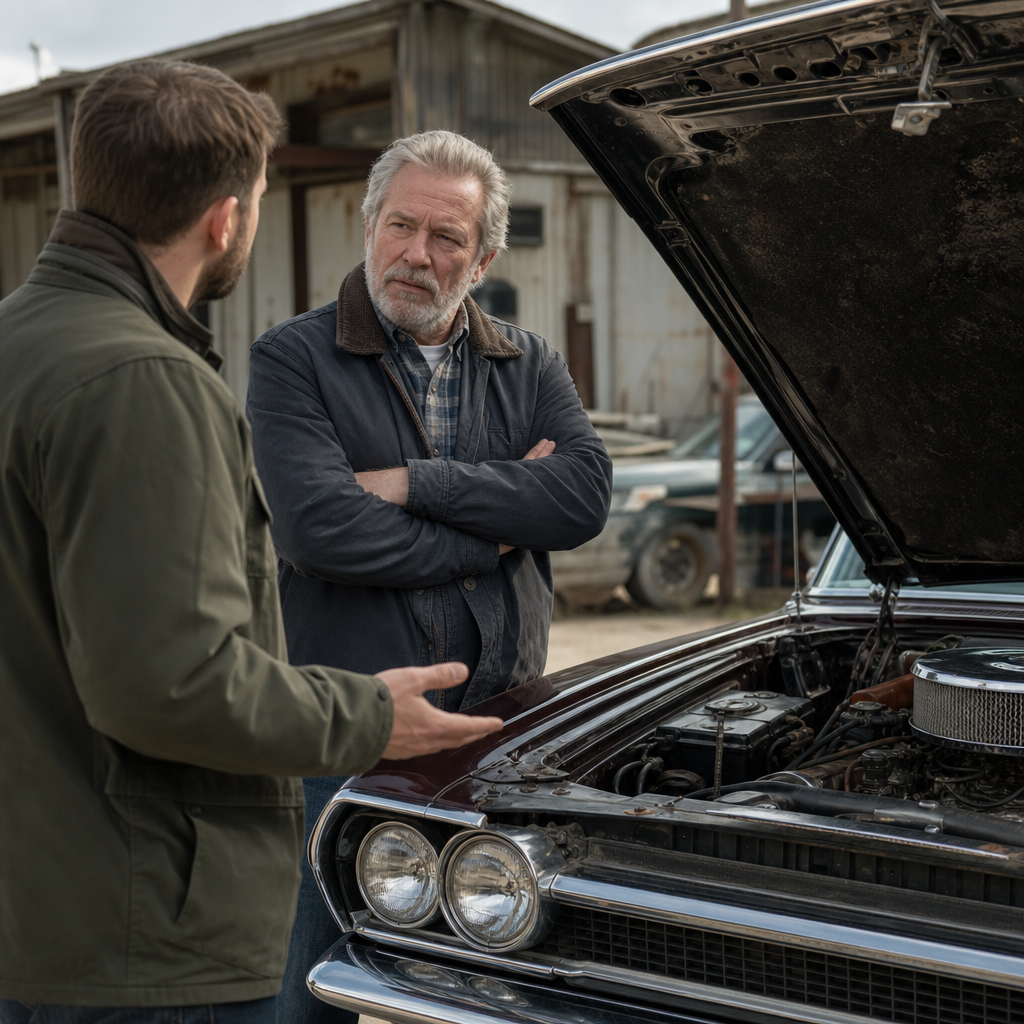
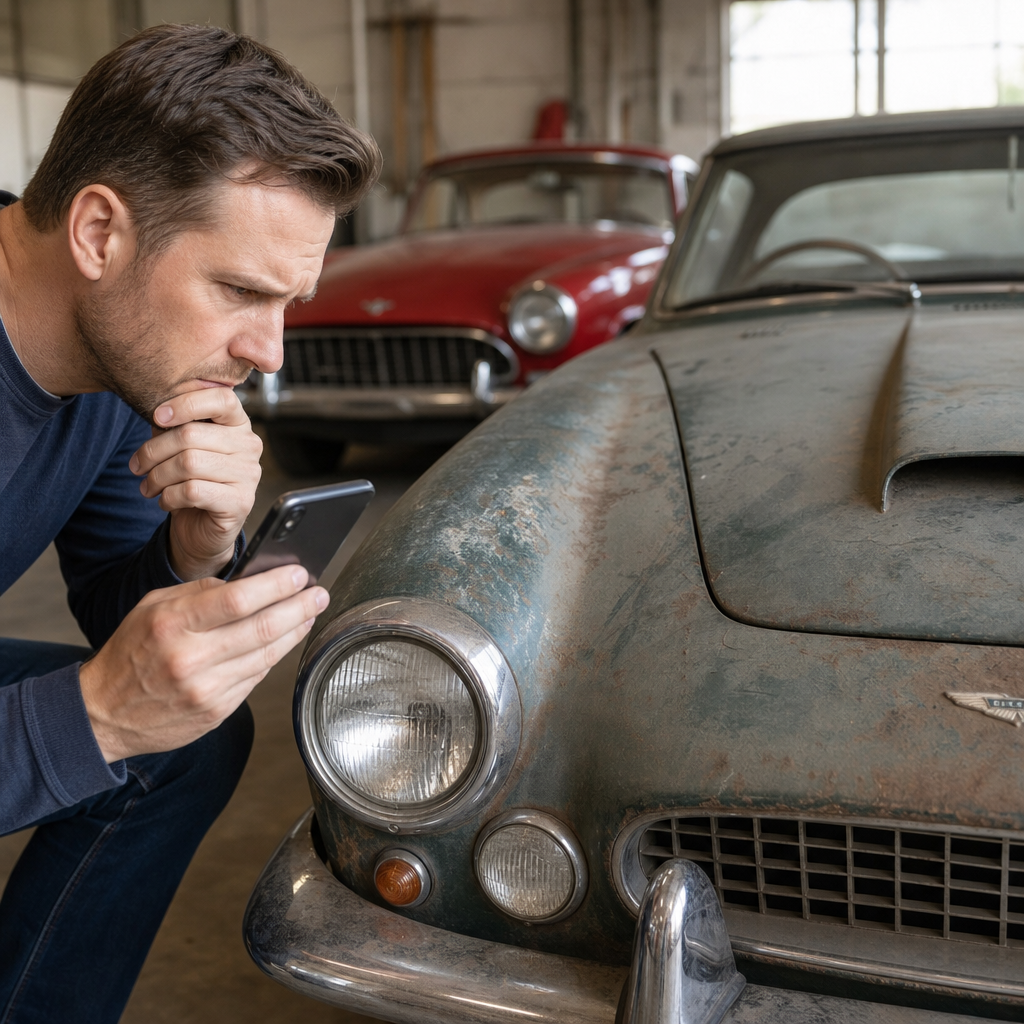
Screen the seller before you inspect the car. Ask how long they have owned it, why they are selling, what work has been done recently, what does not work, whether the title is in their name, and whether there are liens. Request cold-start video, underside photos, trunk and spare-wheel well photos, VIN and data plate images, and close-ups of common rust areas. A trustworthy seller answers directly and consistently. Evasive responses, blurry photos, refusal to share identification numbers, or pressure to send a deposit immediately are warning signs. If a seller says the car is rust-free, ask for photos of the rocker panels, lower fenders, floor pans, frame rails, and battery tray. On classics, rust-free should be proven, not assumed.
Do not rely on listing language alone. Words like restored, mint, all original, and rare are used loosely. I have inspected “fully restored” cars with overspray on wiring, poorly aligned doors, and old brake hoses left in place. The quality of restoration matters more than the existence of one. Ask who performed the work, when it was done, whether photo documentation exists, and whether major components were rebuilt or simply cleaned and painted. A seller who can describe work precisely is usually more credible than one who repeats generic sales phrases.
Inspect the Car Methodically and Verify Authenticity
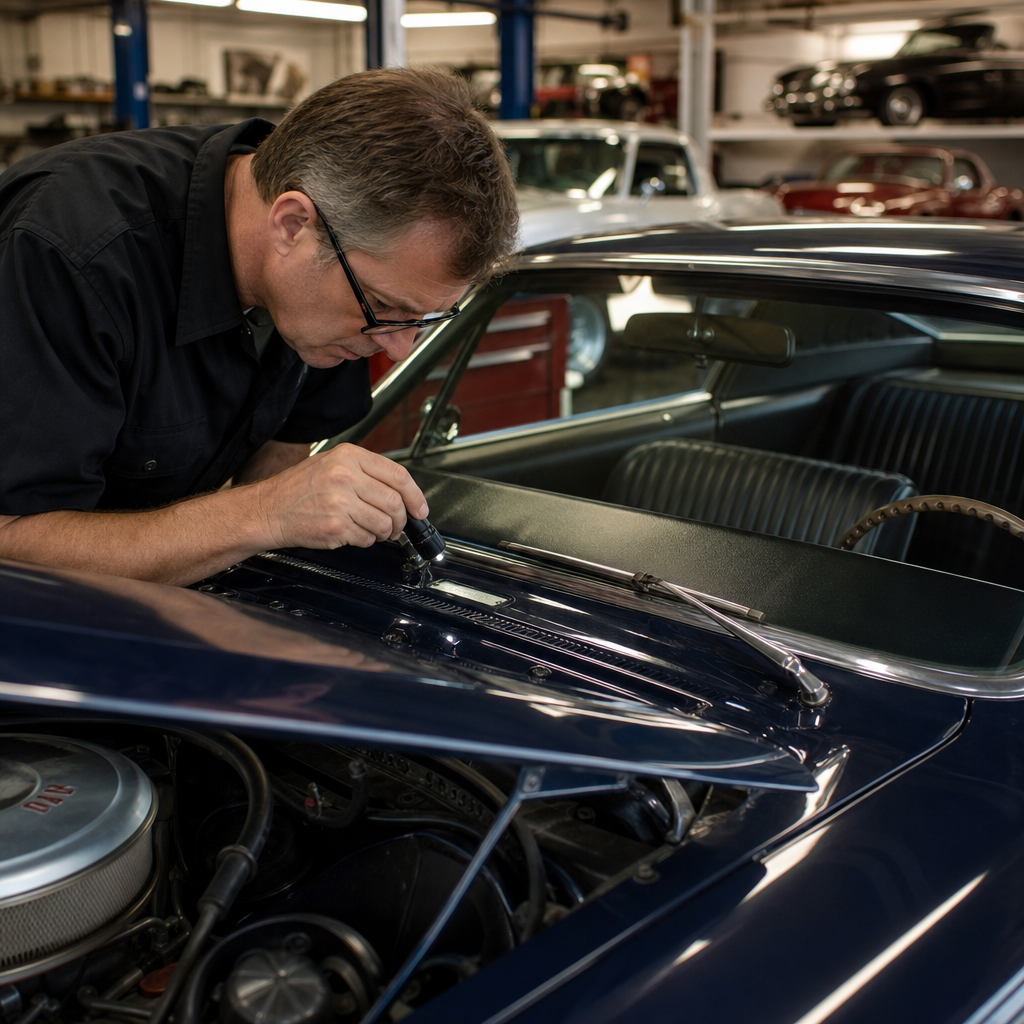
A proper inspection is the point where enthusiasm must yield to evidence. Start with identity. Confirm that the VIN on the body matches the title and, where applicable, the door tag, cowl tag, firewall plate, or chassis stamp. On muscle cars and certain European classics, verify engine and transmission numbers, date codes, paint and trim codes, and option tags against factory references. This is how you avoid paying real SS, GT, Hemi, RS, Carrera, or Alpina money for a clone or tribute car. Clones are not inherently bad, but they must be priced honestly.
Body inspection comes next because rust and previous collision damage are often more costly than engine work. Use a flashlight and magnet where appropriate, look for bubbling paint, inconsistent panel gaps, weld seams, undercoating that appears freshly applied, and signs of filler. Check the lower quarters, rocker panels, frame mounts, shock towers, trunk floor, cowl, windshield channels, and door bottoms. On convertibles, inspect structural reinforcements carefully because hidden corrosion can compromise rigidity and safety. Paint meter readings can help identify prior repairs, but they do not replace visual inspection and underbody access.
Mechanical inspection should begin with a cold start. Listen for valvetrain noise, timing chain rattle, bottom-end knock, smoke color, and abnormal idle behavior. During a test drive, check clutch engagement, transmission synchros, steering play, brake pull, wheel bearing noise, suspension clunks, and cooling-system stability in traffic. Watch the gauges, but remember old gauges can lie. A compression test, leak-down test, or borescope inspection may be warranted for high-value cars. If the car uses mechanical fuel injection, carburetors, or early electronic systems such as Bosch K-Jetronic, confirm that a specialist in your area can service them. A classic you cannot get repaired locally may become a garage ornament.
For most beginners, an independent pre-purchase inspection is non-negotiable. Hire a marque specialist, not just a general mechanic. Organizations such as the Antique Automobile Club of America can help you find local expertise, and many restoration shops offer paid inspections. A good inspector will identify unsafe repairs, non-original components, poor bodywork, and deferred maintenance that casual buyers miss.
Negotiate, Handle Paperwork, and Close the Deal Safely
Negotiation should be evidence-based. Build your offer from comparable sales, inspection findings, missing items, and upcoming maintenance. Be specific. Saying “the car needs work” is weak; saying “the tires are eight years old, the front control arm bushings are cracked, the heater blower is inoperative, and the paint meter shows repaired left-quarter damage” gives the seller a rational basis to move. Most private sellers respond better to calm facts than aggressive tactics. If the car is genuinely exceptional, understand that walking away over a minor difference may cost you the right vehicle.
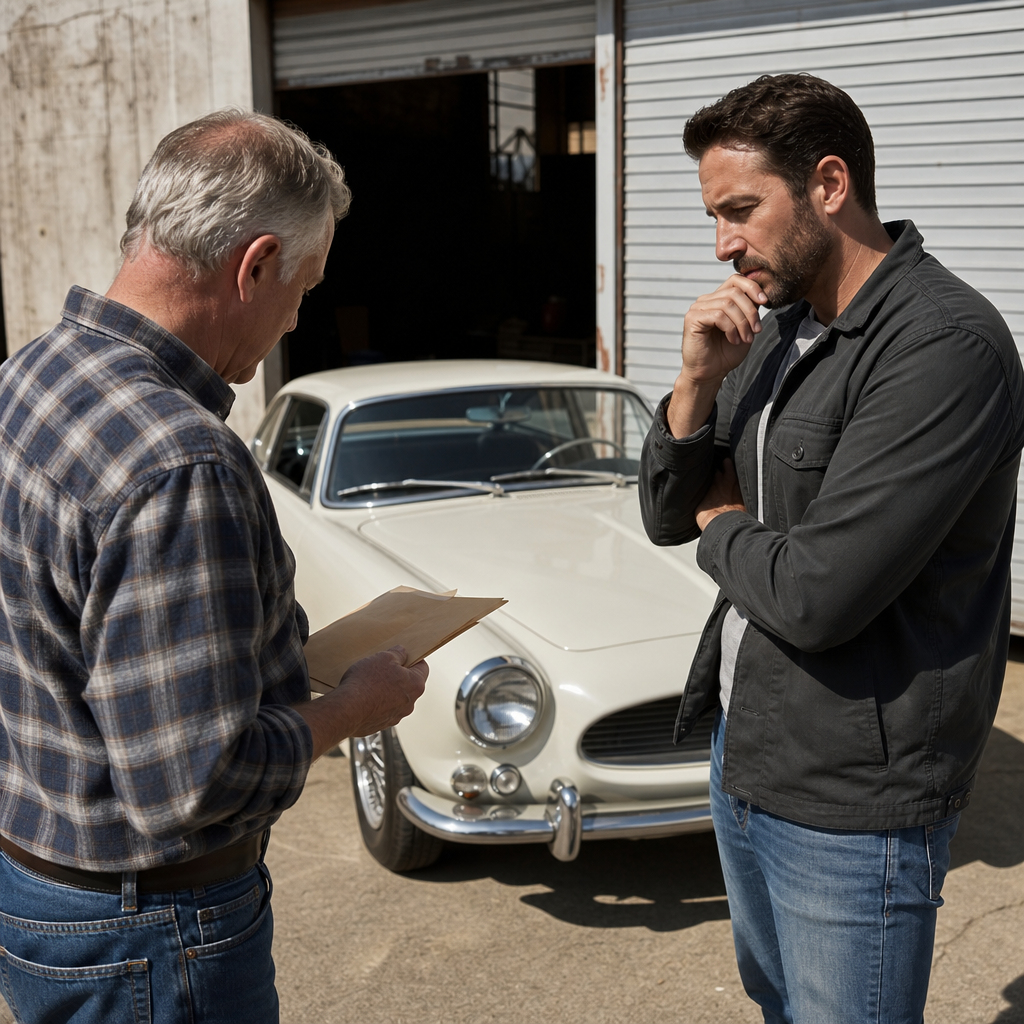
Paperwork matters as much as condition. Verify that the title is clear, correctly assigned, and free of liens. Confirm the VIN on the title matches the car exactly. Some states use registrations rather than titles for older vehicles, so check your local motor vehicle rules before purchase. If the car is imported, review customs documentation, EPA and DOT exemptions where applicable, and any foreign registration papers. For high-value transactions, use a bill of sale with purchase price, VIN, odometer reading if relevant, date, and both parties’ identification details. Escrow services can reduce risk when buying remotely.
Payment and transport deserve planning. Wire transfers are common, but confirm bank details verbally using a trusted number, not one embedded in an email. Cash can work for local deals but raises security concerns. For transport, choose enclosed shipping for high-value or freshly restored cars and inspect the vehicle thoroughly before loading. Photograph all sides, note existing flaws on the carrier condition report, and verify insurance coverage. Once the car arrives, resist the urge to drive immediately. Change fluids, inspect belts, hoses, brakes, tires, and battery connections, and establish a maintenance baseline so you know exactly where ownership begins.
Avoid Common Beginner Mistakes and Build Confidence
The most common beginner mistake is buying with the eyes instead of the checklist. Shiny paint, a strong idle, and a compelling seller story can hide major issues. The second mistake is overreaching. Many first-time buyers chase the top engine, rarest trim, or most iconic badge before they understand maintenance demands and market nuances. A base-model classic in excellent condition is usually a better first ownership experience than a prestigious but needy car. Third, buyers underestimate storage and use. Outdoor storage accelerates deterioration, and infrequent driving can be as harmful as heavy use when fuel systems gum up and seals dry out.
Another mistake is skipping community knowledge. Owner forums, local clubs, and specialist shops can save you thousands by steering you toward good cars and away from known problem examples. They also help you find parts sources, restoration shops, insurers, and appraisers. Finally, do not treat every classic as an investment. Some appreciate, some stabilize, and some simply deliver enjoyment. If you buy intelligently, maintain the car properly, and keep documentation organized, you protect value even if market conditions soften.
Buying a classic car step by step is the safest route for beginners because it replaces guesswork with verification. Define your goals, choose a beginner-friendly model, study values, screen sellers carefully, inspect methodically, and complete paperwork correctly. That process helps you avoid the expensive mistakes that spoil first ownership and puts you into a car you can actually drive, improve, and enjoy. Start with one model, one budget, and one checklist, then begin reviewing real listings with a disciplined eye.
Frequently Asked Questions
What qualifies as a classic car, and why does that definition matter before I buy one?
A classic car is not defined by age alone. In real-world buying terms, a vehicle becomes “classic” because the market values it for something beyond basic transportation. That could be rarity, design, historical importance, motorsport heritage, collector demand, or the cultural identity attached to a specific era or model. That is why one buyer may be shopping for a prewar sedan, another for a 1960s muscle car, another for an air-cooled European coupe, and another for a 1990s Japanese performance car. All may be considered classics in the marketplace, even though they come from very different categories and ownership experiences.
This definition matters because it affects pricing, insurance, parts availability, maintenance expectations, and long-term resale potential. A car that is merely old may be inexpensive to buy but difficult to restore correctly and hard to resell. A car with strong collector interest may cost more upfront but have better documentation, stronger community support, and more predictable market demand. For a beginner, understanding whether a vehicle is “old,” “vintage,” “collector-grade,” or “enthusiast-classic” helps set realistic expectations. It also helps you avoid overpaying for a model that has little demand simply because the seller uses the word “classic” in the listing.
Before you buy, look at how the market treats the specific make, model, trim, engine, transmission, and production year you are considering. Two cars that look similar can have very different values if one is a base model and the other is a rare performance variant. Learn what collectors care about: originality, matching numbers where relevant, documented history, factory colors, desirable options, and known production totals. For a beginner, the safest approach is to buy a car that is clearly recognized by the enthusiast market, has accessible parts support, and has an ownership community willing to share knowledge.
How much should a beginner budget when buying a classic car?
Beginners often focus too much on the purchase price and not enough on the total cost of ownership. With a classic car, the selling price is only the starting point. You should build a budget that includes the car itself, pre-purchase inspection costs, transportation, taxes and registration, insurance, immediate maintenance, cosmetic cleanup, storage, and a repair reserve. Even a well-kept classic usually needs something soon after purchase, whether that is tires, fluids, battery service, hoses, brakes, bushings, carburetor tuning, ignition components, or fuel system work. If the car has been sitting, expect recommissioning costs even if it appears presentable.
A practical beginner strategy is to separate your budget into three categories. First, your acquisition budget: what you can spend to buy the car. Second, your catch-up budget: what you will likely need in the first six to twelve months to make it reliable and safe. Third, your contingency budget: money set aside for surprises. Surprises are common in classic ownership. Hidden rust, electrical faults, leaking seals, overheating issues, neglected suspension components, or poor-quality prior repairs can quickly add up. If you spend every dollar on the purchase, you leave yourself no room to handle these realities.
It is usually smarter to buy the best-condition example you can reasonably afford rather than a cheaper car that “just needs a little work.” Restoration and deferred maintenance are almost always more expensive than beginners expect. A solid, honest driver with good records often costs less in the long run than a bargain car with rust, missing trim, mechanical uncertainty, and incomplete paperwork. Also consider the ownership profile of the model: some classics have excellent reproduction parts and specialist support, while others require expensive rare components or hard-to-find expertise. A realistic budget is one that lets you enjoy the car without financial stress immediately after purchase.
What should I inspect before buying a classic car, especially as a beginner?
Start with structure, paperwork, and mechanical condition—in that order. Cosmetic flaws can be fixed later, but structural rust, title issues, and major driveline problems can turn a dream purchase into a costly mistake. Inspect the body carefully for rust in common trouble spots such as floor pans, rocker panels, wheel arches, trunk floors, frame rails, suspension mounting points, lower fenders, and around the windshield and rear glass. Fresh undercoating, bubbling paint, mismatched panels, inconsistent gaps, or magnet-resistant body filler can all signal hidden repairs. Rust is one of the most expensive and time-consuming problems in classic cars, so do not underestimate it.
Next, confirm the car’s identity and documentation. Check that the VIN or chassis number matches the title and any available registration records. If the model is one where originality affects value, verify engine and transmission numbers where applicable. Review maintenance receipts, restoration photos, ownership history, and any supporting documents that explain what has been repaired or replaced. For beginners, records are extremely valuable because they reduce guesswork. A car with a clear paper trail is generally a safer buy than one with a vague story and no supporting evidence.
Mechanically, inspect for oil leaks, coolant leaks, smoke on startup or acceleration, rough idle, hard cold starts, weak charging, overheating tendencies, worn suspension, sloppy steering, brake pull, transmission slip, clutch issues, and abnormal noises under load. Test every electrical item you can, including lights, gauges, wipers, heater blower, horn, and windows. A road test should tell you whether the car tracks straight, shifts properly, brakes confidently, and runs at the correct temperature. Most importantly, pay for a pre-purchase inspection by a mechanic who knows that specific type of classic. A general repair shop may miss model-specific warning signs that a marque specialist will identify immediately. For a beginner, that inspection fee is one of the best investments in the entire buying process.
Is it better to buy a fully restored classic car or a good driver-quality car?
For most beginners, a good driver-quality car is the better choice. A driver-quality classic is typically presentable, mechanically usable, and honest about its imperfections. It may have older paint, minor wear, or some non-original details, but it is something you can enjoy right away while learning the realities of ownership. That makes it ideal for first-time buyers because it lowers the pressure. You can gain experience with maintenance, storage, parts sourcing, and local specialist shops without immediately worrying about preserving a show-level restoration or protecting a six-figure investment.
A fully restored car can be appealing because it looks finished and may seem like the easiest route. Sometimes it is. But restored cars require careful scrutiny because the word “restored” can mean very different things. One seller may be describing a documented, high-quality, bare-metal restoration completed by specialists. Another may mean older paint, some interior work, and cosmetic cleanup. You need receipts, photos, and a clear understanding of what was actually done. Poor restoration work can be worse than an unrestored original car because shiny surfaces may hide rust, filler, incorrect parts, or shortcuts that are expensive to correct later.
The sweet spot for beginners is often a well-maintained, structurally sound example with strong mechanical health and usable cosmetics. Originality is helpful, but condition and honesty matter more than perfection when you are starting out. If the car runs well, has clean paperwork, is supported by parts suppliers, and has no serious rust or unresolved major issues, it is usually a better first purchase than a project or an over-restored showpiece. Buy a car that matches how you actually plan to use it. If you want weekend drives and local events, a sorted driver is often more rewarding and less stressful than a museum-level car you are afraid to enjoy.
What are the biggest mistakes beginners make when buying a classic car?
The most common mistake is letting emotion take over before the research is done. Classic cars are emotional purchases by nature, and that is part of the appeal, but beginners often fall in love with a shape, color, or nostalgic memory and skip the hard questions. They fail to study market values, known mechanical weak points, rust areas, ownership costs, and parts availability. As a result, they may overpay, buy the wrong trim or engine variant, or end up with a car that is far more difficult to own than expected. Enthusiasm is useful, but it must be matched with discipline.
Another major mistake is underestimating the cost of “small fixes.” Sellers often describe a car as needing only minor work, but a long list of minor issues can become a major expense quickly. Old tires, stale fuel, cracked hoses, weak brakes, old shocks, deteriorated seals, charging problems, tired bushings, and outdated cooling components may not seem dramatic individually, but together they can consume a large budget. Beginners also tend to underestimate rust repair, which can be one of the most expensive problems in any classic. A car with decent paint but hidden corrosion is often a worse purchase than a cosmetically rough but structurally solid example.
Other costly mistakes include skipping the pre-purchase inspection, failing to verify title and VIN information, ignoring model-specific communities, and buying a project that exceeds their skill level, time, or space. Some buyers also purchase overly rare or obscure models before understanding how hard it can be to find correct parts and qualified service. The best way to avoid these problems is to slow down. Research