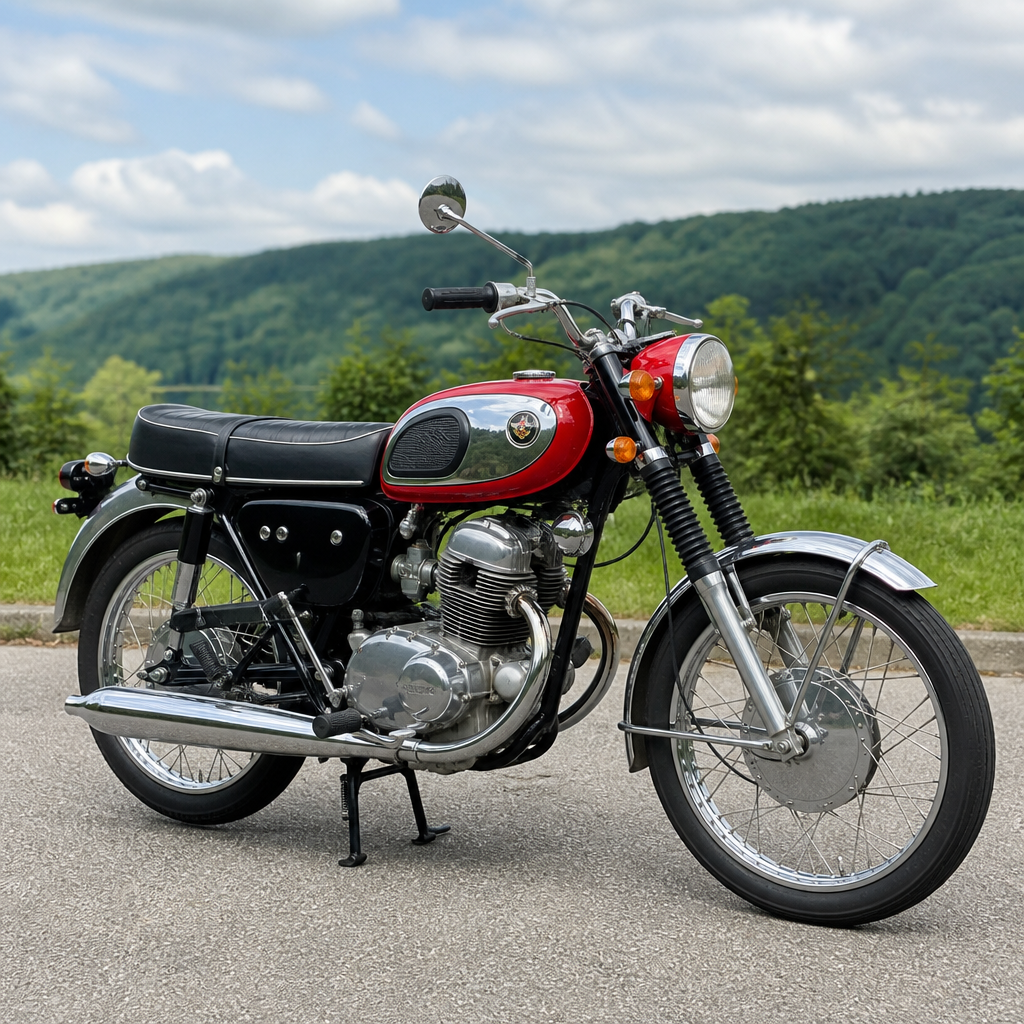
Honda classics occupy a special place in automotive history because they show how a young Japanese manufacturer earned global trust through engineering discipline, clever packaging, and everyday reliability. In the context of Japanese classics, Honda stands apart for building cars and motorcycles that were not merely durable appliances but genuine technical statements. When collectors talk about early Honda models, they usually mean the machines produced from the 1960s through the 1980s that established the brand’s core identity: efficient engines, front wheel drive mastery, lightweight construction, and unusually advanced design for their class. That legacy matters because the modern enthusiasm for Japanese classics did not appear overnight. It grew from decades of owners discovering that small, smartly engineered Hondas could outlast expectations, win races, and influence the industry far beyond their size.
A classic Honda is not defined only by age. It is a vehicle that marked a turning point for the company or the market. The S600 and S800 proved Honda could transfer motorcycle thinking into sports car engineering. The N360 and early Civic showed the company understood compact urban mobility before it became a global obsession. The first Accord demonstrated that practical family transport could also feel refined. The CR-X and Prelude showed how efficiency and driver engagement could coexist. These models matter within the broader Japanese classics landscape because they helped establish the reputation that later benefited cars such as the Integra, NSX, and Type R line. If you are exploring classic Honda history as an entry point into Japanese classics, these early models form the essential map.
I have spent years around surviving Hondas at auctions, owners’ meets, and restoration workshops, and one fact keeps repeating: the cars that built Honda’s legacy were rarely the most expensive in their day, but they were often the most thoughtfully engineered. That is why this hub matters. It is designed to explain which early Honda models shaped the brand, what made them different, where they fit within Japanese classic car culture, and why collectors still care. Whether you want a usable vintage driver, a restoration project, or a deeper understanding of Japanese classics, the early Honda story offers one of the clearest examples of how disciplined engineering can create a lasting automotive identity.
The foundation years: from motorcycles to serious automobiles
Honda entered car production later than some rivals, but it arrived with a distinct engineering mindset formed by motorcycle success. Soichiro Honda built the company’s reputation on high revving, mechanically efficient engines, and that mentality carried directly into its first notable cars. The 1963 T360 kei truck and S500 sports car were not tentative experiments. They were ambitious, technically unusual products from a company determined to prove it could compete on merit. The S500, followed by the S600 and S800, used chain driven rear wheels and jewel like DOHC engines inspired by motorcycle practice. In an era when many small sports cars relied on simpler pushrod layouts, Honda offered sophistication that seemed almost extravagant for the segment.
Those early sports models did more than attract attention. They established patterns that still define classic Hondas today. First, Honda valued engine quality as a brand signature. Second, it believed small displacement did not require dull performance. Third, it used advanced engineering to offset limited scale and market power. In practical terms, these choices gave enthusiasts a reason to take the company seriously. In historical terms, they positioned Honda as a maker of high efficiency machines rather than bargain transportation. That distinction is crucial when comparing Honda with other Japanese classics. Toyota built trust through broad competence, Nissan through breadth and motorsport, Mazda through innovation and rotary identity, while Honda built loyalty through precision engineering and mechanical character.
The N360, launched in 1967, expanded that philosophy into mass mobility. It was tiny, light, and ideally suited to Japanese urban conditions, yet it carried the same sense of engineering intent. Honda did not simply copy prevailing kei car formulas. It optimized packaging, weight, and drivetrain efficiency in ways that reflected a systems approach. For students of Japanese classics, this period is important because it shows Honda learning how to scale its engineering values from niche sports cars to high volume passenger vehicles. That ability would define the company’s rise in the 1970s.
The Civic changed everything for Honda and for small cars
If one model deserves to be called the cornerstone of Honda’s automotive legacy, it is the first generation Civic introduced in 1972. The Civic succeeded because it met a global moment perfectly. Fuel prices were rising, emissions regulations were tightening, and buyers wanted practical cars that did not feel cheap. Honda answered with a compact hatchback and sedan that were space efficient, easy to drive, and surprisingly refined. The Civic’s clean design, low curb weight, and responsive engines gave it broad appeal, but the real breakthrough came with the CVCC engine. Compound Vortex Controlled Combustion allowed Honda to meet strict emissions standards without relying on a catalytic converter in the earliest applications, a major technical and commercial advantage during the 1970s regulatory transition.
That achievement matters far beyond Honda branding. It proved a small Japanese manufacturer could solve an industrywide problem through combustion science rather than cost heavy aftertreatment alone. American regulators and competitors took notice. Consumers noticed something simpler: the Civic was economical, dependable, and easy to live with. In workshop terms, first generation Civics also built loyalty because they were straightforward to maintain. Parts access, simple packaging, and strong owner community support helped many survive long after comparable economy cars disappeared. Today, when collectors seek a foundational Japanese classic that explains why compact Hondas became beloved worldwide, the early Civic is usually the first answer.
| Model | Launch era | Why it mattered | Collector appeal today |
|---|---|---|---|
| S600/S800 | 1960s | High revving DOHC sports cars that announced Honda engineering ambition | Rare, technically distinctive, historically important |
| N360 | Late 1960s | Showed Honda could package efficient urban mobility at scale | Early kei significance, compact charm |
| Civic | 1970s | Global breakthrough model with CVCC emissions innovation | Accessible entry into classic Japanese ownership |
| Accord | Late 1970s | Elevated compact family car standards for refinement and usability | Underappreciated milestone with strong historical value |
| Prelude/CR-X | 1980s | Balanced efficiency, technology, and driver engagement | Growing enthusiast demand and strong parts interest |
The Civic also became the template for Honda’s expansion outside Japan. It demonstrated that Japanese classics were not confined to specialist sports cars or luxury sedans. A practical compact could become collectible if it represented a genuine shift in engineering or market expectations. That is why this hub treats the Civic as central to Japanese classics coverage. It links affordability, innovation, and cultural impact in one package, and it created the customer trust that made later Honda successes possible.
The Accord established Honda as a mainstream global brand
Where the Civic introduced Honda to a mass audience, the first generation Accord, launched in 1976, proved the company could move upmarket without losing its identity. The Accord was still compact by modern standards, but it felt mature. Build quality, cabin ergonomics, ride comfort, and drivetrain smoothness were strong enough to challenge larger and more established competitors. In the United States especially, the Accord became a benchmark for what a well executed family car should be. It was economical, but owners did not buy it only to save fuel. They bought it because it felt carefully engineered in every touchpoint, from control weighting to visibility to practical interior packaging.
This is a key moment in classic Honda history because it broadened the brand’s meaning. Honda was no longer simply the maker of clever small cars. It became a trusted manufacturer of refined daily transport. That transition matters in any serious survey of Japanese classics because many iconic brands earn recognition from halo models while their long term legacy is built by ordinary cars done exceptionally well. The Accord is one of those cars. In restoration circles, early Accords are harder to preserve than later enthusiast models because so many were used until the end of their service life. That scarcity is increasing appreciation. Survivors reveal how advanced the car felt in period, especially in areas like packaging efficiency, driving ease, and assembly quality.
The Accord also helped establish the manufacturing and quality control standards that later supported Honda’s reputation worldwide. Once buyers trusted Honda with family transportation, the company gained room to experiment with more specialized vehicles. In that sense, the Accord is not just a successful model. It is the platform on which much of Honda’s later enthusiast credibility rests.
Sports coupes and driver focused design in the 1980s
By the 1980s, Honda had earned enough confidence to explore more expressive products, and this period produced several future classics. The Prelude, introduced in 1978 and developed further in the 1980s, brought a more sophisticated coupe experience to buyers who wanted something sportier than a Civic or Accord but still practical and efficient. It was notable for clean aerodynamics, well resolved front wheel drive handling, and later technical features such as four wheel steering. The Prelude showed that Honda understood an important truth of Japanese classics: innovation attracts attention, but usability sustains affection.
The CR-X made that principle even clearer. Introduced in the early 1980s, it distilled Honda’s strengths into a compact, lightweight hatchback coupe with excellent fuel economy and lively dynamics. In Si form, the CR-X offered a genuine enthusiast experience without requiring large displacement or high running costs. I have seen repeatedly that owners who come to Japanese classics through European roadsters or American muscle are often surprised by how engaging an early CR-X feels at ordinary speeds. Its magic lies in low mass, direct controls, and mechanical honesty. Those qualities age well, which is exactly why the best Japanese classics remain relevant long after their original performance figures stop impressing on paper.
Another important thread from this era is Honda’s engine development path. The company refined single cam and dual cam layouts, improved fuel injection systems, and built a reputation for smooth, durable high revving fours. These advances were not isolated technical wins. They shaped how enthusiasts perceived every Honda product, from economy hatchbacks to coupes. By the time later icons arrived, the brand had already trained buyers to expect efficiency without fragility and sophistication without unnecessary complexity.
Why early Honda models matter in the wider Japanese classics market
Early Honda models occupy a distinctive niche within Japanese classics because they combine historical importance with usability. Some classics become revered mainly because they were rare, expensive, or dominant in motorsport. Honda’s early legacy models often earned their place through intelligent mass market engineering. That gives them broad cultural reach. A Civic or Accord from the 1970s can tell as much about Japan’s automotive rise as a more exotic performance car because those models changed everyday expectations around emissions, fuel economy, ergonomics, and quality control.
For collectors, this creates both opportunity and challenge. The opportunity is that many classic Hondas remain more affordable than equivalent period icons from Europe, and they often deliver a friendlier ownership experience. The challenge is originality. Because these cars were practical and durable, many were modified, neglected, or simply worn out. Rust is a frequent issue on cars from this era, especially in humid or road salt regions. Trim, interior plastics, and model specific hardware can be harder to source than major mechanical parts. Buyers should prioritize completeness and structural condition over cosmetic polish. A straight, rust controlled car with intact trim is usually worth more than a freshly painted example hiding corrosion or missing rare components.
As a hub page for Japanese classics, this article also points to the broader significance of Honda within the category. Honda links kei car history, emissions innovation, front wheel drive development, practical family transport, and lightweight sport compact culture. Few brands bridge so many important themes with such consistency. That is why any comprehensive exploration of Japanese classics should place early Honda models near the center rather than at the margins.
Honda’s legacy was built by early models that solved real problems better than rivals while still giving drivers something to enjoy. The S600 and S800 showed daring engineering. The N360 proved compact mobility could be intelligently designed. The Civic changed the global small car conversation with efficiency, packaging, and CVCC innovation. The Accord turned Honda into a mainstream standard for quality and refinement. The Prelude and CR-X carried that foundation into enthusiast territory without abandoning practicality. Together, these cars explain why Honda became one of the most respected names in the automotive world and why its earliest successes remain essential to any serious discussion of Japanese classics.
For readers exploring classic car models and brands, the main benefit of understanding early Honda history is clarity. You can see exactly how a manufacturer builds credibility: not through one lucky hit, but through repeated engineering decisions that earn trust over time. That perspective helps when evaluating other Japanese classics as well. Look for the models that introduced a technology, reset a segment standard, or translated motorsport and engineering ideas into everyday usefulness. Honda did all three, repeatedly, and that is why its early cars still matter to collectors, restorers, and historians.
If you want to go deeper into Japanese classics, use these Honda milestones as your starting map. Study the early sports cars, compare first generation Civic and Accord variants, and pay attention to how Honda balanced efficiency with driver appeal. The brand’s legacy becomes much clearer when you follow those threads model by model. Start with the cars covered here, then continue through the broader Japanese classics category to see how Honda’s approach influenced an entire era.
Frequently Asked Questions
What makes early Honda models so important in automotive history?
Early Honda models matter because they document the rise of a company that earned credibility through precision engineering, efficient design, and remarkable consistency. In the 1960s, 1970s, and 1980s, Honda was not simply building affordable transportation; it was proving that compact vehicles could be intelligently packaged, technologically ambitious, and dependable enough to win lifelong customer loyalty. That combination helped Honda move from a relatively young Japanese manufacturer to a global name trusted in markets that had long favored domestic and European brands.
What separates Honda from many of its contemporaries is that its early cars and motorcycles often carried a strong engineering identity. Whether it was a rev-happy small-displacement engine, front-wheel-drive packaging that maximized cabin space, or a willingness to innovate around emissions and fuel efficiency, Honda developed products that felt purposeful rather than generic. Models such as the N600, Z600, Civic, Accord, and first-generation Prelude reflected a company that understood how to solve practical problems without stripping away personality. That is a major reason collectors and historians continue to view early Hondas as foundational classics rather than merely old economy vehicles.
Which early Honda models are considered the true classics that built the brand’s legacy?
Several early Honda models are widely recognized as the pillars of the brand’s legacy. The Honda N600 and Z600 are among the earliest small cars that introduced many buyers outside Japan to Honda’s engineering philosophy. These compact machines were light, efficient, and mechanically distinctive, showing that Honda could extract surprising performance and character from very small platforms. They also represented the brand’s early confidence in doing things its own way, rather than simply copying established industry formulas.
The first-generation Civic is perhaps the most important early Honda car from a mainstream historical perspective. It arrived at exactly the right time, offering efficiency, practical size, and strong reliability when consumers increasingly cared about fuel economy and durability. The early Accord then expanded Honda’s reputation by showing that the company could scale up its strengths into a more refined and versatile package. Add in the first-generation Prelude, with its sporty image and advanced feel, and the picture becomes clearer: Honda’s classics are not just rare curiosities, but the vehicles that established the company’s reputation for intelligent engineering and real-world usability. On the motorcycle side, landmark machines such as the Super Cub and CB series also deserve mention because they reinforced the same themes of quality, accessibility, and technical confidence that defined Honda’s early automotive success.
Why are collectors increasingly interested in classic Hondas from the 1960s through the 1980s?
Collector interest in classic Hondas has grown because the market has broadened beyond traditional muscle cars, European exotics, and luxury classics. Enthusiasts now recognize that cultural significance, engineering originality, and period authenticity are just as important as sheer horsepower. Early Hondas score well in all of those areas. They capture a formative era in Japanese manufacturing, they tell the story of changing global consumer tastes, and they preserve a style of lightweight, efficient engineering that feels especially relevant today.
Another major factor is nostalgia. Many collectors remember these cars as dependable family transportation, first project cars, or vehicles that introduced them to manual gearboxes, efficient engines, and Japanese design. That emotional connection matters, but so does rarity. Because many early Hondas were used hard, modified extensively, or simply worn out over time, clean and original examples are no longer easy to find. As surviving cars become scarcer, their appeal rises. Buyers also appreciate that classic Hondas can still deliver an engaging ownership experience through simplicity, nimble handling, compact dimensions, and mechanical honesty. They may not always dominate auction headlines, but within enthusiast circles they are increasingly respected as historically meaningful and genuinely enjoyable classics.
What engineering qualities helped early Honda models earn global trust?
Honda earned trust by building machines that felt carefully thought out from the inside out. Early models were often compact, but they made smart use of space and mechanical layout. Honda became known for engines that were efficient, durable, and unusually eager for their size, giving drivers a sense that the company valued refinement and responsiveness as much as economy. In an era when many small cars were viewed as disposable or purely basic, Honda showed that affordability did not have to mean carelessness in design or execution.
One of the clearest examples of Honda’s engineering confidence was its approach to emissions and fuel economy during periods of tightening regulations and shifting consumer expectations. Instead of treating compliance as an afterthought, Honda developed solutions that helped its vehicles remain practical and competitive without losing usability. Just as important, the company built a reputation for quality control and repeatability. Owners came to trust that a Honda would start reliably, wear its miles well, and remain economical to operate. That kind of trust is not built through marketing alone; it comes from thousands of everyday experiences in which owners found that the product simply worked. Over time, that consistency turned engineering discipline into brand identity.
What should buyers look for when shopping for a classic early Honda today?
Anyone shopping for an early Honda should begin with condition, originality, and parts support. Rust is often the most important issue, especially on cars from the 1960s through the early 1980s. Buyers should inspect rocker panels, floors, wheel arches, suspension mounting points, trunk areas, and lower body seams carefully, because structural corrosion can be far more difficult and expensive to correct than mechanical problems. A solid, honest car with cosmetic imperfections is usually a better purchase than a freshly restored example hiding serious metal damage underneath.
Mechanical condition still matters, of course, and prospective buyers should pay attention to engine health, transmission operation, cooling system integrity, carburetor tuning where applicable, and the condition of suspension and braking components. With older Hondas, originality can significantly affect both collector interest and long-term value, so it is worth noting whether the car retains its correct engine, interior trim, wheels, and period details. Tasteful period modifications may still appeal to some enthusiasts, but heavily altered examples can be harder to value and restore properly. It is also wise to research model-specific parts availability before buying, since some early Hondas are easier to support than others. Ultimately, the best classic Honda purchase is usually one that combines a strong body, complete documentation, mechanical honesty, and a clear connection to the model’s historical character.