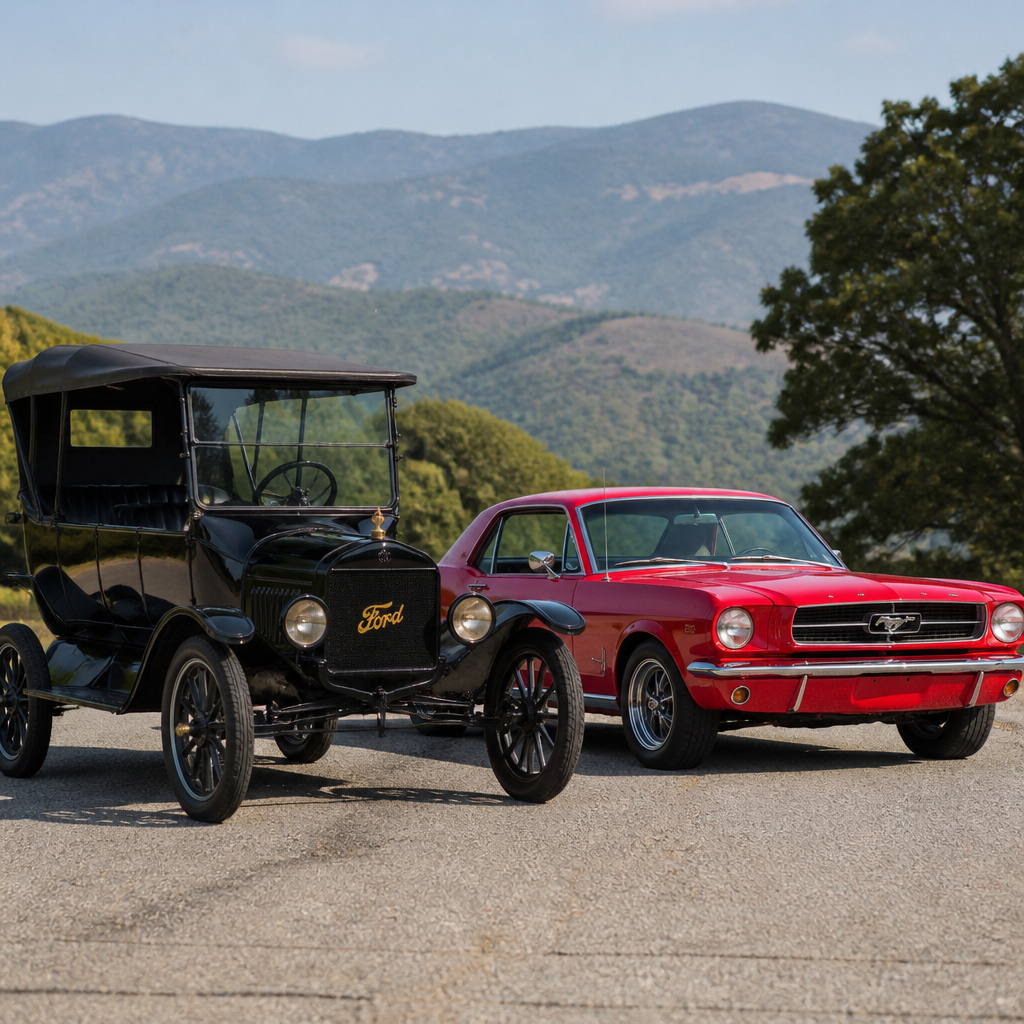
Ford’s classic cars chart the rise of the American automobile, from the utilitarian Model T to the aspirational Mustang, and they still shape how collectors, restorers, and everyday drivers define an American classic. In practical terms, a classic Ford is usually a historically significant vehicle that represents a turning point in design, engineering, manufacturing, or culture. That definition includes mass-market milestones like the Model T, elegant prewar V8 sedans, postwar family cars, thunderous muscle machines, and halo vehicles that gave Ford a performance identity. As someone who has spent years researching production changes, decoding trim tags, and comparing original specifications with restored examples, I can say few brands offer a clearer timeline of American automotive progress than Ford.
This matters because Ford did more than build popular cars. It changed how cars were made, how they were priced, and how they fit into daily life. The moving assembly line, introduced for Model T production in 1913, radically cut build time and helped lower ownership costs for millions of families. Ford also democratized new technology. The flathead V8, launched for 1932, brought eight-cylinder power to buyers who previously could not afford it. Decades later, the 1964½ Mustang created the pony car segment by packaging style, performance options, and affordability in one highly marketable coupe. Each of those breakthroughs influenced competitors, suppliers, racers, and government safety standards.
For readers exploring American classics, Ford serves as the logical hub because its lineup intersects with nearly every collector category. Prewar enthusiasts study brass-era runabouts and flathead hot rods. Mid-century fans pursue Crestline Skyliners, Fairlanes, and Thunderbirds. Muscle car buyers compare Mustangs, Torinos, and Falcons. Restoration newcomers often start with Ford because parts support is broad, club knowledge is deep, and factory documentation is unusually accessible through period brochures, shop manuals, Marti Reports for many later models, and marque specialists. Understanding Ford’s classic cars creates a framework for understanding the wider American market, including Chevrolet, Plymouth, Dodge, AMC, and Lincoln-Mercury counterparts.
Just as important, Ford’s history shows that “classic” does not mean one thing. Some vehicles became classics because they were revolutionary, like the Model T. Others earned status through styling, like the 1949 Ford with its clean postwar slab sides. Some gained legendary appeal because they won races, such as GT40-derived performance influence on late-1960s street Fords. Others were ordinary transportation that survived long enough to become valuable records of everyday American life. A base six-cylinder Falcon can tell as much about its era as a big-block Boss Mustang. That broad spectrum is why Ford remains central to any serious discussion of American classic car models and brands.
How Ford Defined the Early American Automobile
Henry Ford did not invent the car, but he industrialized it more effectively than any rival of his era. The Model T, introduced for 1908, is the starting point for Ford classic car history because it changed the economic equation of mobility. Early Model Ts used a 177-cubic-inch inline-four engine, planetary transmission, and rugged chassis suited to poor roads. By standardizing components and simplifying assembly, Ford pushed prices down over time, helping move the automobile from luxury item to household necessity. By 1927, more than 15 million Model Ts had been built, an output unmatched for decades. That production scale made dealers, mechanics, fuel stations, and road infrastructure expand around the car itself.
The Model T’s real-world significance is easy to overlook today because surviving examples often appear as museum pieces. In its own time, it was farm equipment, family transport, light commercial vehicle, and social passport. Owners converted Ts into pickups, speedsters, snow machines, and even improvised tractors. Ford supported this versatility with interchangeable parts and a nationwide distribution network. For collectors, the Model T remains approachable because mechanical systems are simple, reproduction parts are plentiful, and clubs provide detailed technical advice. When people ask which Ford started the American classics story, the correct answer is the Model T because it created the market that later classics would inhabit.
The Model A replaced the T in 1927 and represented Ford’s first major acknowledgment that buyers wanted not just durability, but also comfort, style, and easier operation. With a conventional three-speed transmission, improved brakes, and more modern proportions, the Model A feels much closer to later automobiles. It sold strongly through the early years of the Great Depression and remains one of the most drivable prewar Fords for present-day hobbyists. If the Model T taught America to drive, the Model A taught Ford how to blend practicality with appeal, a balance that would define the company’s best classic cars for the next half century.
The Flathead V8, Styling Progress, and Prewar Identity
Ford’s next great leap came in 1932 with the introduction of the flathead V8. This side-valve engine was not the most technically advanced design in the industry, but it was affordable, compact, and tunable. That combination made it historic. Before Ford’s 221-cubic-inch V8, eight-cylinder power was mostly reserved for premium brands. By putting a V8 into a car priced for ordinary buyers, Ford changed performance expectations across the market. Hot rodders later embraced the flathead because it responded well to cylinder head, intake, and ignition upgrades from companies such as Edelbrock, Offenhauser, and Navarro.
Prewar Ford styling also matured rapidly. The 1932 Ford, often called the Deuce, became an icon not simply because of its engine, but because its proportions suited customizers. The 1933 and 1934 models introduced smoother grilles and more integrated fenders. By the late 1930s, Ford offered streamlined bodies that reflected broader aerodynamic trends without losing affordability. Mercury’s launch in 1938 expanded the corporation’s reach, bridging the gap between Ford and Lincoln and creating another branch of American classics closely tied to the Ford story. These years established Ford as a company that could sell transportation while nurturing aspiration.
Collectors still value prewar Fords for three distinct reasons: historical significance, mechanical simplicity, and customization heritage. A stock 1936 Ford Tudor appeals to preservationists, while a chopped 1932 five-window coupe represents the birth of hot rod culture. That dual identity is rare. Chevrolet competed closely in sales, but Ford’s V8 and body shapes gave it a stronger foothold in custom and racing circles. Within the larger American classics landscape, prewar Fords are the connective tissue between antique cars and later performance machines.
Postwar Ford and the Birth of the Modern Family Car
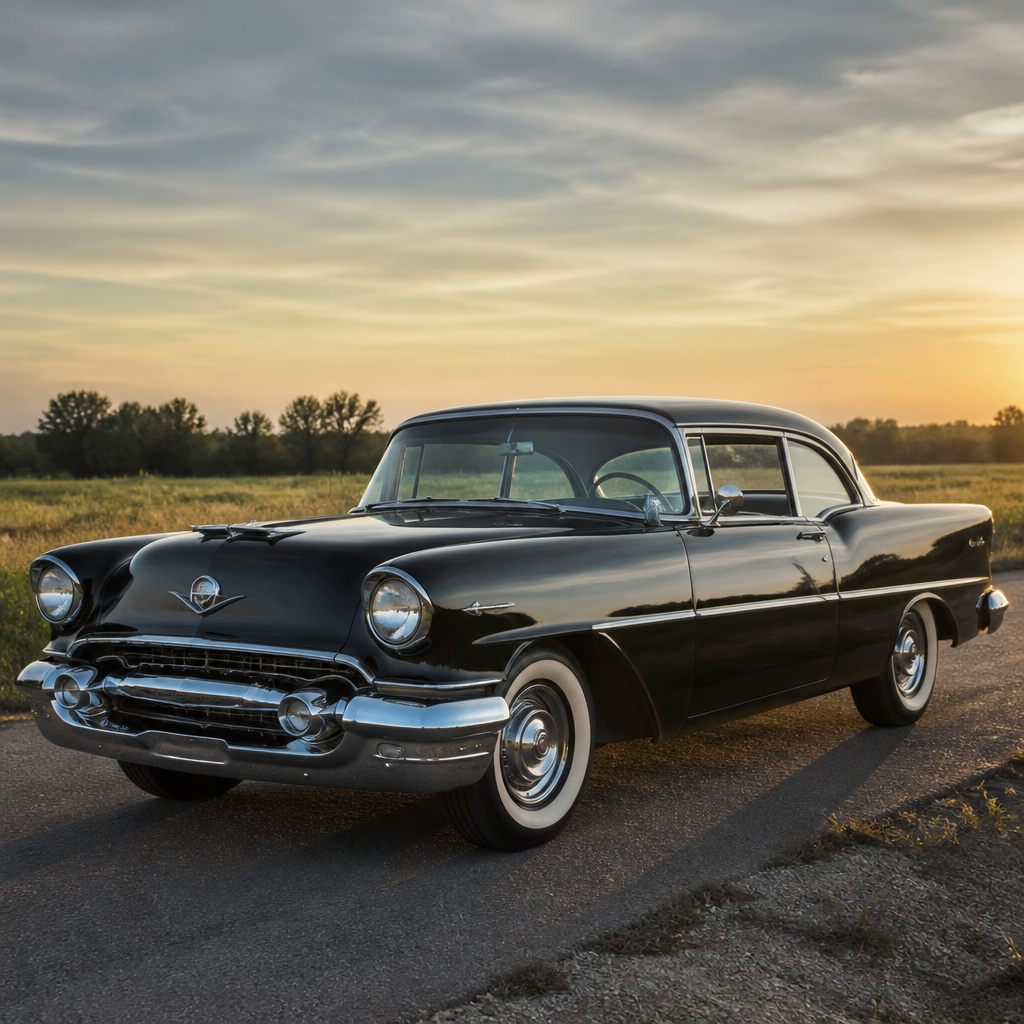
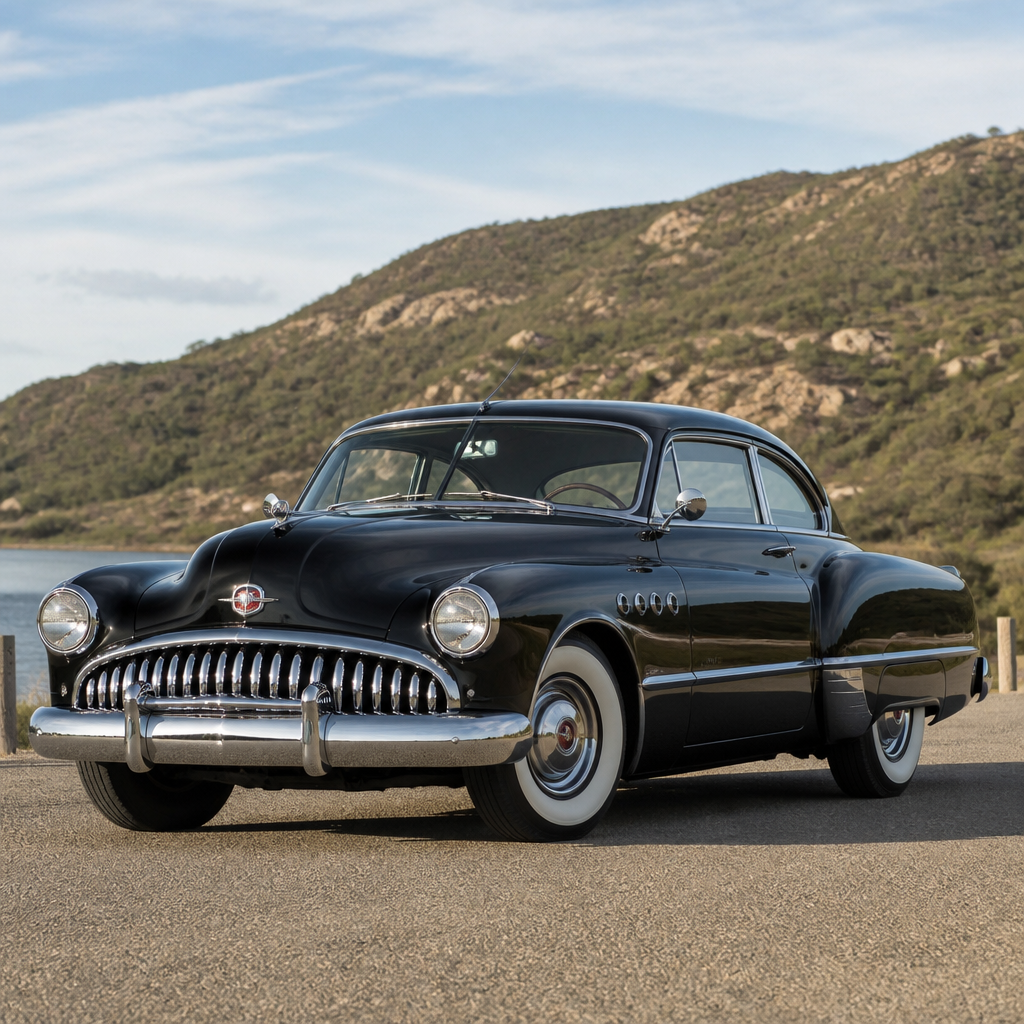
After World War II, Ford initially resumed production with warmed-over prewar designs, as did most manufacturers. The real reset came with the 1949 Ford, one of the company’s most important models. Its slab-sided body, integrated fenders, and lower stance looked decisively modern compared with prewar holdovers. This car helped restore Ford’s competitiveness and gave customizers a fresh platform. In California car culture, the 1949 to 1951 Fords became staples for lowering, nosing, decking, and mild lead work, creating some of the era’s most recognizable customs.
The 1950s brought segmentation and experimentation. Ford expanded trim levels, body styles, and wheelbases to match the growing suburban market. The Crestline, Mainline, and Customline families reflected a strategy that now seems standard but was then transformative: give buyers clear ladders of price and prestige within one brand. Overhead-valve V8 development improved performance and reliability, while automatic transmissions became more common. The 1955 Ford Thunderbird marked another turning point. Although often compared with the Chevrolet Corvette, the Thunderbird succeeded by offering a personal luxury formula rather than a pure sports car experience. Buyers responded strongly, and Ford proved it could create desire beyond basic transportation.
Another important postwar Ford classic is the Fairlane. Introduced in 1955 as a premium trim line and later developed into its own series, the Fairlane became central to Ford’s mid-size strategy. By the 1960s, Fairlane variants would provide the foundation for serious street and strip performance. For readers using this page as a hub within American classics, this is the era when Ford branches into several enduring collector paths: custom 1949 to 1951 coupes, 1950s chrome-laden cruisers, personal luxury Thunderbirds, and practical but increasingly powerful Fairlanes and Galaxies.
| Model | Introduced | Why It Matters | Collector Appeal |
|---|---|---|---|
| Model T | 1908 | Mass-produced car that expanded ownership nationwide | Foundational automotive history, simple mechanics |
| Model A | 1927 | Modernized Ford with conventional controls and improved comfort | Usable prewar classic with strong parts support |
| 1932 Ford V8 | 1932 | Brought affordable V8 power to the public | Hot rod icon, major customization heritage |
| 1949 Ford | 1949 | Defined Ford’s postwar styling reset | Custom culture favorite, milestone design |
| Thunderbird | 1955 | Created a successful personal luxury performance formula | Style, comfort, and broad generational interest |
| Mustang | 1964½ | Launched the pony car segment | Huge enthusiast base, endless model variety |
Muscle, Motorsports, and the Mustang Revolution
No Ford classic car article is complete without the Mustang, because the Mustang changed not just Ford but the entire American performance market. Introduced in April 1964 and commonly called the 1964½ by enthusiasts, the Mustang used Falcon-based underpinnings to keep costs down while presenting a long-hood, short-deck silhouette that looked youthful and sporty. Buyers could choose coupes, convertibles, and later fastbacks, then add engines ranging from an economical inline-six to increasingly potent V8s. More than 400,000 were sold in its first model year, proving Ford had identified a huge unmet demand.
The Mustang’s genius was flexible packaging. A secretary, a returning veteran, or a suburban family could all buy versions suited to their budgets and identities. Carroll Shelby then amplified the Mustang’s performance credibility with the GT350 and later GT500, turning a stylish compact into a racing and street legend. Ford deepened the formula with high-performance variants such as the Mach 1, Boss 302, Boss 429, and Cobra Jet models. In parallel, the Fairlane, Torino, and Galaxie lines offered big-block power for drag racing, NASCAR homologation, and highway performance. This is why Ford occupies such a large share of American muscle history: it covered every price point from accessible to elite.
Motorsports mattered because showroom reputation and track results reinforced each other. Ford’s FE-series and later 429 engines built credibility in stock car racing and drag strips, while the company’s battle with Ferrari at Le Mans elevated Ford’s global performance image. Even though the GT40 was not a typical mass-market classic car, its racing success boosted enthusiasm for performance-oriented Fords sold to the public. By the late 1960s, a buyer could walk into a Ford dealership and choose a mild commuter Mustang or a serious performance machine with stripes, scoops, upgraded suspension, and competition-inspired branding. Few manufacturers executed that ladder better.
Why Ford Classics Still Dominate the American Collector Market
Ford classics remain popular because they are supported, recognizable, and usable. Parts availability is one of the biggest reasons. Companies such as Dennis Carpenter, National Parts Depot, Scott Drake, and Dearborn Classics have long supplied reproduction trim, weatherstripping, sheet metal, and interior components for many key models. Engine support is even broader. Small-block Ford V8s, FE engines, Y-blocks, flatheads, and six-cylinders all benefit from decades of aftermarket knowledge. That support reduces restoration risk, especially compared with orphan brands or low-volume independents.
Documentation also helps. Factory shop manuals, assembly manuals, dealer literature, and production references allow restorers to verify finishes, hardware, and option combinations with a level of precision that serious collectors expect. Judging standards from marque clubs create useful benchmarks, even for owners who prefer driver-quality cars over concours restorations. Market demand stays strong because Ford spans multiple entry points. A Model A, first-generation Mustang coupe, or 1950 Ford sedan may be reachable for a new enthusiast, while rare Shelbys, Boss cars, and select Thunderbirds sit firmly in blue-chip territory. That range keeps the brand visible at local cruise nights, national auctions, and museum exhibitions alike.
For anyone building out knowledge of classic car models and brands, Ford is the essential American hub. Its cars explain industrial history, design trends, postwar consumer culture, hot rodding, motorsports, and the economics of collecting in one continuous story. Start with the Model T, study the flathead era, understand the 1949 reset, then follow the line to Thunderbird and Mustang. Doing that gives you a working map of American classics and a smart foundation for exploring related marques, restoration guides, and model-specific buying articles across this topic.
Ford’s classic cars endure because each major era solved a different problem for American drivers while leaving behind machines with lasting emotional pull. The Model T made mobility affordable. The Model A made Ford more modern. The flathead V8 made performance attainable. The 1949 Ford translated postwar optimism into sheet metal. The Thunderbird proved comfort and glamour could sell as strongly as speed. The Mustang turned personal style and performance into a segment that competitors had to chase. Together, those vehicles tell a larger story about the United States: industrial growth, expanding roads, suburbanization, youth culture, and the rise of enthusiast communities.
For collectors and readers exploring American classic cars, the main benefit of understanding Ford history is clarity. You can place nearly any domestic classic in context once you understand how Ford set benchmarks in production, design, and marketing. That context makes it easier to evaluate rarity, restoration priorities, parts support, and long-term desirability. It also helps you appreciate ordinary survivors, not just headline auction cars. A six-cylinder Falcon, a base Fairlane, or a weathered F-1 can be historically valuable because it reflects how people actually lived and drove.
If you want to go deeper into classic Ford models and the wider world of American classics, use this hub as your starting point. From here, explore model-specific histories, restoration guides, engine families, body-style comparisons, and buying advice for the Ford, Mercury, and Lincoln vehicles that shaped the market. The more precisely you study Ford’s progression from Model T to Mustang, the more confidently you can navigate every other classic car brand in America.
Frequently Asked Questions
1. Why is the Ford Model T considered such an important starting point in the history of Ford classic cars?
The Ford Model T is widely regarded as the foundation of Ford’s classic-car story because it transformed the automobile from a luxury item into practical transportation for ordinary people. Introduced in 1908, the Model T was not the first car ever built, but it was the car that changed how cars were made, sold, and used. Henry Ford’s adoption of moving assembly-line production dramatically lowered manufacturing costs, reduced build times, and made ownership possible for a much broader segment of American society. That shift alone gives the Model T a permanent place in automotive history.
Beyond manufacturing, the Model T also mattered because it helped shape the early identity of the American automobile. It was durable, simple to repair, and adaptable to rough roads and rural conditions, which made it especially valuable in a rapidly developing country. Farmers, tradespeople, and families used Model Ts for everything from daily travel to work duties, and that versatility made the car a cultural fixture. When people discuss what qualifies a Ford as a true classic, historical significance is a major factor, and the Model T easily meets that standard because it represents a turning point in mobility, industry, and everyday life.
For collectors and restorers today, the Model T remains important not just as an antique, but as the vehicle that launched Ford’s long relationship with practical innovation. Its straightforward engineering and iconic status make it one of the most recognizable early American cars, and it set the stage for every major Ford model that followed.
2. What makes a Ford “classic” rather than just old?
A Ford becomes a classic not simply because of age, but because it holds lasting historical, engineering, stylistic, or cultural importance. In practical terms, a classic Ford is usually a vehicle that represents a meaningful step in the brand’s evolution or in the wider auto industry. That can mean a breakthrough in manufacturing, an influential design, a major performance achievement, or a model that became deeply woven into American life. Age can help establish a car’s status, but age alone does not guarantee significance.
For example, the Model T is classic because it revolutionized mass production and personal transportation. Prewar Ford V8 models are classic because they brought affordable V8 power to a wider public and helped redefine performance and value. Postwar sedans and family cars matter because they reflect the changing needs of suburban America. Later, cars like the Thunderbird and Mustang became classics because they captured aspirational ideas about style, freedom, and performance in ways that reshaped the market.
Collectors also tend to look at originality, design influence, rarity, cultural visibility, and historical context. A car that introduced a new engine concept, marked a design breakthrough, or became symbolic of a specific era often carries more weight than a less distinctive model from the same period. In Ford’s case, the classic label often attaches to vehicles that tell a larger story about American manufacturing, middle-class mobility, hot-rodding culture, or the rise of the personal car. In other words, a classic Ford is usually one that stands for more than itself.
3. How did Ford’s prewar and postwar cars help shape the company’s classic-car legacy?
Ford’s classic-car legacy was not built by one model alone; it developed across several eras, especially through the transition from prewar innovation to postwar expansion. In the prewar period, Ford established itself as a company capable of combining durability, affordability, and increasingly sophisticated engineering. One of the biggest landmarks was the introduction of the flathead V8 in 1932. This engine brought eight-cylinder performance into a more accessible price range, and that had a major impact on both everyday driving and early enthusiast culture. The flathead Ford became especially influential in hot-rodding circles, where its tunability and availability helped define grassroots American performance.
Prewar Ford sedans, coupes, and commercial vehicles also became important because they reflected the company’s ability to evolve beyond pure utility. Styling improved, comfort increased, and Ford’s vehicles began to embody a stronger emotional appeal. These cars were practical, but they also started to express a design language and mechanical identity that collectors still appreciate today.
After World War II, Ford entered a very different market. Americans wanted reliable family transportation, but they also wanted modern styling, more comfort, and cars that reflected postwar optimism. Ford’s postwar models helped meet those demands, and in doing so they became part of the visual and social fabric of mid-century America. These were the cars seen in expanding suburbs, on new highways, and in family photo albums across the country. By the 1950s and early 1960s, Ford was no longer just building transportation; it was shaping aspiration, image, and mainstream consumer taste.
This prewar-to-postwar evolution matters because it explains how Ford became central to multiple definitions of the American classic. Some classic Fords are prized for their engineering simplicity and historical importance, while others are remembered for chrome-heavy styling, V8 character, or nostalgic ties to family life and growing car culture. Together, those eras created the broad foundation that made Ford such a dominant force in collector history.
4. Why is the Ford Mustang often seen as the defining classic Ford for many enthusiasts?
The Ford Mustang occupies a special place in Ford history because it combined accessibility, style, and performance in a way that felt fresh and exciting when it debuted in 1964. It was not just another new model; it effectively created and popularized the “pony car” segment, offering buyers a sporty image at a price many could realistically afford. That formula made the Mustang an immediate sensation and helped turn it into one of the most important nameplates in American automotive culture.
What makes the Mustang especially significant in the classic-Ford conversation is how many roles it has played at once. It appealed to young drivers who wanted something stylish and energetic, to families looking for an affordable second car with personality, and to performance enthusiasts drawn to increasingly powerful V8 variants. Over time, Mustang versions ranging from modest six-cylinder coupes to high-performance GTs and specialty models created a wide enthusiast base. That diversity helped the car remain culturally relevant while still feeling distinctly Ford.
The Mustang also became a symbol of a broader shift in the auto market. It represented freedom, individuality, and sporty design without requiring the expense of a European sports car or a full-size American performance model. In that sense, it was aspirational but attainable, which is a big reason it remains so beloved today. For collectors, the Mustang offers rich variety across generations, trims, engines, and special editions. For restorers, it benefits from excellent parts support and a vast knowledge base. And for everyday enthusiasts, it provides one of the clearest examples of how a Ford can be both historically important and genuinely enjoyable to own.
Simply put, the Mustang feels like the point where Ford’s practical heritage and emotional appeal fully came together. That is why, for many people, it stands as the defining classic Ford, even within a lineup that includes landmarks as important as the Model T and the flathead V8 era.
5. How do classic Ford cars still influence collectors, restorers, and everyday drivers today?
Classic Ford cars continue to shape the automotive world because they remain highly visible, highly usable, and deeply connected to American identity. For collectors, Ford’s history offers a broad spectrum of entry points. Some pursue brass-era icons like the Model T for their foundational place in automotive history. Others focus on 1930s and 1940s V8 Fords because of their mechanical character and hot-rod heritage. Many are drawn to postwar cruisers, Thunderbirds, Falcons, Fairlanes, or Mustangs because these cars combine nostalgia with a driving experience that still feels engaging. That range is one reason Ford holds such a strong position in the classic market.
Restorers benefit from another major advantage: support. Many classic Ford models have strong aftermarket parts availability, active owner communities, abundant literature, and generations of shared technical knowledge. That makes restoration more practical than it is for many obscure makes or low-production cars. Whether someone is performing a factory-correct restoration or building a restomod with modern brakes, suspension, and electronics, classic Fords often provide a realistic path from project car to roadworthy machine.
Everyday drivers are influenced by classic Fords in a different but equally important way. These vehicles have helped define what many people think of as an American classic: simple mechanical honesty, recognizable styling, V8 sound, and a connection to a specific period of social history. Even people who do not own one often measure later cars against the standards set by iconic Fords. The Mustang still shapes expectations around affordable performance. Early Fords still symbolize ingenuity and industrial progress. Mid-century Ford sedans and coupes still evoke family history, road trips, and postwar prosperity.
In practical and cultural terms, classic Fords endure because they are more than collector objects. They are reference points in the story of American transportation, design, and identity. That lasting influence is exactly why Ford’s classic cars remain central to conversations about restoration, collecting, and the meaning of an authentic American automobile.