The most valuable classic cars in today’s market are not simply old vehicles with shiny paint; they are scarce, culturally important machines whose values are shaped by provenance, condition, originality, and shifting collector demand. In practical terms, a classic car is usually a vehicle old enough to carry historic significance, while an investment-grade classic is one that attracts sustained buyer competition at major auctions, private sales, and marque-specific events. After years of tracking consignments, interviewing brokers, and watching reserve prices rise and fall, I have found that the strongest performers share a clear pattern: they sit at the intersection of rarity, design, motorsport history, and global brand recognition. That is why classic car market trends matter to collectors, investors, insurers, and even casual enthusiasts. Values affect restoration budgets, estate planning, financing, transport, and the liquidity of enthusiast assets. In today’s market, blue-chip classics continue to command extraordinary premiums, but the reasons vary by segment. A Ferrari 250 GTO trades on race pedigree and microscopic supply. A Mercedes-Benz 300 SL Gullwing benefits from engineering innovation and broad international appeal. Air-cooled Porsche 911s reflect a different trend entirely: large enthusiast communities can create durable demand even when production numbers are higher than true coachbuilt exotics. Understanding the hierarchy of value helps buyers avoid expensive mistakes. It also clarifies why two cars from the same decade can sell for prices separated by millions. This hub explains which models lead the market, what forces move prices, how different categories behave, and where informed collectors are finding opportunity now.
What makes a classic car valuable in today’s market
Classic car value is built on five primary factors: rarity, provenance, originality, condition, and market relevance. Rarity is the easiest to understand, but it is rarely enough on its own. Many low-production cars remain cheap because they lack desirability, parts support, or historical significance. Provenance, by contrast, can transform a car from merely expensive to museum grade. A documented competition history, celebrity ownership, factory prototype status, or inclusion in a respected registry materially changes buyer behavior. I have seen similar cars separated by hundreds of thousands of dollars because one retained matching-numbers driveline components and an uninterrupted ownership file.
Originality matters because serious buyers pay for authenticity. A car with its original engine, gearbox, chassis, body panels, interior materials, and factory colors generally commands a premium over a restored example with replacement parts or non-original specifications. Condition also matters, but the market has become more nuanced. Top-level concours restorations still do well, yet many buyers now pay equally strong money for well-preserved unrestored cars with known history, especially in preservation classes at major events such as Pebble Beach and Amelia Island. Market relevance refers to the broader taste cycle. During the last decade, analog driving experiences, manual gearboxes, and iconic designs from the 1950s through the 1990s have outperformed many later collectibles because they offer a sense of mechanical honesty modern cars often lack.
Liquidity is another overlooked component. Cars that are easy to understand and easy to sell tend to hold value better than obscure models. This is why headline names like Ferrari, Porsche, Mercedes-Benz, Jaguar, and certain American muscle marques dominate high-value conversations. A strong specialist network, factory heritage program, reliable documentation standards, and transparent auction comparables create confidence. Confidence, more than hype, is what sustains premium prices in the long run.
The blue-chip leaders: Ferraris, Mercedes, and the top tier
At the summit of the market, Ferrari remains the benchmark. The Ferrari 250 GTO is the most obvious example, with private transactions and public sales placing the model among the most valuable automobiles ever made. Only 36 were built, and the car combines Colombo V12 power, successful period racing history, and universal recognition. That combination is almost impossible to replicate. Other Ferrari models with exceptional standing include the 250 GT SWB, 250 California Spyder, 275 GTB/4, 365 GTB/4 Daytona Spider, and competition-derived F40 variants. The core lesson is simple: when Ferrari value is tied to low production, homologation, or motorsport use, the market responds with remarkable strength.
Mercedes-Benz occupies a different but equally secure place. The 300 SL Gullwing remains one of the most consistently sought-after postwar classics because it introduced direct fuel injection in a production sports car, delivered dramatic styling, and carries the prestige of Stuttgart engineering. Roadsters also trade strongly, especially examples with alloy blocks or standout provenance. The prewar Mercedes market, particularly supercharged S, SS, SSK, and 540K models, sits in an even thinner segment where craftsmanship, concours eligibility, and event access drive values. These are not casual purchases; they are portfolio-level assets requiring specialized care and a buyer comfortable with limited supply and equally limited comparison data.
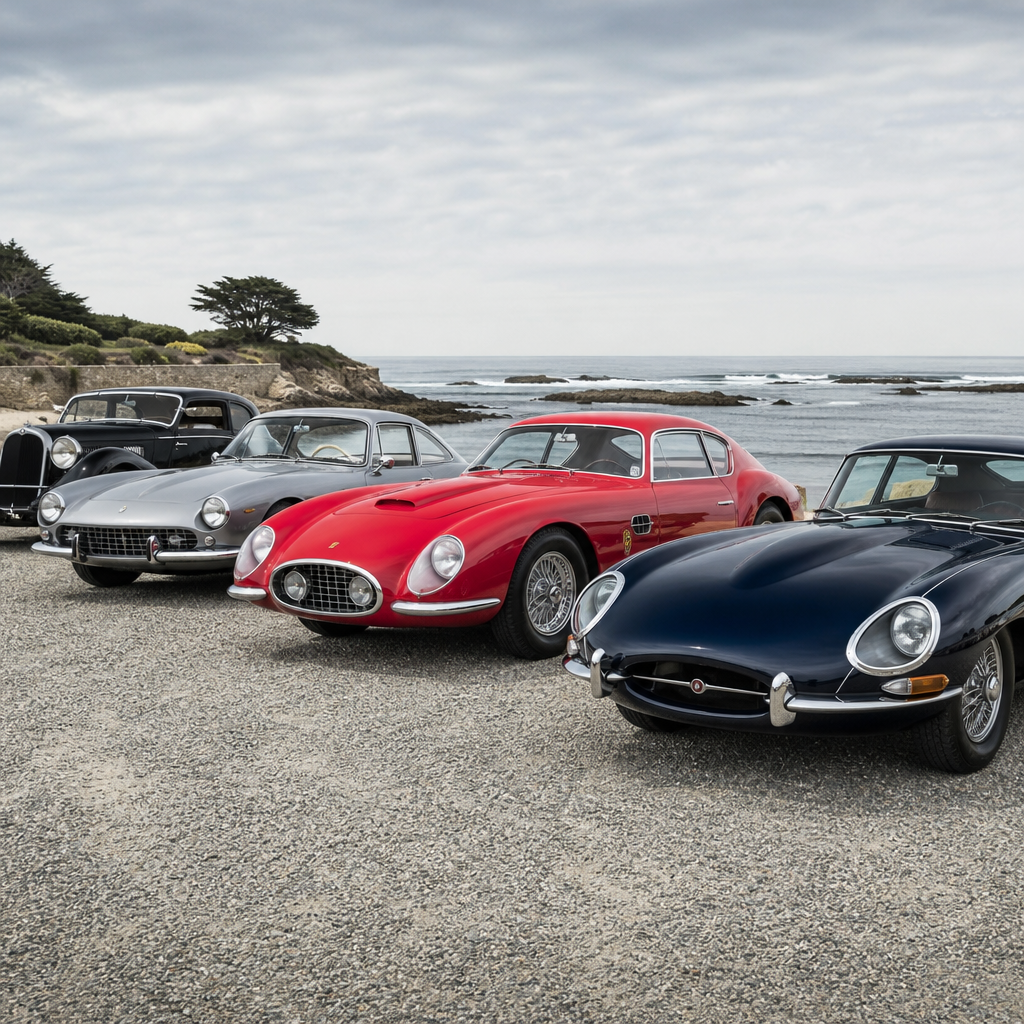
Jaguar’s highest-value classics, such as the D-Type, Lightweight E-Type, XKSS, and select C-Types, prove that motorsport credibility can elevate British cars into the same elite conversation. Aston Martin DB4 GTs, DB4 GT Zagatos, and DB5 convertibles remain similarly important because they pair scarcity with enduring cultural relevance. These upper-tier cars attract international bidding from established collectors, institutions, and family offices seeking tangible assets with historical weight.
Why Porsche, muscle cars, and analog icons remain investment grade
Porsche demonstrates that the most valuable classic cars are not always the rarest. The 356 Carrera models, early 911 S variants, 1973 Carrera RS 2.7, 930 Turbo, and air-cooled limited-production 911s have built value through engineering credibility and enormous enthusiast support. The 911 market in particular benefits from deep transactional transparency. Buyers can compare records from RM Sotheby’s, Gooding Christie’s, Bonhams, Broad Arrow, Bring a Trailer, and marque registries with relative ease. That level of data reduces uncertainty, and reduced uncertainty usually strengthens bids. In my experience, buyers pay more confidently when they know exactly how color, specification, restoration level, and ownership history affect the price ceiling.
American muscle cars operate differently but remain central to classic car market trends. The 1969 Chevrolet Corvette L88, 1971 Plymouth Hemi ’Cuda convertible, 1967 Shelby GT500 Super Snake, 1969 Dodge Charger Daytona Hemi, and COPO Camaros sit at the top because they reflect the peak of the horsepower era and often survive in tiny numbers. Documentation is crucial here. Build sheets, broadcast sheets, window stickers, dealer invoices, and certification from recognized marque experts can make or break value. The muscle market also teaches an important lesson: emotional demand matters. Buyers who grew up around these cars are now financially capable of competing for the best examples, and nostalgia continues to support premium pricing.
Analog icons from the 1980s and 1990s add another layer. The Ferrari F40, Porsche 959, Jaguar XJ220, Acura NSX-R, BMW M3 Sport Evolution, and homologation specials such as the Lancia Delta Integrale Evoluzione have all benefited from a generation of buyers who want poster cars they once considered unreachable. Some of these are now crossing from collectible into blue-chip territory because they combine low production with broad global appeal and increasing eligibility for top concours and preservation events.
Classic car market trends shaping values right now
The current market is defined by selectivity, transparency, and globalized demand. Broadly speaking, the market is no longer lifting every collectible at once. Instead, buyers are concentrating capital in the best examples of the right cars. Restoration quality is scrutinized more closely than it was a decade ago, and digital access to auction archives has made overpaying for mediocre cars less common. This is healthy. Mature markets reward quality, not just availability.
Another trend is the premium attached to originality and documented history. Preservation-class winners, time-capsule mileage, known ownership chains, and factory records are moving values upward because they reduce interpretive risk. A heavily restored car may look spectacular, but if it has lost its original engine or body shell, a sophisticated buyer will discount it. Sustainability of support also matters. Brands with factory heritage divisions, such as Ferrari Classiche, Porsche Classic, Mercedes-Benz Classic Center, and Jaguar Heritage, provide authentication and parts access that help protect long-term value.
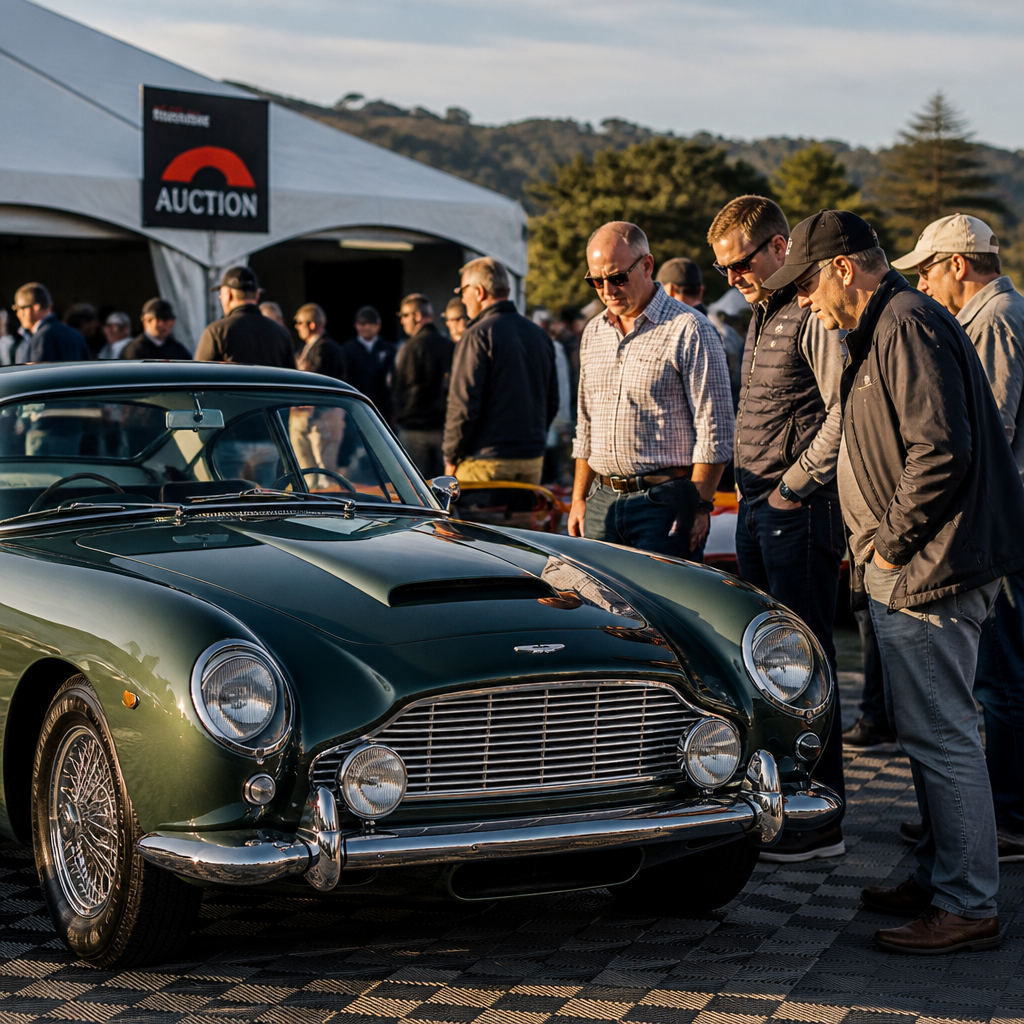
Online auctions have changed the middle and upper-middle tiers of the market by widening bidder pools and accelerating price discovery. They have not replaced live sales at Monterey, Scottsdale, Paris, or Villa d’Este for truly elite cars, but they have made market signals faster and harder to ignore. Cross-border demand has also intensified. A significant car in London can attract bidders from California, Dubai, Germany, Japan, and Singapore on the same day, which pushes landmark examples toward international valuation standards rather than purely local ones.
| Category | Examples | Main value drivers | Current market behavior |
|---|---|---|---|
| Blue-chip European exotics | Ferrari 250-series, Mercedes 300 SL, Jaguar D-Type | Rarity, race history, provenance, concours eligibility | Very resilient, strongest for top documented examples |
| Air-cooled sports cars | Porsche 356 Carrera, 911 Carrera RS, 930 Turbo | Enthusiast depth, drivability, parts support, transparency | Stable to strong, highly specification sensitive |
| American muscle | Hemi ’Cuda, L88 Corvette, COPO Camaro | Documentation, engine originality, nostalgia, low build counts | Selective, best cars outperform average restorations |
| Modern classics | Ferrari F40, Acura NSX-R, BMW E30 M3 Sport Evo | Generational demand, analog feel, homologation appeal | Growing institutional interest, volatile at lower grades |
How buyers evaluate condition, authenticity, and investment risk
Every serious purchase should begin with verification. Matching numbers should be confirmed through factory records, registry data, and specialist inspection. Paint meter readings, weld consistency, stampings, casting dates, and trim codes all matter. On high-value classics, I recommend pre-purchase inspections by marque experts rather than generalist mechanics. A Ferrari specialist understands whether a gearbox casing is period correct. A Porsche expert can identify replaced floor pans or non-original engine type numbers. An American muscle authority can validate stampings and hidden VIN locations that casual buyers miss.
Condition should be evaluated in context. A concours restoration can justify a premium, but only if the work quality is documented and the restoration philosophy matches the car. Over-restoration can hurt authenticity. Preservation can be even more valuable when wear is honest, mileage is credible, and finishes remain factory applied. Mechanical health is just as important as visual appeal. Deferred maintenance on a six-figure or seven-figure car quickly becomes a six-figure problem. Buyers should budget for transport, storage, insurance, recommissioning, specialist labor, and sourcing rare components, not just the hammer price.
Investment risk in classic cars is manageable but real. The asset is illiquid compared with stocks, carries storage and maintenance costs, and can be sensitive to changes in generational taste. Regulatory shifts, import rules, emissions policies, and tax treatment may also affect ownership economics. Still, the best cars often behave differently from average collectibles. They are scarce globally, understandable to broad audiences, and supported by decades of scholarship. That is why disciplined buyers focus on quality first and price second. A great car bought at a fair price usually performs better than a compromised car bought cheaply.
Where the smartest opportunities may be next
Opportunity today lies just below the obvious trophy tier. Exceptional examples of historically important but less headline-driven models can still be acquired before they fully re-rate. Think Ferrari 328 GTS in top original condition, Mercedes-Benz 190 SL with impeccable provenance, BMW E9 CSL, Lexus LFA, first-generation Honda NSX, and carefully documented air-cooled 911 variants outside the most famous trims. These cars benefit from brand strength, strong communities, and recognizable significance without requiring ultra-elite budgets.
There is also growing attention on homologation specials, lightweight variants, and cars with direct ties to engineering milestones. Collectors increasingly favor models that tell a precise story: first fuel injection sports car, first major carbon-composite road car, last hand-built series, or a roadgoing version developed to qualify a racer. Narrative matters because it makes the car legible to future buyers. In a competitive market, the easiest cars to explain are often the easiest cars to sell.
The most valuable classic cars in today’s market earn that status through a repeatable formula: scarcity, authenticity, mechanical significance, and durable demand. As the classic car market matures, buyers are becoming more selective, not less enthusiastic. That is good news for anyone building a collection carefully. Focus on documentation, buy the best example you can justify, and study comparable sales across major venues. If you want to navigate classic car market trends with confidence, start by defining your budget, your holding period, and your tolerance for restoration risk, then follow the evidence rather than the noise.
Frequently Asked Questions
What makes a classic car truly valuable in today’s market?
A classic car becomes truly valuable when several factors align at the same time. Age alone is not enough. The highest-value cars tend to be rare, historically important, and highly desirable to serious collectors. Rarity can come from low production numbers, limited surviving examples, or a specific configuration that was produced only briefly. Historical importance matters just as much. Cars tied to motorsport success, major design milestones, famous engineers, or influential brands often command stronger prices because they represent more than transportation; they represent a moment in automotive history.
Condition and originality also play a major role. Collectors generally pay a premium for cars that retain their original engine, transmission, body panels, colors, and interior materials, especially when these details are supported by factory records and ownership documentation. Provenance can elevate value dramatically. A car with documented celebrity ownership, a notable racing history, or long-term stewardship by respected collectors often attracts stronger bidding. Finally, market demand shapes value in real time. Even an exceptional car needs an active base of buyers willing to compete for it. That is why certain Ferraris, Porsche competition models, Mercedes-Benz icons, and rare American muscle cars consistently rise to the top in auctions and private sales.
Which types of classic cars are considered the most valuable right now?
The most valuable classic cars in today’s market generally fall into a few clear categories. The first includes blue-chip European exotics from brands such as Ferrari, Bugatti, Mercedes-Benz, Jaguar, Aston Martin, and Porsche. Within this group, limited-production models, competition cars, and halo road cars tend to lead the market. Examples with direct ties to racing, coachbuilt bodies, or landmark engineering often sit at the highest end of the value spectrum because they combine scarcity, design prestige, and global collector demand.
A second major category is historically significant sports and racing cars. Vehicles that competed in major events such as Le Mans, Mille Miglia, or Formula racing often attract elite buyers because their stories are well documented and their place in automotive history is secure. A third category includes top-tier American classics and muscle cars, especially rare high-performance variants with matching numbers, factory options, and low production totals. While the very top of the global market is often dominated by European names, standout American models can also achieve extraordinary results. In short, the most valuable classics are usually the ones that combine limited availability, recognizable significance, and enduring collector confidence across international markets.
How important are provenance, originality, and documentation when pricing a classic car?
They are absolutely central to pricing, especially at the upper end of the market. Provenance tells the story of the car: who owned it, where it has been, how it was used, and why it matters. A car with a traceable history is easier to authenticate and easier to market to sophisticated buyers. If a vehicle has notable past owners, factory support records, period competition history, or known appearances at important events, that documentation can push it into a much higher value bracket. Buyers are not just purchasing a machine; they are purchasing confidence and historical legitimacy.
Originality is equally important because it helps confirm authenticity. Collectors often look for matching-numbers drivetrains, original chassis and body tags, correct finishes, and period-correct components. A properly restored car can still be extremely valuable, but restorations that erase original details or introduce non-authentic changes can reduce appeal among serious buyers. Documentation ties everything together. Build sheets, service records, ownership files, restoration photos, factory certifications, and expert inspection reports all reduce uncertainty. In a market where small differences can mean substantial swings in price, complete documentation often makes the difference between a merely desirable classic and an investment-grade one.
Are classic cars still a strong investment, or is the market becoming more selective?
Classic cars can still be strong stores of value, but the market has become far more selective than many casual observers realize. Broadly speaking, buyers today are more informed, more data-driven, and less willing to overpay for average examples. The strongest performance is typically concentrated in exceptional cars: rare models with excellent provenance, high originality, strong presentation, and wide brand recognition. These cars continue to attract competition because wealthy collectors want the best available examples, and top-tier supply remains limited.
At the same time, mediocre cars often struggle. Over-restored examples, poorly documented vehicles, cars with questionable histories, or models that lack deep collector demand may not keep pace with the headline-grabbing auction results people read about. Shifting tastes also matter. Certain generations of buyers are showing increased interest in later analog-era performance cars, while some older segments of the market may soften unless they have lasting historical significance. For that reason, classic cars should be approached with both enthusiasm and discipline. The right car can perform very well over time, but success usually depends on careful model selection, rigorous due diligence, realistic expectations, and a willingness to hold for the long term rather than chase short-term trends.
How can a buyer tell whether a classic car is investment-grade before making a purchase?
An investment-grade classic car usually reveals itself through a combination of objective qualities and market behavior. First, study the model’s reputation. Has it shown consistent demand at major auctions, private brokered sales, and marque-specific events? Do respected collectors actively seek it out? Cars that repeatedly draw serious bidding across different venues tend to have deeper market support than cars that spike only occasionally. Next, evaluate rarity and significance. Low production numbers help, but rarity alone is not enough. The car should also have a compelling reason collectors care about it, whether that is design importance, racing heritage, engineering innovation, or iconic status within its brand.
Then examine the individual example closely. Verify authenticity, matching numbers, ownership history, factory specifications, and the quality of any restoration work. Commission a pre-purchase inspection from a recognized specialist, not a general mechanic. Review comparable sales, but do so carefully, since prices can vary dramatically based on condition, originality, and provenance. It is also wise to consider liquidity: some cars are prestigious but trade infrequently, while others have an established global buyer base. In practical terms, an investment-grade classic is one that combines elite desirability, limited supply, strong documentation, and proven demand from serious buyers. If even one of those elements is weak, the car may still be enjoyable to own, but it may not qualify as a top-tier market asset.